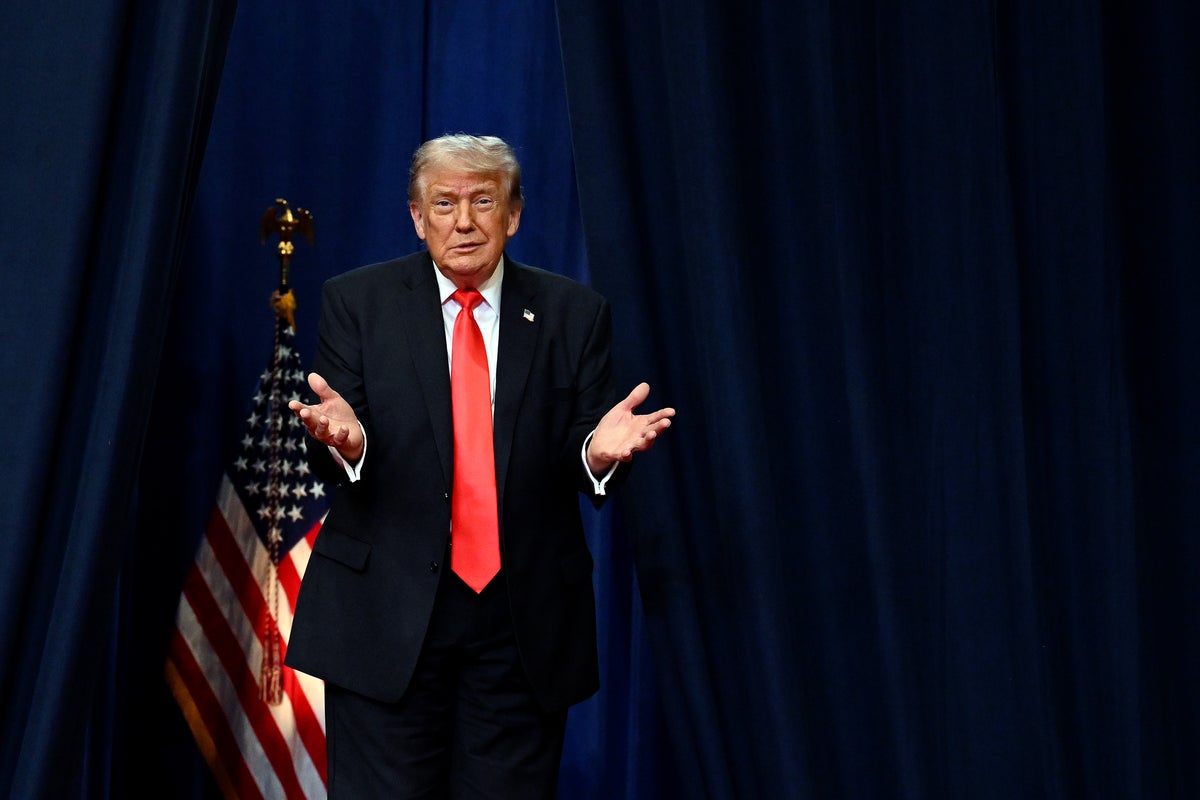
A Washington Post-ABC-Ipsos poll shows Trump with 66% disapproval on the Iran war and 76% disapproval on rising prices, with 72% disapproving of his handling of inflation and 65% of the economy. Gas prices are cited at $4.44 per gallon, nearly $1.50 higher than a year ago, and independents' approval has fallen to 25% from just below 40% in April 2025. The article also flags worsening generic House numbers for Republicans, with Democrats leading 49% to 44%.
The market implication is not the headline decline in approval itself, but the widening gap between consumer pain and policy credibility. When energy costs become the dominant household salience metric, it compresses discretionary spending quickly and unevenly: lower-income consumers, commuter-heavy regions, and small businesses see margin pressure first, while big-box retail and value-oriented grocers may hold up better than premium discretionary names.
The second-order effect is a likely shift from narrative-driven inflation expectations to actual behavior changes. If households start treating fuel as a persistent tax rather than a transitory shock, you get delayed demand destruction in travel, dining, and autos over the next 1-2 quarters, even before broader CPI prints fully reflect it. That tends to flatten the consumer sector dispersion trade: airlines, leisure, and lower-end consumer credit are more exposed than the broad indices suggest.
Politically, the most important market variable is not the base approval number but the collapse in independents. That raises the odds of pre-midterm policy reversals or symbolic interventions aimed at gasoline relief, which could hit energy markets through SPR rhetoric, refinery scrutiny, or pressure on trade/production channels. Those moves would likely cap further upside in crude and crack spreads even if geopolitical risk remains elevated.
Contrarianly, this may be more bullish for crude volatility than for outright direction. The market may already be pricing the visible gas-price shock, but not the policy response risk if the White House pivots hard into relief mode. That argues for trading volatility and relative value rather than chasing a directional energy beta move here.
AI-powered research, real-time alerts, and portfolio analytics for institutional investors.
Request DemoOverall Sentiment
moderately negative
Sentiment Score
-0.45
