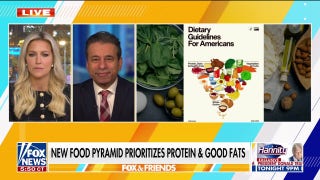
The Department of Health and Human Services under Secretary Robert F. Kennedy Jr. released new dietary guidelines featuring an inverted food pyramid that emphasizes meat, protein and healthy fats while de-emphasizing whole grains and refined carbohydrates, and calls out ultraprocessed foods and sugar-sweetened beverages. The shift — framed as a public-health effort to reduce chronic disease — has drawn praise from some health figures and sharp criticism from nutrition experts who allege industry influence and dispute the prioritization of red meat and saturated fat. For investors, the guidance could alter consumer messaging and regulatory risk for food producers, processors and beverage companies, but it does not include immediate regulatory mandates or fiscal metrics and is unlikely to be market-moving in the near term.
Market structure: The HHS pivot structurally favors animal-protein, dairy and fat suppliers (retail and processing) and penalizes grain-first packaged food makers and sugar-heavy beverage offerings. Expect incremental retail share and pricing power to shift to Tyson Foods (TSN), Hormel (HRL) and Pilgrim’s Pride (PPC) at the expense of Kellogg (K) and General Mills (GIS); live cattle and soybean/corn futures are the natural commodity beneficiaries as feed demand rises. Cross-asset: anticipate 3–8% upside in near-term cattle/corn prices over 6–12 months if consumption patterns shift even modestly; limited immediate sovereign/FX impact, small downward pressure on long-duration health-cost inflation pricing in muni/IG healthcare credits over years. Risk assessment: Tail risks include a policy reversal or court/NGO-driven litigation (15–25% probability over 12 months) and strong consumer/NGO backlash that preserves prior secular trends toward plant-based diets. Timeframes split: immediate days—news-driven equity volatility; short-term 1–6 months—positioning and retail sales data; long-term 1–3 years—actual demand and commodity cycles. Hidden dependencies: school lunch contracts, Medicare/insurer guidance, and ESG/climate regulation can materially blunt or reverse winners. Trade implications: Direct: establish a tactical 2–3% long in TSN and 1% long in CALM (eggs/dairy exposure) versus a 1–2% short in K or GIS; pair trade long TSN / short K to isolate protein vs grain exposure. Options: buy 3–6 month TSN calls 10–15% OTM (size 0.5–1% portfolio) and purchase 6-month puts on K 10% OTM as hedge. Entry: deploy within 2–6 weeks; exit or re-evaluate at 6–12 months or after USDA/agency rulemaking or two months of Nielsen/IRI sales data confirm trend shifts. Contrarian angles: Consensus overestimates the speed at which Americans change diet—consumption shifts historically take years, so equity moves may be overdone; conversely, commodity markets may be underpricing a medium-term feed shift. Historical parallels (past DGAs) show limited demand displacement; unintended consequence: higher wholesale cattle prices could compress processor margins—consider hedging processor longs with short live-cattle futures or put spreads if cattle rallies >10% in 3 months.
AI-powered research, real-time alerts, and portfolio analytics for institutional investors.
Request DemoOverall Sentiment
mixed
Sentiment Score
0.00
