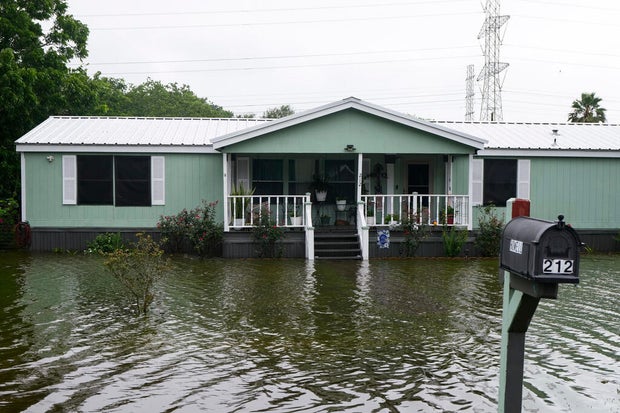
Post-tropical Arthur is forecast to bring 5 to 10 inches of rain across Texas, Louisiana, Mississippi, Alabama and western Florida Panhandle through early Friday, with the National Weather Service warning of potentially life-threatening flash flooding. Maximum sustained winds fell to 35 mph, but hazardous surf, rip currents and possible tornadoes remain a risk along the northwestern Gulf Coast. The storm is unlikely to be a broad market mover, but it could disrupt regional travel, logistics and local infrastructure.
The market impact is less about the storm’s wind profile and more about the downstream friction in the Southeast logistics stack. The highest-probability dislocation is temporary but broad-based: regional trucking, parcel delivery, and port-adjacent freight corridors can see 2-4 days of rerouting and dwell-time spikes, which creates short-lived margin pressure for time-sensitive shippers while benefiting carriers with higher pricing power and flexible capacity. The second-order effect is inventory timing — retailers and industrial distributors with Gulf/Southeast exposure may see delayed receipts just as they are trying to rebuild summer inventory, which can force expedited freight spend and squeeze gross margins.
Travel/leisure is the cleanest near-term loser because weather-driven cancellations have immediate revenue recognition while costs remain fixed. The key nuance is that the damage is usually more pronounced in high-frequency leisure channels than in headline airline seat capacity: hotels, regional resorts, theme parks, and coastal recreation operators often absorb the hit through softer occupancy, lower ancillary spend, and a later recovery than the storm itself. If flooding persists into the weekend, the pain can extend beyond the storm path because drive-to leisure demand is typically what rebounds first; that rebound becomes the tell for whether the shock is truly transitory.
The contrarian point is that this is likely a short-duration earnings event rather than a fundamental demand reset. The bigger risk is not the storm itself but compounding effects if repeated rainfall saturates soils and produces infrastructure disruptions, power outages, or localized business closures for more than a week. That makes the opportunity set asymmetric: fade overreaction in broad market cyclicals, but lean into names where near-term revPAR or load-factor weakness is most visible and easiest to quantify versus a later normalization.
AI-powered research, real-time alerts, and portfolio analytics for institutional investors.
Request DemoOverall Sentiment
moderately negative
Sentiment Score
-0.45
