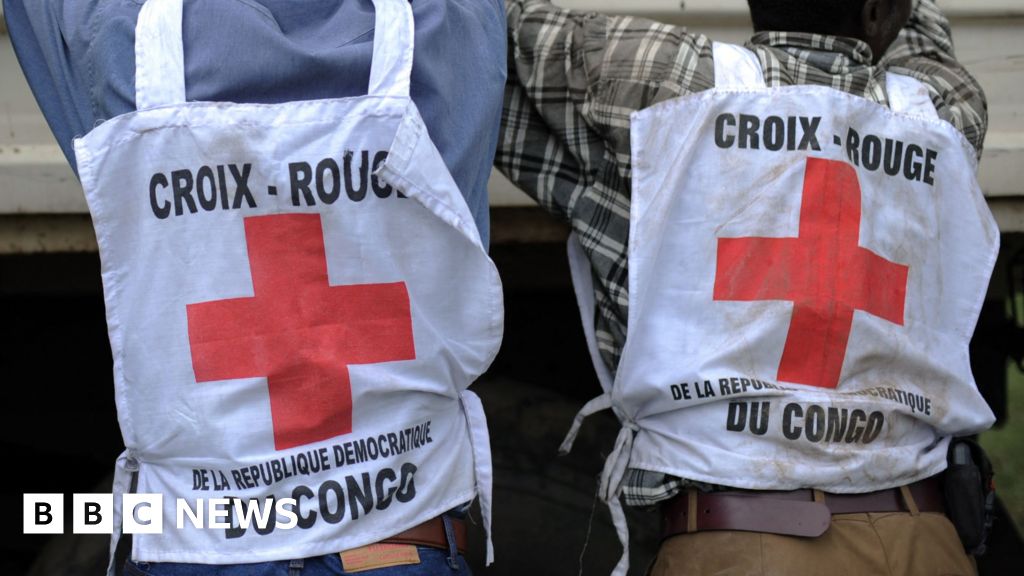
Three Red Cross volunteers died in DR Congo from suspected Ebola after handling bodies in Ituri, bringing the outbreak's suspected toll to more than 170 deaths and 750 cases. WHO raised the country risk level from high to very high, while Uganda confirmed three new cases, lifting its total to five. The outbreak has also spread into North and South Kivu, with M23-held territory complicating containment efforts.
This is less a direct sector event than a regional operating-risk shock with two implications: first, outbreak control is likely to be slower than headline case counts suggest because burial practices and body-handling protocols are now clearly an amplifier; second, the market should expect a larger perimeter of disruption across eastern DRC and adjacent corridors as authorities impose movement controls, facility closures, and community pushback. The immediate economic damage falls on any business exposed to field logistics, humanitarian transport, border flows, and last-mile distribution in North Kivu/Ituri rather than on listed global healthcare names.
Second-order effects are more important than the virus itself for risk assets. A rebound in local unrest or facility attacks raises the odds of supply interruptions for cross-border trade routes, mining-linked transport, and aid logistics, which can spill into neighboring countries already flagged as at-risk. In EM macro terms, this is a classic negative-feedback loop: fear drives burial resistance, which drives more transmission, which prompts stricter containment, which then increases social friction and operational downtime.
The contrarian read is that the direct global market impact should remain contained unless the outbreak crosses from a local containment problem into a sustained regional mobility shock. Bundibugyo’s lower historical fatality rate relative to the worst Ebola strains can reduce long-duration panic, but the absence of a proven vaccine keeps the tail risk asymmetric over the next 2-8 weeks. The real catalyst to watch is not case count alone, but whether health workers and burial teams continue to be targeted, because that determines whether response efficiency improves or deteriorates.
AI-powered research, real-time alerts, and portfolio analytics for institutional investors.
Request DemoOverall Sentiment
strongly negative
Sentiment Score
-0.80
