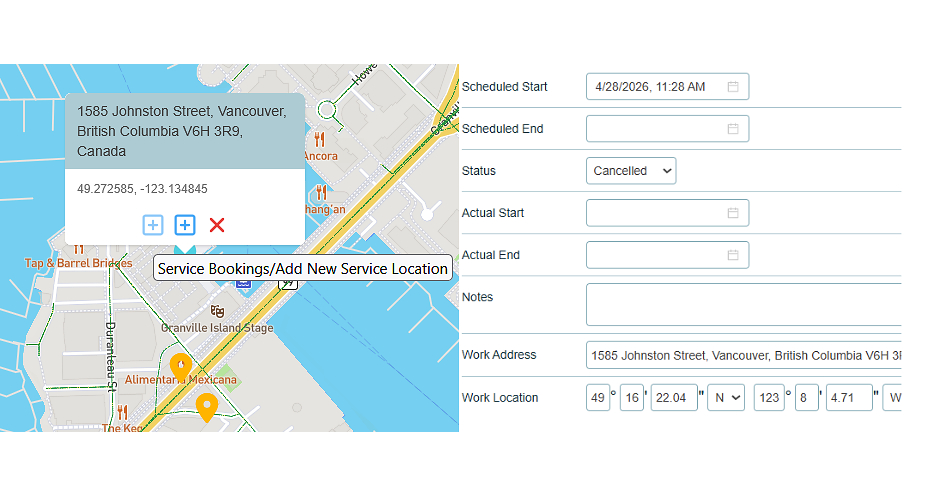
Flowfinity launched Flowfinity Actions 26.1, expanding its AI assistant capabilities to improve accuracy/clarity and reduce manual errors while adding IT controls to track whether records were updated by AI agents via MCP vs. humans. The update also adds enterprise-grade geospatial data collection with geocode-verified location capture, upgraded dashboards for operational monitoring, and security features including configurable password expiration policies. Overall, this is a product/feature release with limited immediate market impact beyond potential operational adoption.
This reads less like a catalyst for a specific vendor and more like a signal that enterprise AI monetization is moving from model novelty to governance, provenance, and workflow plumbing. That tends to favor incumbents with distribution and admin controls — MSFT, NOW, CRM — because buyers will pay for auditability and permissions before they pay for raw AI capability. The first-order revenue effect is modest; the second-order effect is stronger: AI becomes an attach feature inside broader workflow contracts, which supports retention and seat expansion more than headline ARR.
The more interesting spillover is on adjacent field-ops and geospatial software. If customers value geocode-verified capture and traceability, standalone mobile form/survey tools and narrow point solutions face pricing pressure unless they can prove higher accuracy or faster deployment. Public proxies that could benefit on the margin are TRMB and ZBRA, but the broader takeaway is that this is a bundling war: platform vendors can absorb these features at low marginal cost, while smaller workflow vendors may have to discount to keep deal velocity.
Contrarian view: the market often overpays for "AI-enabled" announcements when the real moat is implementation depth, not the assistant itself. The key falsifier is evidence that these features actually raise net retention or shorten sales cycles; absent that, this is mostly a table-stakes release. Time horizon matters: any price reaction should fade quickly, while the real read-through would show up over 1-3 quarters in enterprise software commentary and over 6-18 months in software mix shifts toward governance-heavy suites.
AI-powered research, real-time alerts, and portfolio analytics for institutional investors.
Request DemoOverall Sentiment
mildly positive
Sentiment Score
0.18
