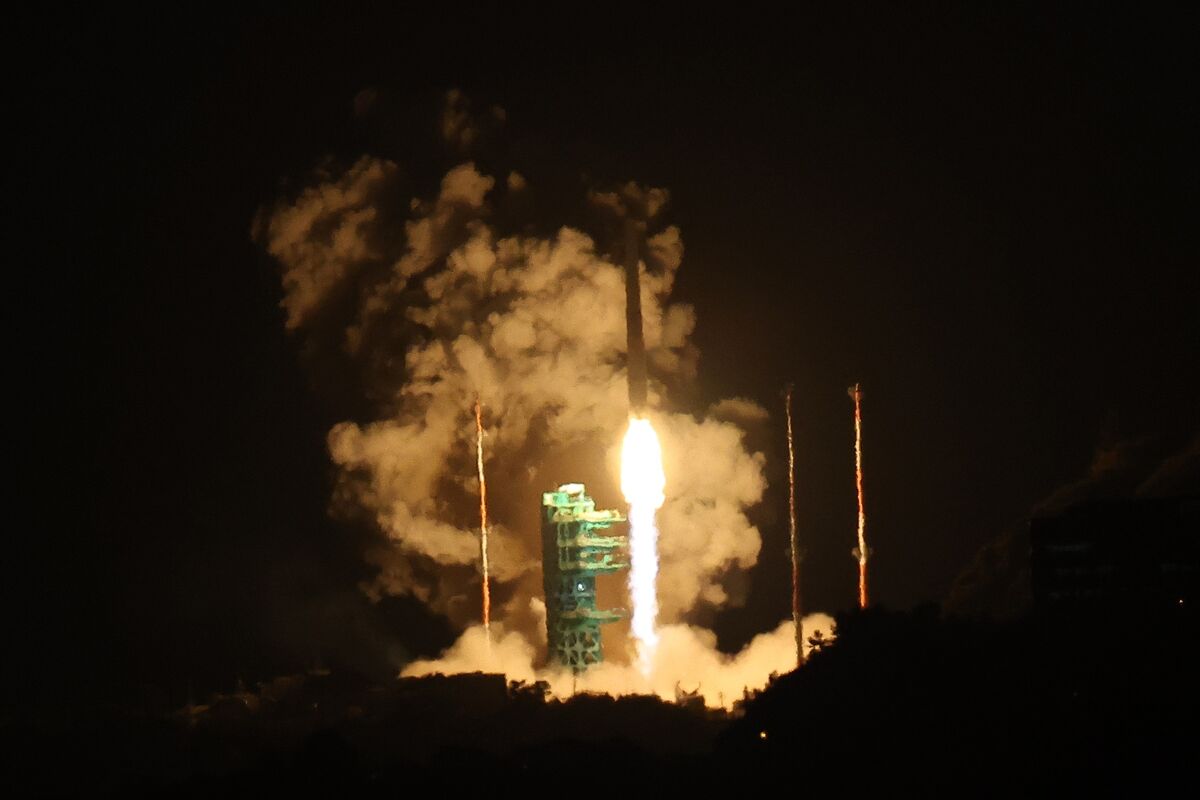
South Korea achieved its first privately led rocket launch when the Nuri rocket lifted off at 1:13 a.m. local time Thursday from the Naro Space Center, with the space agency reporting that all satellites successfully separated about 15 minutes after launch. The milestone underscores a shift toward commercialization of the domestic space sector and enhances South Korea’s positioning in the global space race, which could support follow-on investment and growth opportunities for private space ventures and aerospace suppliers.
Market structure: A successful private-led Korean launch expands global small-sat launch supply and creates near-term winners in Korean aerospace suppliers (KAI 047810.KS, Hanwha Aerospace 012450.KS) and systems integrators. Expect downward pressure on per-launch pricing for sub-500kg payloads of ~10–30% over 3–5 years as capacity increases, benefitting low-cost, high-frequency providers and satellite makers but compressing margins for high-fixed-cost incumbents.
Risk assessment: Tail risks include a major launch failure, tightened export controls (US/EU/Korea), or a subsidy rollback that could wipe out new business models; probability low-medium but impact high (−50%+ valuation shock for pure-play launchers). Immediate market move is likely muted (days); watch backlog and manifested launches (weeks–months); durable industrialization of a domestic supply chain unfolds over quarters–years, hinging on government budgets and export deals.
Trade implications: Favored exposures are diversified space ETFs (ARKX) and selected Korean suppliers (KAI, Hanwha Aerospace) for 6–12 month upside tied to procurement and export wins; use limited-cost option structures (12-month call spreads) on liquid US launch names (RKLB) to express demand growth while capping downside. Rotate from discretionary commercial aerospace (airlines) into industrials/defense and satellite services; size initial positions small (1–3% each) and scale to fundamentals (manifest growth, budget increases).
Contrarian view: Consensus understates consolidation risk — increased capacity can cause brutal price competition, forcing bankruptcies among undercapitalized U.S. small-cap launchers and creating acquisition targets. Historical parallels (UK/India space programs) show multi-year timelines; avoid assuming rapid monetization. An unintended consequence: aggressive pricing could erode long-term R&D investment, slowing engine/avionics advancement and favoring conglomerates with cash (defense primes).
AI-powered research, real-time alerts, and portfolio analytics for institutional investors.
Request DemoOverall Sentiment
mildly positive
Sentiment Score
0.35
