

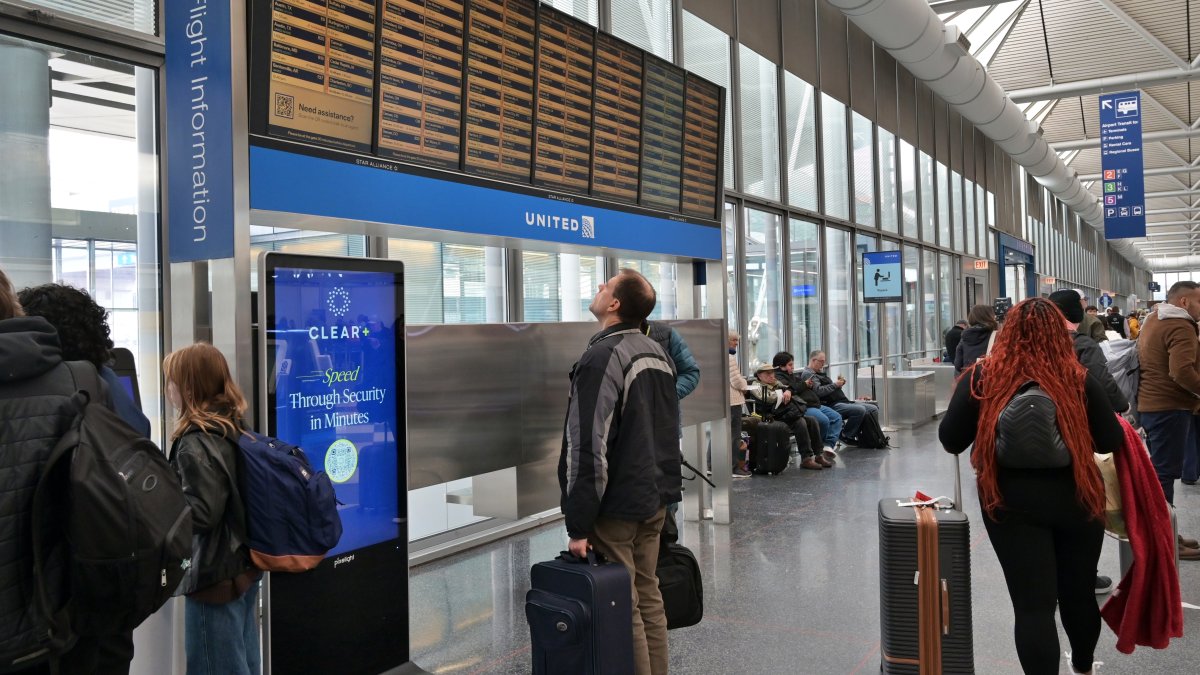
Federal aviation officials will cap O'Hare flights at 2,708 per day and cut about 300 flights daily from the summer schedule from May 17 through Oct. 24 to reduce widespread delays. The move follows a 14.9% year-over-year increase in peak-day flights to more than 3,080 and ongoing construction-related taxiway closures. American estimates it may need to cut no more than 40 arrivals and departures per day, while United could face more than 200 cuts.
This is a capacity shock disguised as a reliability fix. The key second-order effect is that the constraint is being imposed on the most schedule-sensitive nodes in the network, which tends to reward carriers with stronger re-accommodation infrastructure and punish those with higher local concentration and thinner connection buffers. Near term, the biggest alpha is not in absolute demand destruction but in relative share capture: displaced O’Hare volume will leak to alternative Midwest gateways and to nonstop O&D alternatives, creating modest pricing power on competitive overlaps even if headline system capacity is capped.
For AAL vs UAL, the asymmetry is more interesting than the shared negative. American’s exposure looks more manageable because its cut estimate is lower relative to the implied total, which should reduce operational chaos and compensation costs. United’s larger implied burden likely means more involuntary changes, worse customer satisfaction, and a higher chance of spillover into premium cabin and corporate accounts if its schedule trimming hits high-yield business banks. That said, both names can get a short-term relief rally if investors had been bracing for an even harsher order, so the first move may be less informative than the rebooking and yield data over the next 4-8 weeks.
The main contrarian point is that fewer flights is not automatically bearish for airline earnings if it removes the weakest marginal capacity from an already delay-heavy airport. If the order meaningfully improves on-time performance, the revenue mix can improve faster than unit growth falls, especially into peak summer where reliability commands pricing. The real risk is execution: if construction-related disruptions persist or labor/air-traffic constraints worsen, the schedule cap becomes a floor rather than a solution, and the market will start pricing this as a broader Chicago hub impairment lasting through the October end date.
The better trade is relative, not directional. I would avoid chasing the first-day move in either name and instead wait for evidence of which carrier absorbs the disruption with less compensation expense and fewer corporate defections. Over the next 1-2 months, the market should distinguish between temporary rescheduling friction and a durable yield/brand hit; that is where the spread will open.
AI-powered research, real-time alerts, and portfolio analytics for institutional investors.
Request TrialOverall Sentiment
mildly negative
Sentiment Score
-0.18
Ticker Sentiment
