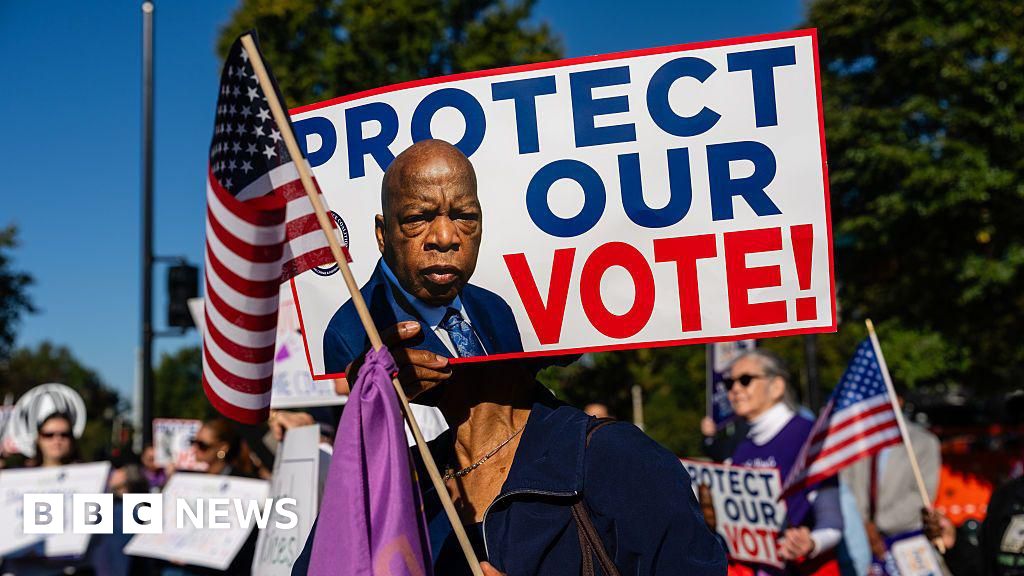
The US Supreme Court, in a 6-3 ruling, narrowed how race can be used when drawing electoral maps under Section 2 of the Voting Rights Act. The decision makes it harder to challenge maps for diluting minority voting power and could reshape redistricting in southern states, including Florida, Tennessee and Mississippi. Markets are unlikely to react directly, but the ruling has significant implications for state politics and congressional seat allocation.
This is a structural, not just political, change: the ruling raises the evidentiary bar for minority-opportunity challenges, which should reduce the expected success rate of future redistricting litigation and make map-drawing more aggressive where legislatures are already aligned. The first-order winners are state-level incumbents in charge of the pen; the second-order winner is any party with stronger legal and procedural resources to defend maps over multiple cycles. The losers are urban/suburban minority-heavy districts that were previously “protected” through race-conscious line drawing, but the larger market impact is that election outcomes become more path-dependent and less sensitive to demographic shifts over the next 1-2 redistricting cycles.
The key risk is timeline asymmetry: the highest market sensitivity is concentrated in the next 1-6 months as states revisit maps and lawsuits are filed, while the constitutional uncertainty can persist for years. A meaningful reversal would require either a narrower lower-court interpretation that preserves most existing remedies, or a future court/circuit split that re-expands the practical burden on legislatures. The more important second-order effect is on national House math: a handful of seat changes in tightly balanced chambers can reprice policy probabilities across healthcare, energy permitting, defense, and regulation more than the ruling itself would suggest.
The contrarian view is that the move may be overread as an immediate partisan windfall. Redistricting gains are often incrementally small, legally delayed, and partially offset by incumbency, candidate quality, and turnout variance; the bigger effect may be on litigation costs and the leverage of map drawers rather than on the raw seat count. That means the tradable edge is less about a binary election bet and more about positioning for a modest but persistent increase in policy volatility and a higher probability of Republican-controlled state and federal outcomes in the 2026-2028 window.
AI-powered research, real-time alerts, and portfolio analytics for institutional investors.
Request DemoOverall Sentiment
neutral
Sentiment Score
0.00
