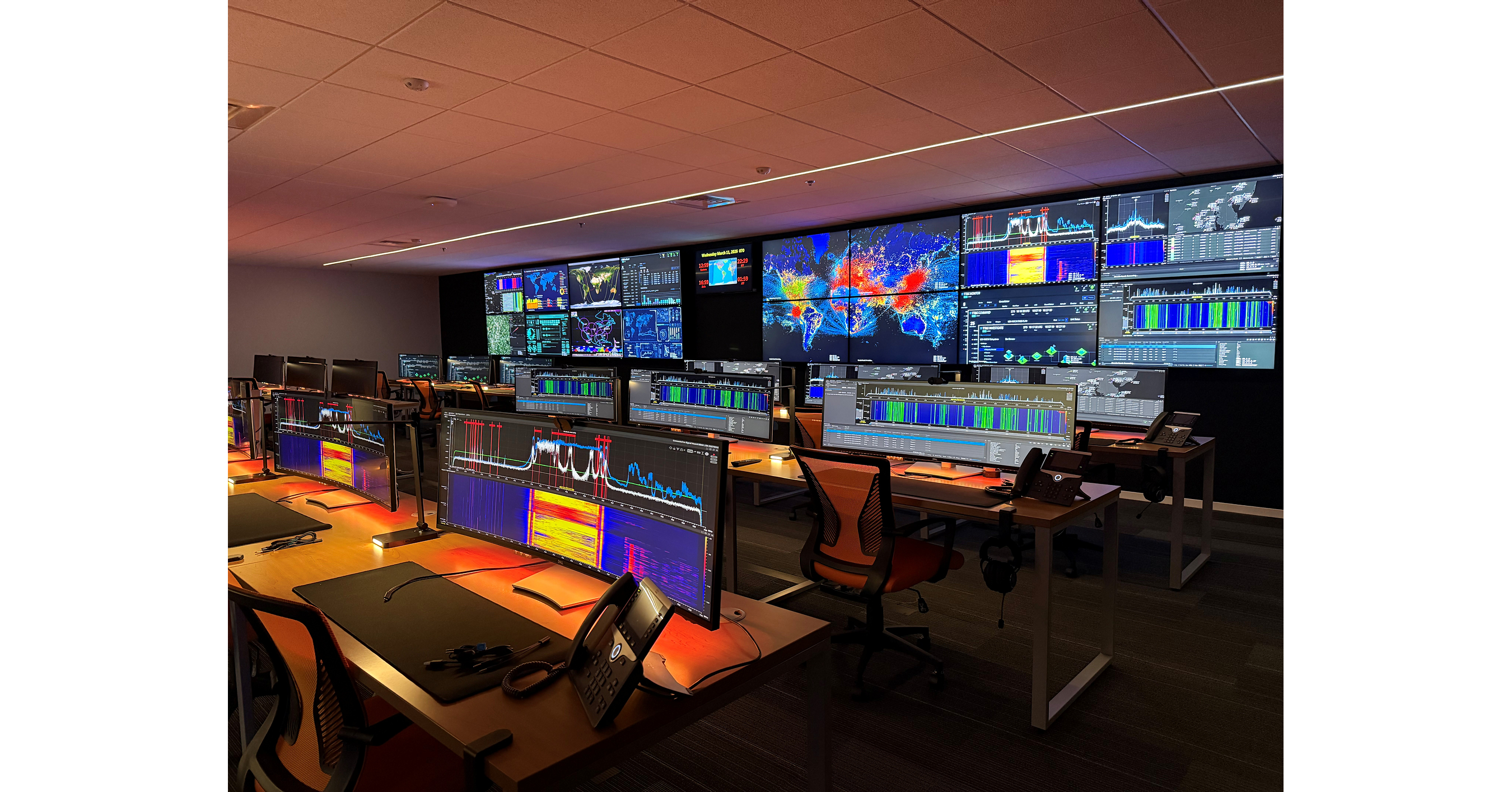
HawkEye 360 (via Innovative Signal Analysis/ISA) was selected by the U.S. Space Force’s Space Rapid Capabilities Office to develop an adaptable GEO radar-warning sensor under a Small Business Innovation Research (SBIR) Direct-to-Phase II award. The program targets detecting and characterizing emissions from ground-based radars tracking U.S. satellites in geosynchronous orbit, building on ISA’s validated ENCORE payload performance on the International Space Station. While this is defense-focused rather than a financial results update, it supports near-term R&D momentum and potential future production/transition to broader U.S. Space Force architectures.
This is a validation event, not an earnings event. The economic value sits in the probability of follow-on production and a stronger seat at the table for future GEO architectures, so the first-order P&L impact is likely negligible while the option value can matter if the concept is adopted across programs. The real beneficiaries are vendors that can combine low-power payload design, onboard processing, and secure downlink; that profile favors HAWK and also raises the odds of work for primes/integrators like LHX, NOC, RTX, and potentially RKLB if the architecture migrates toward modular smallsat platforms.
The competitive read-through is more interesting than the contract itself: moving radar-warning into orbit is a budget reallocation from ground-heavy sensing toward distributed space assets. That would pressure legacy ground-based SSA/SIGINT niches, but only if the prototype survives integration testing and gets written into the next appropriations cycle. In the next 1-3 months, the catalyst to watch is whether this stays an SBIR demo or turns into a transition award; without that, the market will likely fade the move.
Contrarian view: the market may be underpricing the dual-use angle if the same onboard processing stack becomes relevant for commercial space traffic monitoring and satellite diagnostics, which could broaden the TAM beyond defense. The consensus risk is overreacting to "space defense" headlines while ignoring how slow federal procurement is; the thesis is falsified if there is no production bridge or if GEO sensing is deprioritized in the next budget. For public proxies, this is more about sentiment support for small-cap space names than a near-term fundamental rerating.
AI-powered research, real-time alerts, and portfolio analytics for institutional investors.
Request DemoOverall Sentiment
mildly positive
Sentiment Score
0.25
Ticker Sentiment
