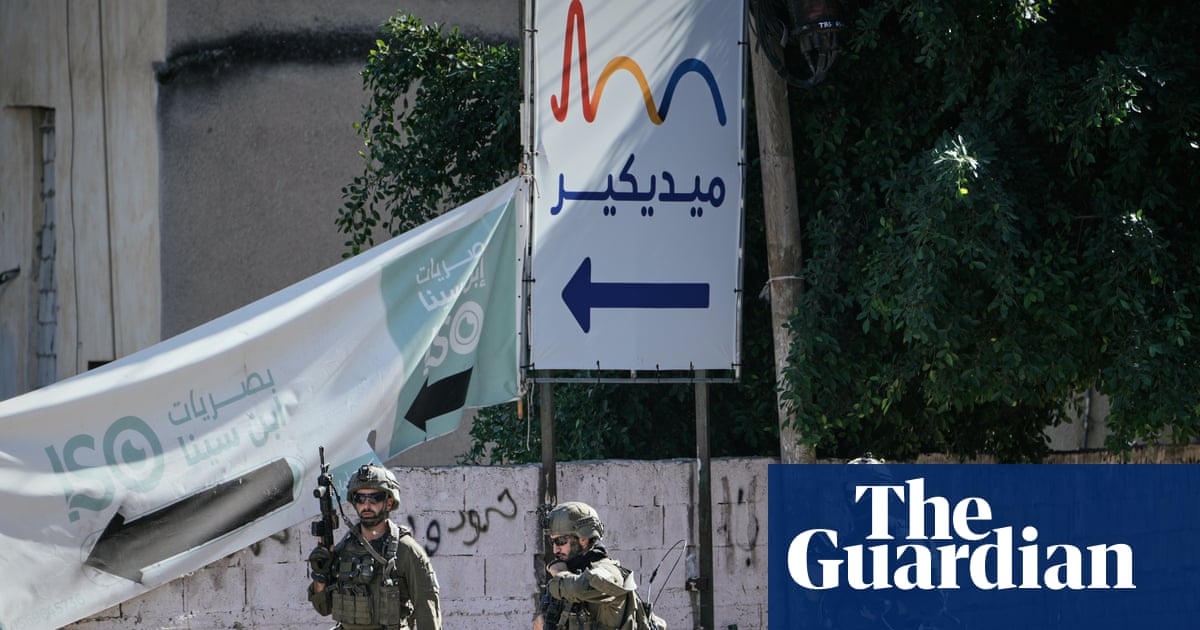
Israeli forces conducted the largest West Bank deployment since the Gaza ceasefire, sending hundreds of soldiers with armoured vehicles into Tubas, imposing curfews, sealing roads and requisitioning homes in a multi-day counter‑terrorism operation. Violence continued in Gaza with reported bombardment near al‑Bureij and an Israeli claim of six militants killed near Rafah; Hamas returned the remains of one Israeli hostage while two hostages’ remains remain in Gaza. Casualty figures cited include about 1,200 Israelis killed and 251 abducted in the October 2023 attacks, roughly 70,000 Palestinians killed and 170,863 injured in the ensuing offensive, more than 1,000 Palestinians killed in the West Bank since the war began, 44 Israelis killed in the West Bank, and some 32,000 people displaced from West Bank refugee camps according to rights groups. Policymaking developments include Donald Trump’s 20‑point plan proposing an international UN‑mandated governing and reconstruction body and an armed stabilization force — a framework that, if pursued, could influence reconstruction financing, defense exposure and regional risk premia.
Market structure: Tactical West Bank raids and ongoing Gaza skirmishes push a classic risk-off microshock into equities, FX and energy. Direct winners: defense primes (Lockheed LMT, Raytheon RTX, Northrop NOC), safe havens (gold GLD, JPY, long-duration Treasuries TLT) and short-term oil risk premia (Brent). Losers: Israel-focused equities/ETFs (EIS), regional tourism/airlines, and EM credit spreads; expect a 1–3% near-term bump in Brent if escalation broadens.
Risk assessment: Tail risks include rapid regional escalation (probability 5–15% next 30 days) that spikes oil >10% and draws US military/logistics involvement, or a sustained ceasefire that reverses risk premia in 4–12 weeks. Immediate window (days): vol and safe-haven flows; short-term (weeks–months): defense re-rating and credit widening; long-term (quarters+): reconstruction wins for engineering/construction if international governance plan advances. Hidden dependencies: refugee flows, sanctions, and US political decisions can compress or amplify flows quickly.
Trade implications: Near-term tactical plays favor 48–72 hour risk-off hedges (GLD, TLT) and 3–6 month selective longs in LMT/RTX/NOC with add-on rules on >8% pullbacks. Use oil call spreads (3-month) to capture limited upside if Brent moves 3–12% higher; hedge global equity exposure with short-dated SPX put spreads funded by selling OTM calls. Size positions small (single-digit % of portfolio) given geopolitical tail risk uncertainty.
Contrarian angles: Consensus may overprice sustained escalation—historical parallels (post-2006/2014 regional spikes) show oil and market vol mean-revert within 4–8 weeks absent strike on major infrastructure. Defense names often price in risk early; look for 10–20% pullbacks as better entry points. Unintended consequence: prolonged instability could accelerate Western reconstruction contracts and defense budgets over 12–36 months, benefiting construction/engineering (CAT, KBR) beyond immediate defense names.
AI-powered research, real-time alerts, and portfolio analytics for institutional investors.
Request DemoOverall Sentiment
strongly negative
Sentiment Score
-0.70
