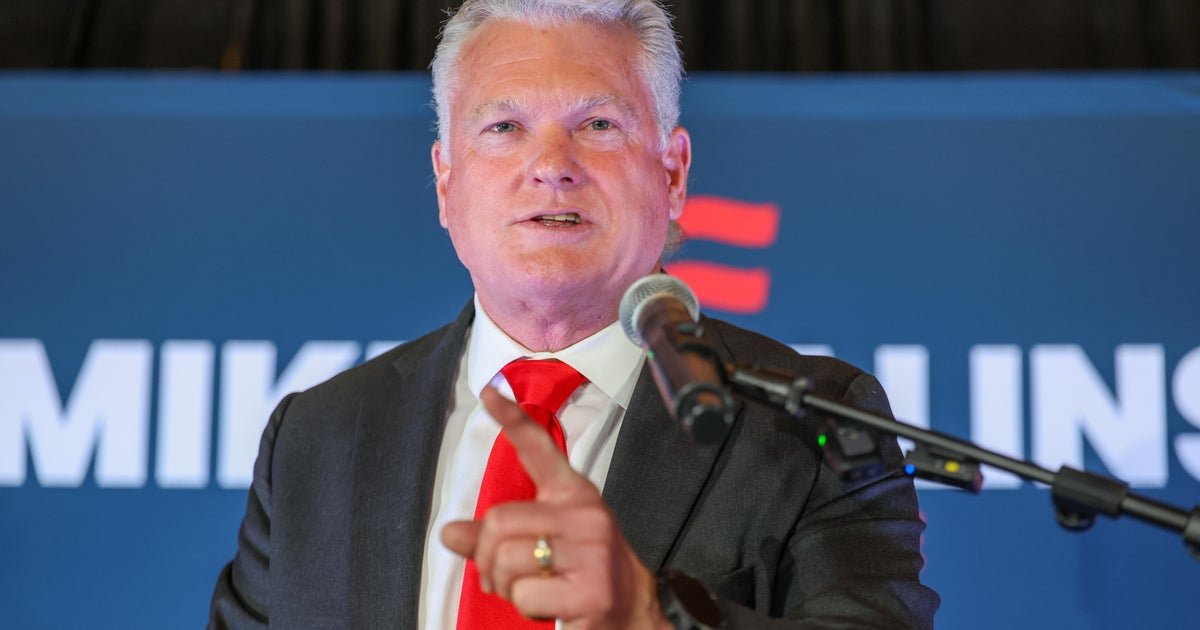
Rep. Mike Collins won the Georgia GOP Senate runoff with nearly 41% of the vote and will face Sen. Jon Ossoff in November, after President Trump endorsed Collins over Derek Dooley. The race is shaping up as a key battleground for control of the Senate, with Ossoff framed as the most endangered Democrat and Collins facing allegations of misused congressional funds that remain under House Ethics Committee review. Market impact is limited, but the outcome could matter for policy expectations around taxes, trade, and regulation if Republicans win the seat.
Collins’ nomination removes the biggest source of short-term uncertainty for Georgia’s Senate contest, but the market implication is not the headline race itself; it is the reallocation of donor money, ad spend, and opposition research into a fully nationalized fight over the next 4-5 months. Ossoff enters as the better-financed incumbent, and incumbency plus a hostile-ad environment usually compresses late-cycle polling volatility rather than widen it. That argues for viewing any immediate Republican enthusiasm as a sentiment event, not a durable probability shift.
The more interesting second-order effect is that Collins gives Democrats a cleaner foil on policy and temperament, which should help them frame Georgia as a referendum on Washington rather than a local contest. If that narrative sticks, it increases the odds of ticket-splitting suppression in the Atlanta suburbs, where modest turnout swings can outweigh rural GOP margins. The Senate math also matters: because control could hinge on a single seat, outside groups will likely overpay for TV in Georgia, which benefits incumbent name recognition and punishes challengers who need paid media to define themselves.
The risk to that view is if national conditions improve for Republicans into early fall and Georgia's race becomes a generic anti-incumbent trade. In that scenario, Collins’ alignment with the president could become an asset rather than a liability, especially if economic data and border politics dominate the news cycle. But the key catalyst window is late summer through October, when ad saturation and turnout operations tend to overwhelm early primary narratives; before then, polls will likely be noisy and less tradeable.
Contrarian angle: the consensus may be overestimating how much Collins’ nomination changes the race. The bigger edge is that Ossoff now has a well-known opponent who can be attached to Washington controversies, but he also has a ceiling on how much his margin can compress because he has already proven he can win a runoff in a high-salience environment. That makes this less of a pure bearish Ossoff setup and more of a volatility setup: the path to a GOP pickup exists, but the probability may still be below the market's reactive pricing after the runoff.
AI-powered research, real-time alerts, and portfolio analytics for institutional investors.
Request DemoOverall Sentiment
neutral
Sentiment Score
0.05
