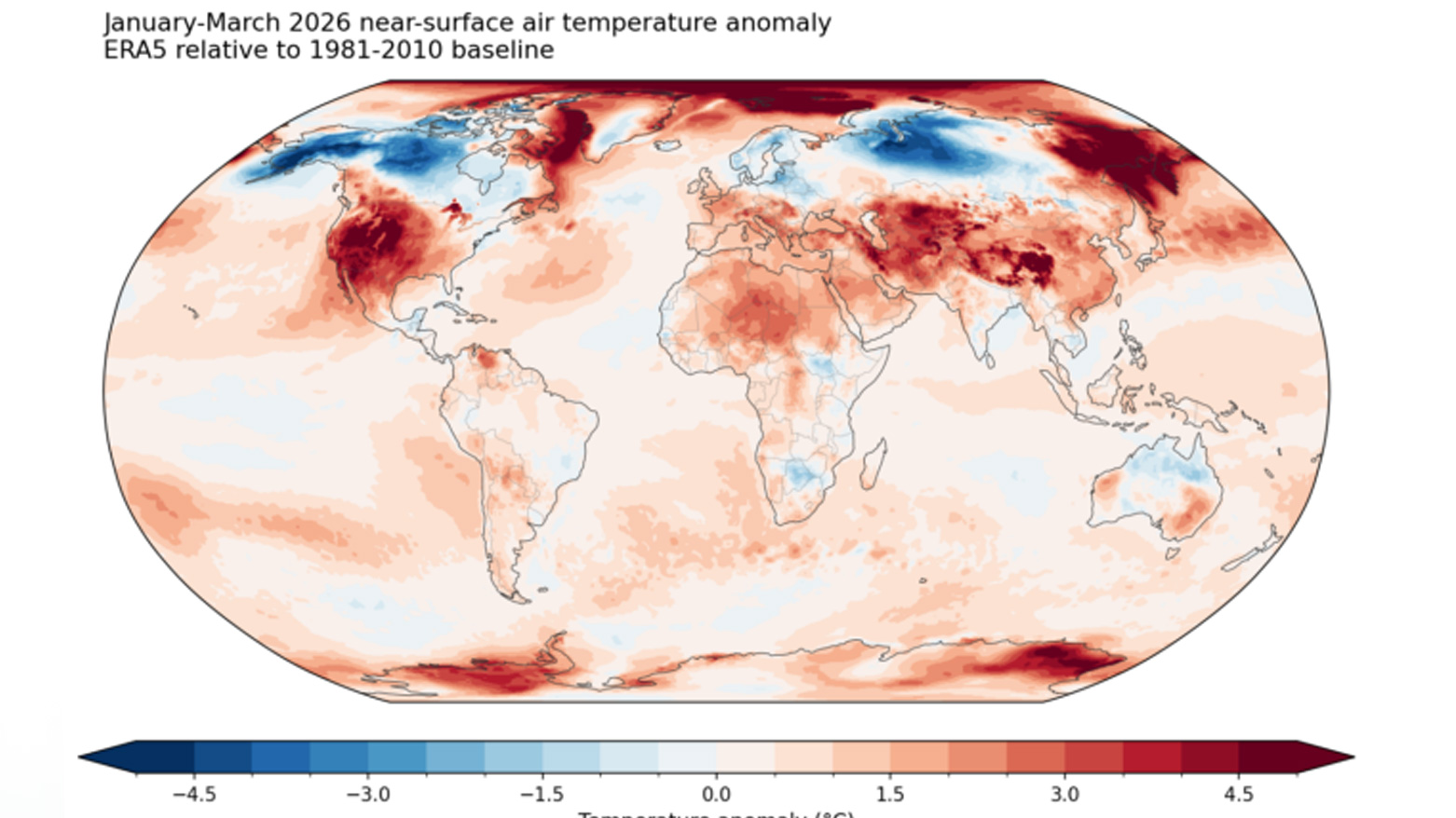
The UN’s WMO projects global temperatures will remain at or near record highs in 2026-2030, with an 86% chance at least one year exceeds 2024 as the warmest on record and a 75% chance the five-year average tops 1.5C above pre-industrial levels. The report also warns of accelerating Arctic warming and shifting precipitation patterns, reinforcing climate-risk concerns for agriculture, infrastructure, and energy planning. While largely a climate outlook rather than a direct market event, the findings are relevant for policy, ESG, and long-duration asset risk assessment.
The market implication is not a single “climate trade” but a widening dispersion trade across sectors with different weather pass-through. The most immediate beneficiaries are price-setters with low physical exposure and inflation linkage—utilities with regulated inflation escalators, insurance/reinsurance with hardening pricing, and select agribusiness/input names that can reprice faster than end-demand weakens. The losers are asset-heavy operators with fragile uptime economics: utilities with thermal generation, rail/logistics exposed to buckling/flood disruptions, and consumer staples/food producers whose margins get squeezed by crop volatility before they can fully pass costs through.
Second-order effects matter more than headline temperature levels. Repeated heat and precipitation anomalies tend to raise working capital needs, inventory buffers, and capex for redundancy; that is a quiet margin headwind for industrials, chemicals, and cold-chain logistics over the next 12–24 months. The more interesting trade is not “green good, fossil bad,” but “volatility up”: variability of harvests, power demand peaks, and insurance losses should lift earnings dispersion and justify higher option-implied vol in weather-sensitive baskets.
Catalyst timing is asymmetric. Near-term, the next heat dome or wildfire/flood episode can re-rate weather-exposed names within days; over 6–18 months, the bigger catalyst is policy and underwriting reset—higher premiums, tighter municipal/federal resilience spending, and accelerated adaptation capex. The contrarian miss is that chronic warming is not uniformly bearish for all carbon-intensive firms: firms with flexible pricing, asset rotation, and geographic diversification can monetize volatility, while the truly vulnerable are those with fixed tariffs, legacy infrastructure, and poor balance-sheet flexibility.
The cleanest positioning is to lean into dispersion rather than direction. A long/short basket on insurers/reinsurers versus exposed utilities or transport names should outperform as loss-cost inflation compounds. On the upside, select climate-resilience and grid-hardening names should benefit from multi-year capex cycles, while on the downside the most fragile food producers and inland logistics operators look vulnerable to repeated weather shocks that markets still tend to treat as transitory.
AI-powered research, real-time alerts, and portfolio analytics for institutional investors.
Request TrialOverall Sentiment
mildly negative
Sentiment Score
-0.20
