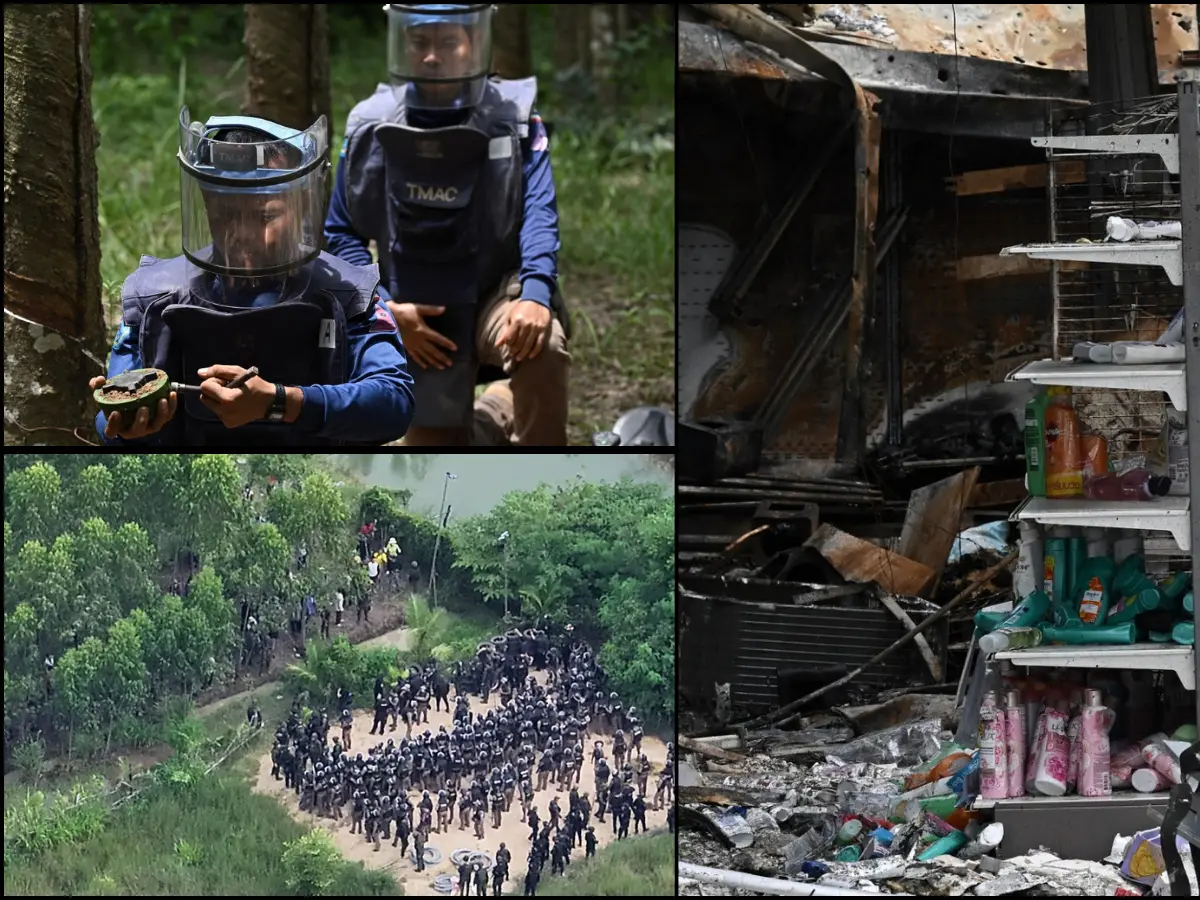
Cross-border fighting between Thailand and Cambodia has escalated into air strikes with Cambodia accusing Thailand of bombing the casino hub and land crossing at Poipet; Thailand demands Cambodia announce a truce first. China has dispatched a special envoy to mediate while the US and Indian embassies issued travel warnings (US: avoid travel within 50 km of the border), underscoring heightened security risks to tourism, cross‑border trade and investor sentiment in the region. The clashes — sparked after a November landmine incident that injured a Thai soldier who later died — have persisted for more than two weeks against a backdrop of an 800 km disputed boundary and prior deadly exchanges earlier this year.
Market structure: The immediate winners are safe-haven assets (USD, gold) and regional cash/liquidity providers; direct losers are Thailand-focused travel & leisure, border casino operators and short-tourism-exposed small-cap Thai names. Expect THB depreciation (near-term 1–5% move possible) and a widening of Thai sovereign 5–10bps vs. regional peers if clashes persist; equities with >10% revenue exposure to cross-border land travel will see demand shock. Cross-asset mechanics: EM equity volatility (VIX-EM proxies) should spike short-term, pressuring EMB and raising CDS spreads for Thailand and frontier issuers.
Risk assessment: Tail scenarios include (A) rapid escalation drawing in outside powers or disrupting Gulf of Thailand shipping (low probability, high impact) and (B) quick China-mediated ceasefire within 7–14 days limiting market damage. Immediate risk window is days–weeks (tourist season impact), medium term weeks–months (investor sentiment and capital flows), long term quarters+ (bilateral tension altering investment plans). Hidden dependencies: December–January tourism season and Chinese investment flows into Cambodia amplify sensitivity; traveller advisories can depress arrivals 20–40% regionally.
Trade implications: Tactical hedges (short THD or THB) and long-duration safe havens (GLD, short-dated USTs) are attractive for 0–3 months; use options to cap cost (buy-put or call spreads). Relative trades: long EMB hedges are risky — prefer rotating from travel/leisure ETFs into defensive local-currency bonds or global defense ETFs if volatility persists beyond two weeks. Key catalysts: China’s envoy, casualty reports, and US embassy advisories — moves here should trigger position adjustments.
Contrarian angles: Consensus may oversell Thailand exposure; if China brokers a ceasefire within 14 days, beaten-down Thai tourism and casino plays could rebound 20–40% due to pent-up travel demand. Mispricings likely in small-cap Thai names lacking liquid hedges; avoid one-way directional shorts without event-time stop rules. Historical parallel: prior 2011 border flare-ups were sharp but reversed within months once diplomacy advanced.
AI-powered research, real-time alerts, and portfolio analytics for institutional investors.
Request DemoOverall Sentiment
strongly negative
Sentiment Score
-0.60
