
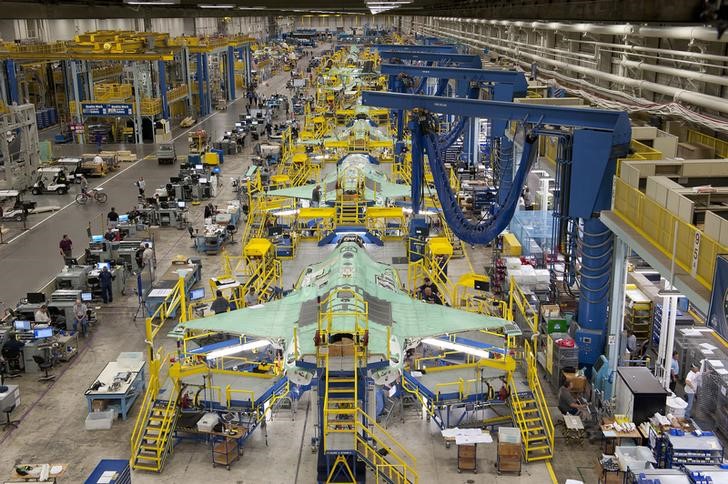
Lockheed Martin opened an 88,000-square-foot missile assembly facility in Courtland, Alabama, to support production of the Next Generation Interceptor for the Missile Defense Agency. The plant uses digital manufacturing, automated workflows, and digital twin methods, with core technologies advancing toward Critical Design Review. The expansion supports long-running regional operations and should modestly bolster manufacturing capacity and defense production capabilities.
The real signal is not the ribbon-cutting; it is that Lockheed is effectively de-risking a multi-year procurement story by turning NGI from a paper program into a manufacturable, testable industrial asset. That matters because defense primes do not get rewarded for engineering elegance alone — they get rewarded when the program crosses the point where production learning curves, supplier commitments, and sustainment revenue become visible to the Pentagon and to the market. In other words, this is a credibility event that lowers cancellation risk and raises the probability of follow-on funding across adjacent missile-defense layers.
Second-order, the winner set is broader than LMT. Digital manufacturing, automation, metrology, specialty materials, and electronics suppliers tied into the production line should see a longer-duration demand runway as this facility becomes a reference model for future interceptor and payload programs. The competitive implication is that firms lacking integrated manufacturing and systems-integration depth could lose share on future missile-defense awards, especially if the government increasingly prefers vendors that can prove throughput and software-upgradeability rather than just best-in-class performance on a prototype.
The contrarian read is that the market may underappreciate how slowly this translates into revenue. Facilities like this improve medium-term margins and win rates, but they rarely change the next quarter unless there is a parallel contract modification or production-rate increase. The better trade is therefore not a chase into a headline pop, but a months-long accumulation on weakness, with the catalyst stack coming from budget allocations, test milestones, and any expansion of layered air/missile defense priorities.
Tail risk is execution: if integration or test milestones slip, the whole thesis reverts to 'promising capability, delayed cash flow,' which typically compresses the multiple. The other risk is budgetary substitution — if missile-defense spending gets pushed out in favor of other munitions or space programs, the program remains strategically important but financially less accretive in the near term. Over the next 6-12 months, the stock should react more to evidence of production cadence and award flow than to facility headlines.
AI-powered research, real-time alerts, and portfolio analytics for institutional investors.
Request TrialOverall Sentiment
mildly positive
Sentiment Score
0.28
Ticker Sentiment
