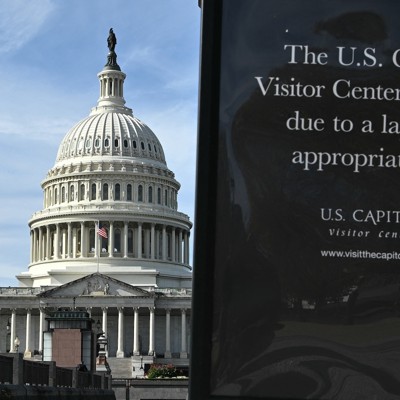
Bipartisan lawmakers indicate mild progress in negotiations to end the ongoing government shutdown, which is poised to become the longest in U.S. history. Discussions center on a package of full-year appropriations for select agencies (Veterans Affairs, Agriculture, legislative branch) and a temporary continuing resolution to reopen the remaining government, signaling a potential, albeit complex, path to resolving the current funding uncertainty and its broader economic implications.
Bipartisan lawmakers have reported mild, albeit cautious, progress in negotiations to end the ongoing government shutdown, which is poised to become the longest in U.S. history, reaching its 36th day. Discussions are centered on a package of full-year appropriations for specific agencies, including Veterans Affairs, Agriculture, and the legislative branch, coupled with a temporary continuing resolution to reopen the remaining government. This development carries a 'mildly positive' sentiment score of 0.3 and an 'optimistic' tone, suggesting a slight improvement in the outlook for fiscal stability.
While senators acknowledge that many details still need to be ironed out and a broad agreement is not yet in place, the ongoing conversations are described as productive. A key shift involves moving past the obsolete November 21st deadline for a continuing resolution, with a new, later expiration date being discussed to avoid another year-long CR. This indicates a pragmatic approach to immediate funding needs.
The market impact score of 0.5 suggests that while this progress is a positive signal, it does not represent a definitive resolution, implying continued uncertainty. The themes of 'Fiscal Policy & Budget' and 'Elections & Domestic Politics' remain highly relevant, as the resolution directly impacts government operations and reflects inter-party dynamics. The focus on a 'minibus' of three appropriations bills indicates a piecemeal approach to funding.
The divergence between Senate and House fiscal 2026 appropriations bills, with the latter proposing significant cuts, underscores the underlying legislative challenges that persist beyond the immediate shutdown resolution. This structural disagreement could pose future fiscal hurdles, even if the current impasse is resolved. The current progress, however, offers a glimmer of hope for mitigating immediate operational disruptions.
AI-powered research, real-time alerts, and portfolio analytics for institutional investors.
Request DemoOverall Sentiment
mildly positive
Sentiment Score
0.30
