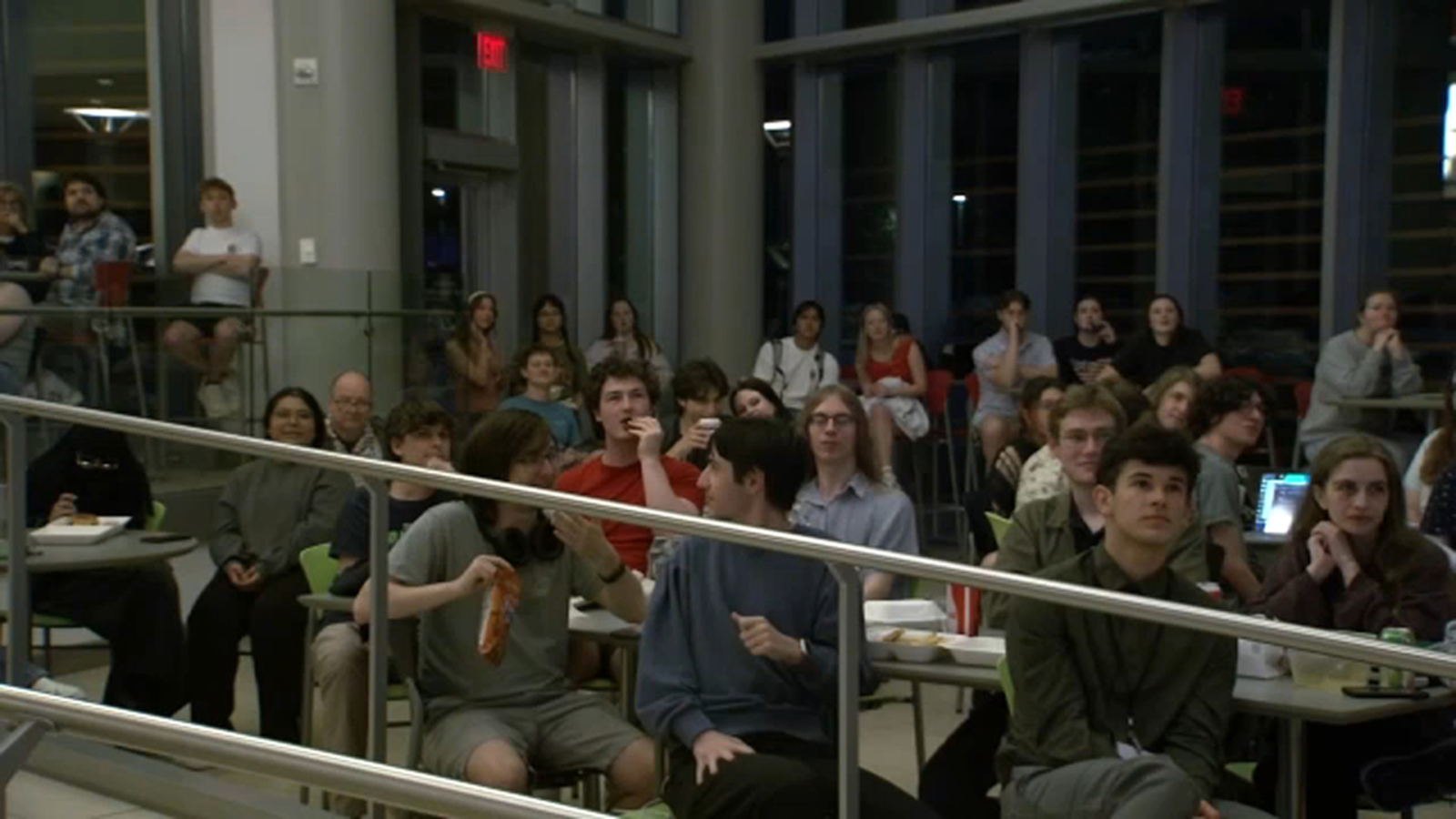
NASA's Artemis II crew completed a 10-day lunar mission with a Pacific splashdown, described as a "perfect bullseye," marking humanity's first trip to the moon in more than 50 years. The article highlights the mission's symbolic importance for future deep-space exploration and the emotional reaction of NC State students to alum Christina Koch's return. The piece is inspirational but has minimal direct market impact.
The relevant trade signal is not the splashdown itself but the proof point for a multi-year federal willingness to fund deep-space infrastructure after a long gap. That tends to benefit the second-order supply chain: propulsion, avionics, thermal systems, specialty materials, simulation software, mission systems integration, and range/ground support. In practice, the public market winners are usually the primes and a handful of niche subcontractors with exposure to NASA, SLS/Orion-like programs, and adjacent defense space budgets rather than pure-play “space theme” names.
The more important implication is budget durability. Once a program reaches a clean demo milestone, cancellation odds fall materially and follow-on appropriations become easier to defend; that can extend revenue visibility for 2-4 years even if the near-term revenue step-up is modest. The risk is that this becomes a sentiment event without a procurement step-function: if Congress re-prioritizes spending or schedule slips reappear, the stock-level impact fades quickly and the trade reverts to fundamentals.
Contrarian read: the market may already be pricing a generic space renaissance, but the monetization is still concentrated and slow-moving. The better alpha is in companies whose backlog or margin expansion is levered to increased government space throughput, not in broad “innovation” baskets that get enthusiasm but little incremental award flow. In other words, the mission is a catalyst for budget persistence, not an immediate revenue explosion.
From a risk standpoint, the next catalyst window is months, not days: watch for procurement announcements, appropriations language, and contractor commentary on program cadence. If mission success triggers even one or two follow-on contract awards, that is more actionable than the media cycle and could support a 6-12 month re-rating in the most exposed names.
AI-powered research, real-time alerts, and portfolio analytics for institutional investors.
Request DemoOverall Sentiment
neutral
Sentiment Score
0.10
