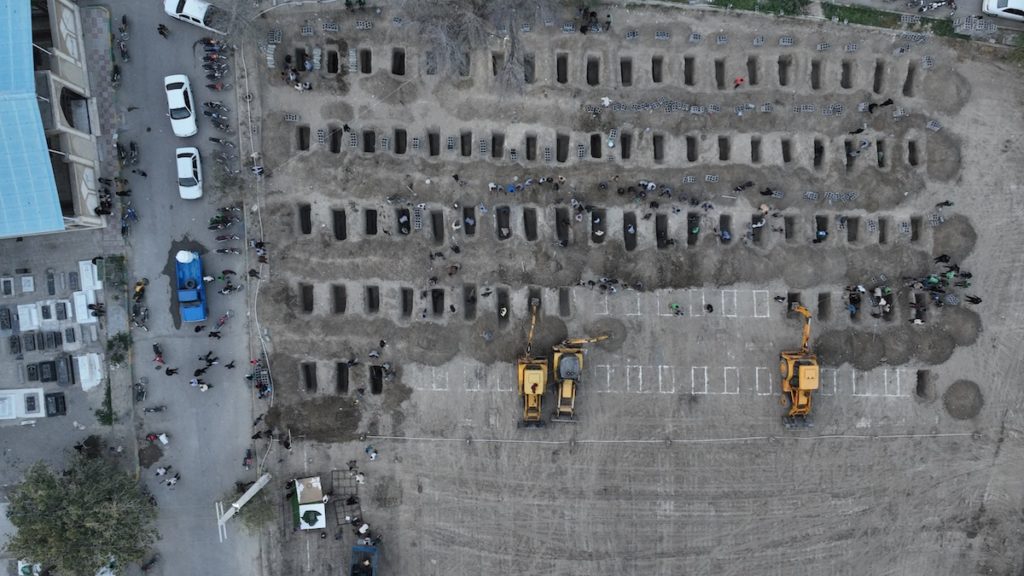
More than 150 people, mostly schoolgirls, were reported killed in an explosion at a school adjacent to an IRGC naval base in Minab; a U.S. initial review suggests the strike was likely American. Video, satellite imagery and expert commentary point to Tomahawk-like cruise-missile signatures and multiple precision impacts inside the IRGC compound, raising acute escalation and political-risk concerns. Expect heightened volatility and risk-off flows that could pressure oil and regional assets, lift defense-sector sensitivity, and drive short-term moves in FX and equities as investigations and political fallout unfold.
The immediate market implication is not just a binary escalation/no-escalation outcome but a reallocation within defense/spatial intelligence budgets toward higher-resolution persistent ISR, targeting software, and attribution capabilities. Procurement cycles mean revenue impact will lag operations by 6–24 months, so look for upside in firms that supply sensors, processing software, and low-latency comms rather than only missile manufacturers; contract award timing (Q3–Q4 calendar) will be the first concrete read.
A string of high-profile targeting errors raises counterparty, insurance and logistics frictions: war-risk premiums and short-duration rerouting can lift freight and insurance costs by a discrete 10–30% for weeks, pressuring regional trade flows and accelerating onshore energy inflation in vulnerable importers. Commodity volatility (oil, shipping fuels) will produce episodic capital rotations into safe-havens and drive modest Treasury/Gold rallies in the near-term (days–months) before fundamentals reassert.
Politically, the accountability mechanism from an investigation introduces medium-term policy risk: expect 3–6 month windows where authorities and ROE are restricted, then potential legal/regulatory tightening that reallocates DoD line items to civil-protection, oversight and verification technologies. That means a two-phase trade: short-term defensive FX/credit hedges and a medium-term tilt to vendors who benefit from increased verification, audit and geospatial analytics spend.
Contrarian angle — the market may overpay for headline-facing prime contractors while underpricing smaller, faster vendors that supply imagery, ML targeting processors and attritable ISR platforms. Positioning accordingly captures asymmetric upside when procurement pivots from kinetic volume toward precision, attribution, and risk-avoidance tools.
AI-powered research, real-time alerts, and portfolio analytics for institutional investors.
Request DemoOverall Sentiment
extremely negative
Sentiment Score
-0.95
