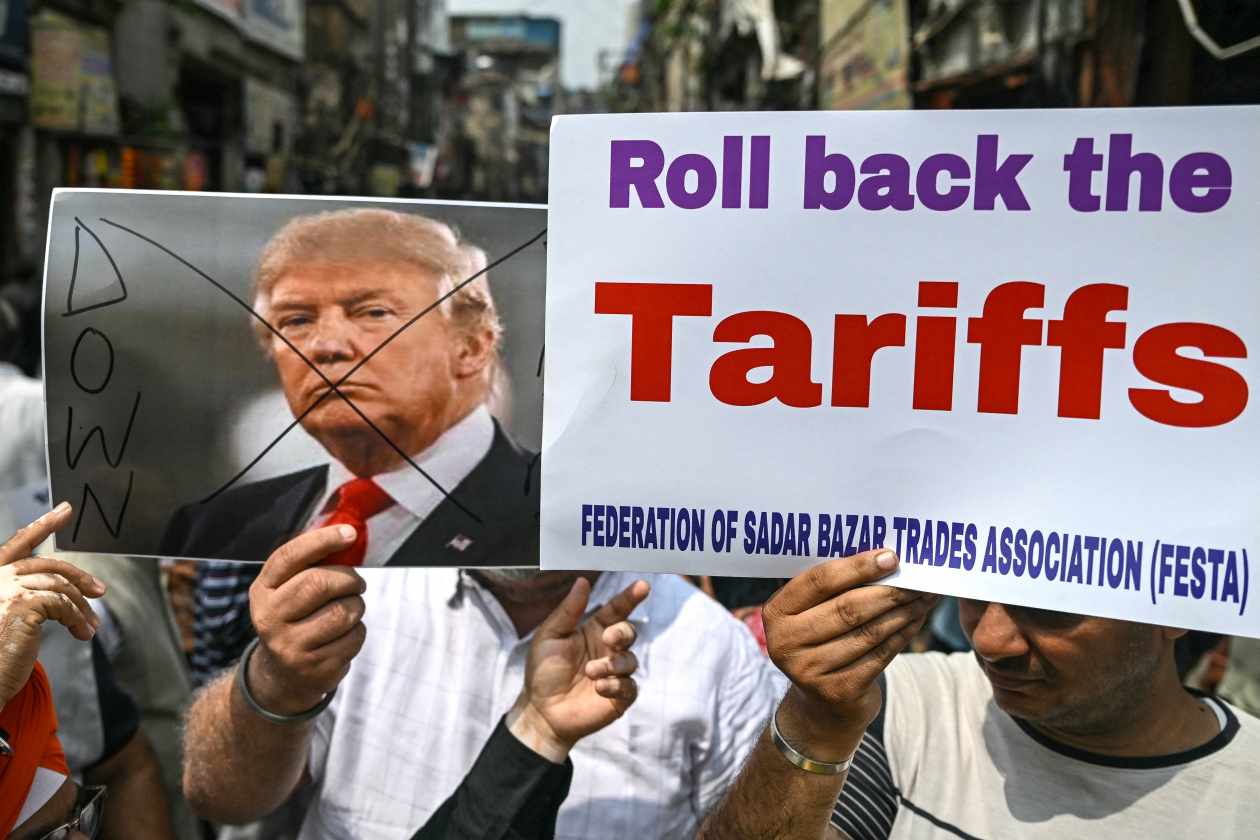
About 86% of U.S. executives expect import taxes to remain a significant feature of the economic landscape for years, even beyond the Trump era. PwC trade specialists say that expectation is reasonable, implying tariffs are becoming a durable cost and supply-chain planning factor rather than a temporary policy. The article is a forward-looking assessment of policy persistence, not an immediate market-moving event.
The market is underestimating tariff persistence as a regime shift rather than an episodic negotiating tool. If import duties remain structurally higher for years, the first-order winners are domestic producers with pricing power and localized supply chains, but the bigger second-order winner is capital intensity: firms that can afford to re-shore or dual-source will widen the gap versus smaller import-dependent competitors that cannot absorb the working-capital drag. That creates a slow-burn concentration effect in several industries, where tariff exposure becomes a moat for incumbents with scale. The more interesting implication is margin dispersion inside the same sector. Companies that previously optimized for global lowest-cost sourcing will face a multi-quarter reset in gross margin and inventory policy, while peers with North American production or Mexico/US exposure should see better relative guidance durability. Expect management teams to talk less about “transitory” tariff impacts and more about permanent mix changes, capex reallocation, and supplier renegotiations; that tends to favor names with flexible manufacturing footprints and punish those relying on promotional pricing to defend share. From a catalyst standpoint, the risk is not a sudden tariff reversal but policy ratchet: even if one administration softens the headline rate, businesses will price in a higher long-run average because supply chains are now being redesigned around political uncertainty. The vulnerable window is 3-12 months, when inventory buffers roll off and earnings revisions start reflecting incremental landed-cost inflation. A true reversal would require both a meaningful policy pivot and evidence that enforcement intensity is falling, which is harder to trust than campaign rhetoric. The contrarian read is that the consensus may be too complacent about second-order inflation. Investors may assume companies can pass through tariffs without demand damage, but that only works for essentials and oligopolies; for discretionary and mid-tier consumer goods, pass-through usually arrives with a lag and volume leakage. That means the trade is less about broad market direction and more about relative shorting of import-heavy, low-margin businesses versus domestically insulated cash generators.
AI-powered research, real-time alerts, and portfolio analytics for institutional investors.
Request DemoOverall Sentiment
mildly negative
Sentiment Score
-0.15
