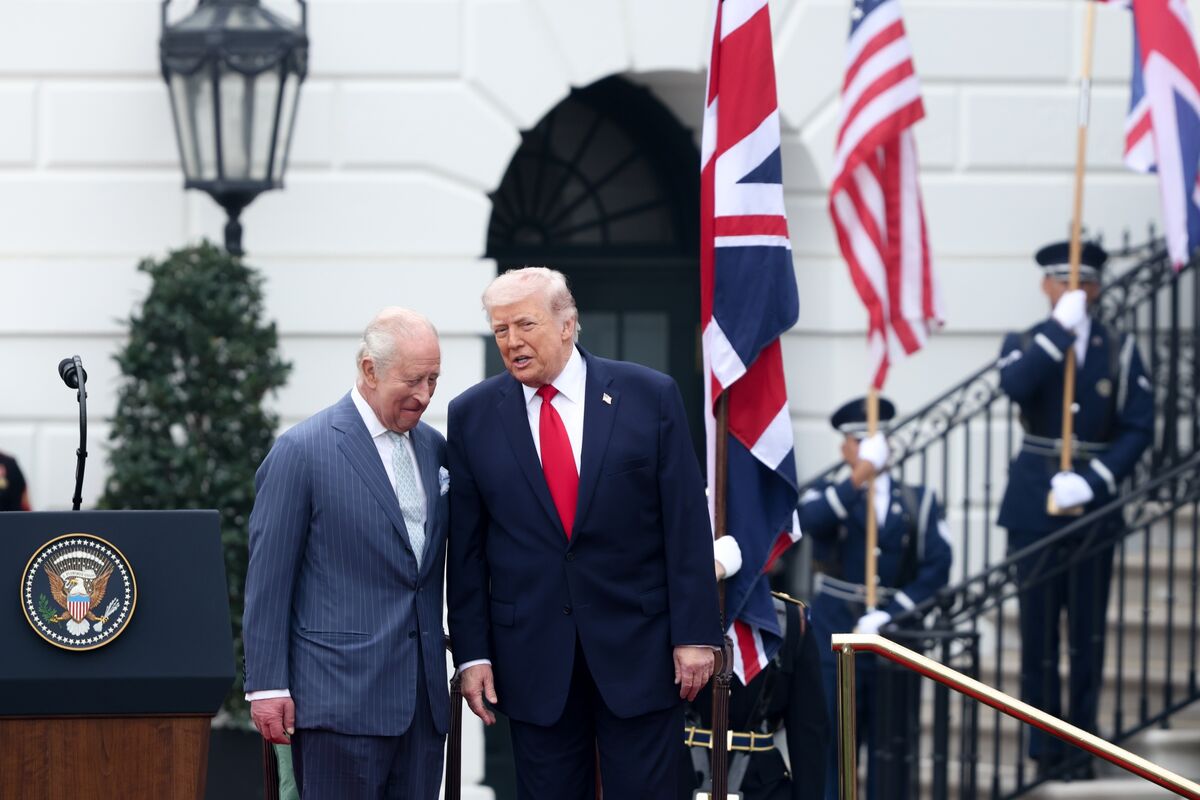
The article says UK-U.S. ties under Prime Minister Keir Starmer have fallen to their lowest level in decades as managing Donald Trump’s America consumes the British state. A split between events in Washington and London highlights the strain on the UK’s diplomatic agenda and its effort to preserve the 'special relationship.'
The market takeaway is not the diplomatic theater; it is the rising probability that the UK becomes a policy taker rather than a policy shaper in Washington over the next 6-18 months. That tends to compress UK sovereign optionality: less room to secure favorable carve-outs on tariffs, defense procurement, and tech regulation, and a higher chance that domestic fiscal plans get forced into reactive mode. The second-order effect is a broader risk premium on UK assets tied to policy stability, especially where growth depends on transatlantic trade confidence rather than purely domestic demand.
The clearest beneficiaries are not in the UK at all but in continental Europe and selected US defense/industrial names if bilateral UK-US friction nudges London toward faster European re-alignment on procurement, intelligence, and industrial policy. That would be supportive for firms with NATO exposure and for European exporters that can capture share if UK-US trade terms become noisier. Conversely, UK domestic cyclicals with US revenue exposure — banks, consumer staples, and internationally oriented midcaps — face a small but persistent headwind from a weaker policy backdrop and potential GBP volatility.
The contrarian risk is that the article overstates the durability of the relationship shock: Trump-style diplomacy is highly personal, so a single concessions package, defense announcement, or trade gesture can reset sentiment quickly. In that sense, the near-term dislocation may be more about headline risk than cash-flow impairment, which argues for using any knee-jerk selloff in UK assets as a tactical opportunity rather than a structural short. The bigger medium-term risk is not a rupture, but chronic underinvestment and delayed capital allocation as management teams price in a noisier UK-US corridor.
For positioning, the cleanest expression is defensive: own quality UK multinationals with limited US policy sensitivity and hedge GBP downside, rather than shorting the UK outright. If the rhetoric intensifies, tactically short the FTSE 250 versus long the STOXX 600 over 1-3 months, since domestic UK midcaps should absorb more policy uncertainty than pan-European peers. The asymmetry is best expressed with options: buy 3-6 month GBP/USD puts on rallies, because currency volatility is the fastest transmission mechanism from diplomatic stress to UK asset prices.
AI-powered research, real-time alerts, and portfolio analytics for institutional investors.
Request DemoOverall Sentiment
mildly negative
Sentiment Score
-0.20
