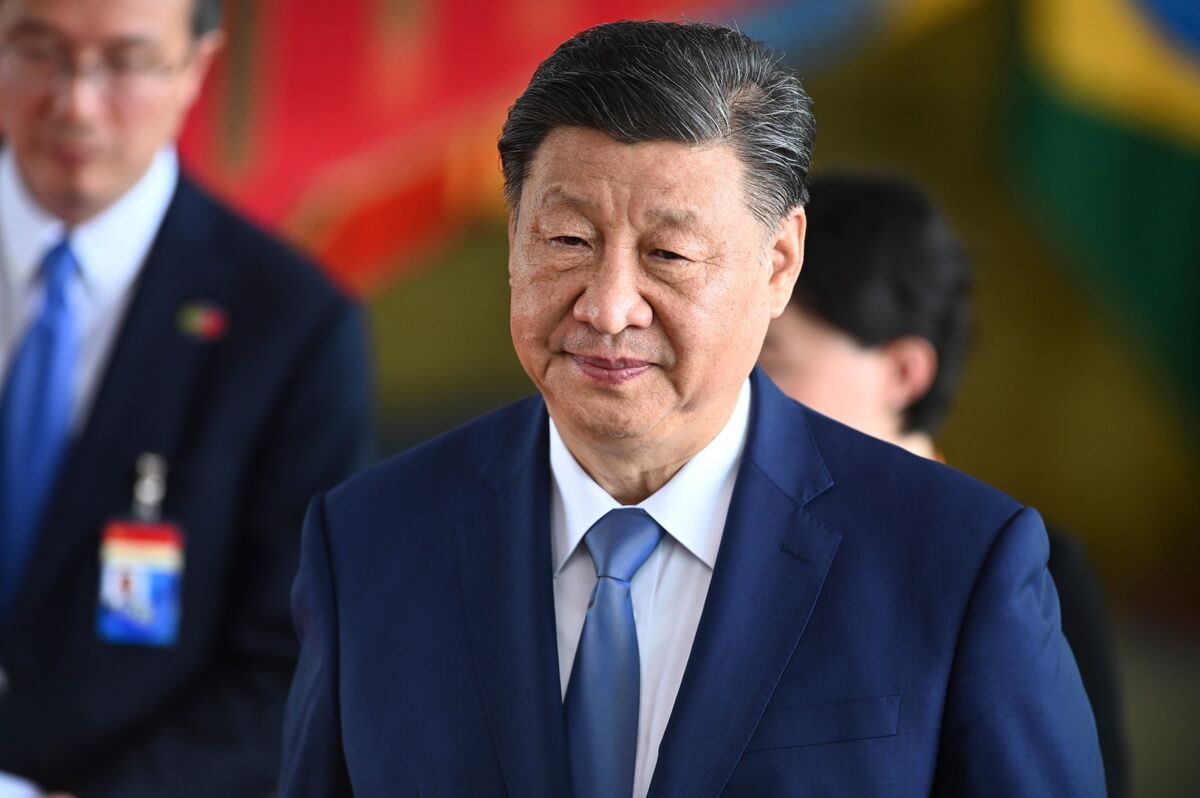
President Xi Jinping held at least five high-profile meetings in Beijing during an unusually busy week of diplomacy, underscoring strong foreign interest in deepening ties with China. The article highlights geopolitical positioning amid the US conflict with Iran, but provides no direct market-moving policy or economic developments. Overall impact appears limited and mostly contextual.
This is less about a single diplomatic headline and more about the market pricing a gradual re-wiring of perceived geopolitical alignment risk. When US foreign policy looks distracted or internally conflicted, China gains optionality: more governments will hedge by expanding trade, financing, and industrial cooperation with Beijing, especially in the next 3-12 months as firms and sovereigns reassess supply-chain resilience. The second-order effect is a slow normalization of “China exposure” that can support sectors tied to infrastructure, capital goods, and commodity demand even without a broad re-rating of Chinese domestic growth.
The biggest winners are not the most obvious China-facing equities but the intermediaries that monetize bloc fragmentation: commodity exporters, EM FX carry, logistics, and multinational firms that can arbitrate between US and China demand centers. Conversely, US ally-dependent sectors face a subtle headwind if diplomatic credibility weakens; defense names may see support near-term from elevated conflict risk, but any perception of fractured alliance coordination can pressure companies reliant on synchronized procurement or export controls. The more interesting competitive dynamic is that neutral countries may accelerate diversification away from single-source US alignment, which can dilute American leverage over tech restrictions over time.
Catalyst-wise, the relevant horizon is months rather than days. The move reverses if the US demonstrates rapid coalition repair, de-escalates Middle East risk, or reasserts leadership through trade/industrial policy rather than rhetoric. Tail risk is a broader containment narrative: if multiple emerging markets conclude that the US is an unreliable security partner, capital flows into China-linked industrial ecosystems could compound, but that is a slow-burn theme with intermittent reversals.
The contrarian view is that the market may overread optics and underread constraints: many countries are engaging Beijing tactically, not choosing sides permanently. That means the better expression is not a blunt China bull trade, but selective longs in beneficiaries of geopolitical hedging and relative shorts in names whose valuation assumes persistent US alliance cohesion.
AI-powered research, real-time alerts, and portfolio analytics for institutional investors.
Request TrialOverall Sentiment
neutral
Sentiment Score
0.00
