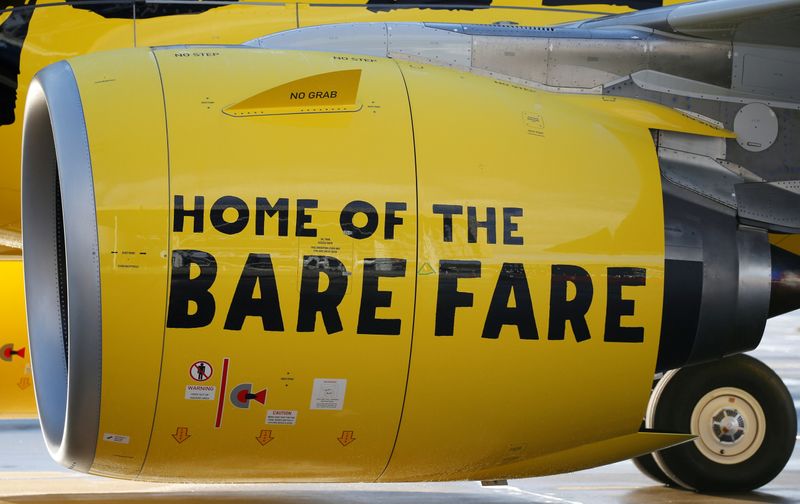
Jet-fuel prices have surged toward $5.00 a gallon, driving a severe margin squeeze across global airlines and threatening the sector’s 2026 profit outlook. Spirit Airlines is winding down operations after high fuel costs derailed its bankruptcy exit, while American Airlines warned of a possible 2026 loss tied to a projected $4 billion increase in fuel expense and United has also cut guidance. Carriers have raised fares five times since the Iran conflict began, with a sixth increase underway, but demand resilience remains uncertain as consumers absorb higher ticket prices.
The key second-order effect is not just margin compression at the airlines, but a forced redistribution of capacity toward the large network carriers that can absorb fuel shocks and redeploy aircraft quickly. If weaker discounters keep shrinking or fail, the industry’s fare discipline improves mechanically, which can partially offset fuel headwinds for the survivors over the next 1-2 quarters. That dynamic is most favorable for carriers with premium-heavy revenue mix and loyalty monetization, while the lowest-end price takers face a capital structure problem before they face a demand problem.
This is also a late-cycle stress test for consumer travel elasticity. The market is likely underestimating how quickly leisure demand can roll over once multiple fare hikes stack on top of already-elevated prices; airlines tend to talk about resilience until booking curves inflect, then capacity cuts follow within weeks. The risk window is near-term: fuel spikes hit reported margins immediately, but the real earnings downgrade cycle usually lands 1-2 quarters later as forward bookings soften and promotions reappear.
Contrarian takeaway: the bearish trade on the sector may be too crowded if investors are already pricing a 2026 margin reset. The cleaner expression is not to short the whole group, but to discriminate between balance-sheet survivors and fuel-sensitive laggards. A collapse in one or two smaller operators can actually be bullish for pricing power and load factors at the majors, even as headline sentiment remains negative.
Berkshire is a useful barometer here: a large cash balance is an option on dislocation, and airline stress may create cheaper entry points into adjacent travel, leasing, and maintenance assets over the next 6-12 months. If fuel stays elevated but recession fears stay contained, the winners will be the carriers with the most capacity discipline and the least need to chase volume with discounting.
AI-powered research, real-time alerts, and portfolio analytics for institutional investors.
Request DemoOverall Sentiment
strongly negative
Sentiment Score
-0.68
Ticker Sentiment
