



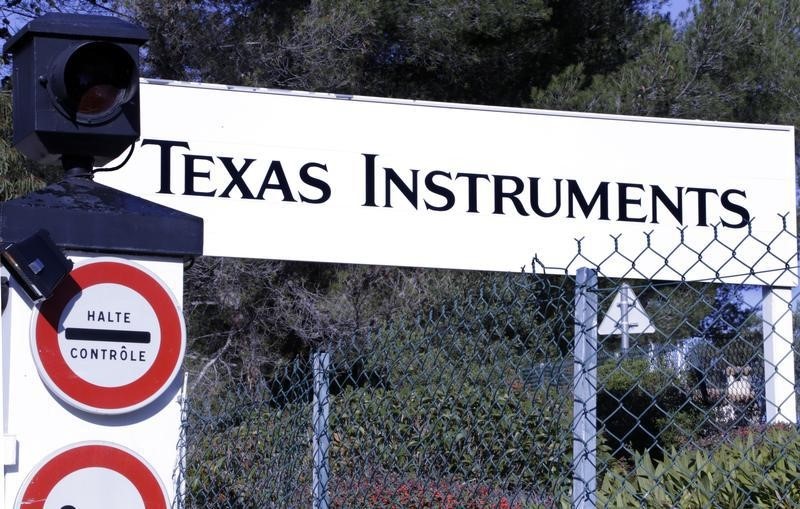
Texas Instruments director Martin S Craighead sold 10,000 shares for approximately $3.2 million at $320.4075-$321.0069 per share, leaving him with 14,359 shares. The article also highlights multiple bullish analyst actions tied to TXN's AI data center exposure, including target raises to $300, $340, and $400, alongside a $563 million quarterly AI data center run rate. Overall, the piece is largely factual with a modestly constructive backdrop, but the insider sale and valuation concerns keep the tone neutral.
The more important signal is not the insider sale itself but where it lands in the narrative: a heavily owned, quality semiconductor compounder that has rerated on AI power exposure is now seeing insiders monetize strength into optimism. When a stock is already trading on 2027-style expectations, incremental good news tends to compress into multiple expansion fatigue rather than earnings upside, so any disappointment in AI power bookings or margin cadence can hit harder than the sell-side expects. The risk is less a fundamental collapse than a valuation air pocket if the market starts discounting a slower second derivative in the next 2-3 quarters.
The competitive dynamic is interesting: TXN is being treated as a broad AI-power beneficiary, but the market is still underestimating how concentrated the winners may be across specific sockets, not the whole analog complex. That creates a relative-value setup where names with more direct exposure to data-center power density and faster content capture could keep outperforming even if TXN remains fundamentally sound. In other words, TXN may become the "good company, crowded trade" while peers with cleaner AI beta and less legacy-cycle baggage can sustain multiple support.
Contrarian view: insider selling after a sharp rerate is not automatically bearish, but it does suggest management may see the current price as fully reflective of near-term AI optionality. The consensus appears to be extrapolating a multi-year data-center runway without enough scrutiny on how much of that growth is already in consensus estimates. If AI capex pauses for even one quarter, semis with stretched expectations can derate 15-20% quickly, especially when insider activity gives the market a convenient narrative hook.
AI-powered research, real-time alerts, and portfolio analytics for institutional investors.
Request TrialOverall Sentiment
neutral
Sentiment Score
0.12
Ticker Sentiment
