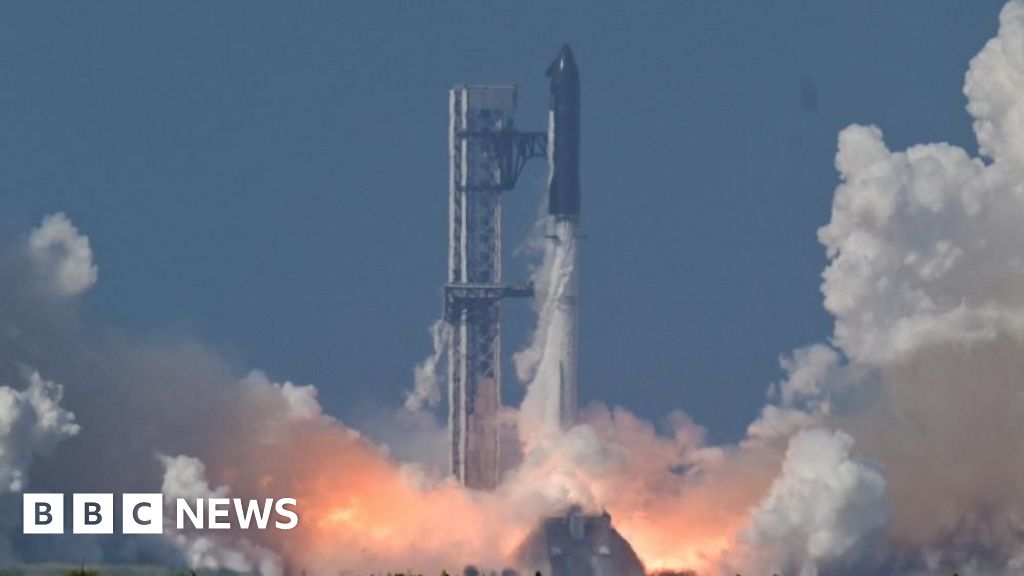
SpaceX completed the first Starship V3 test launch, with the 124-meter rocket lifting off in Texas and successfully splashing down in the Indian Ocean after about an hour. The mission hit most major objectives, including deployment of 20 mock Starlink satellites, though the booster missed its boost-back burn and one engine malfunctioned. The flight supports SpaceX's broader Starship and Starlink development roadmap ahead of a potential record-setting IPO valued at $1.25tn.
This launch is less about the rocket and more about the commercialization signal: SpaceX is demonstrating that it can iterate hardware in public while keeping a credible cadence toward a market listing. The second-order effect is on implied scarcity value in private markets—if the company is simultaneously advancing launch capability, satellite scale, and AI adjacency, the IPO is likely to be priced more like a platform asset than a pure aerospace contractor, which could reset private-market comps across frontier infrastructure names.
The operational takeaway is that the test was “good enough” for capital formation even if not clean enough for engineering purists. That matters because public-market demand often rewards visible progress and narrative compression more than perfect mission execution; the risk is that this can decouple valuation from unit economics until the first post-IPO quarterly disclosures expose launch cadence, reuse rates, and capex intensity. Over the next 3-6 months, the biggest swing factor is whether the company can convert this halo effect into a tighter timeline for the offering without a fresh technical setback.
On the competitive side, this raises the bar for every launch and satellite-internet incumbent that has to compete against a vertically integrated platform with launch, connectivity, and AI optionality. Suppliers and subcontractors in propulsion, thermal protection, and launch infrastructure may see a short-lived halo, but the larger medium-term pressure is margin compression as SpaceX’s scale advantage forces pricing discipline across the sector. The contrarian read is that investors may be overestimating how much of this value is monetizable in the IPO itself; the market could initially reward the story, then re-rate lower if the float is limited or if execution issues remain visible.
Tail risk is not technical failure alone but valuation disappointment: if the listing lands next month, any sign that launch performance or satellite deployment cadence is behind narrative will be punished quickly because expectations are now anchored to a trillion-dollar franchise. The most asymmetric window is into the IPO itself, where sentiment is likely to stay strong unless another launch anomaly creates doubt about repeatability. Longer term, the real monetization test is whether the company can show that launch economics, Starlink growth, and AI optionality compound rather than merely coexist.
AI-powered research, real-time alerts, and portfolio analytics for institutional investors.
Request DemoOverall Sentiment
moderately positive
Sentiment Score
0.35
