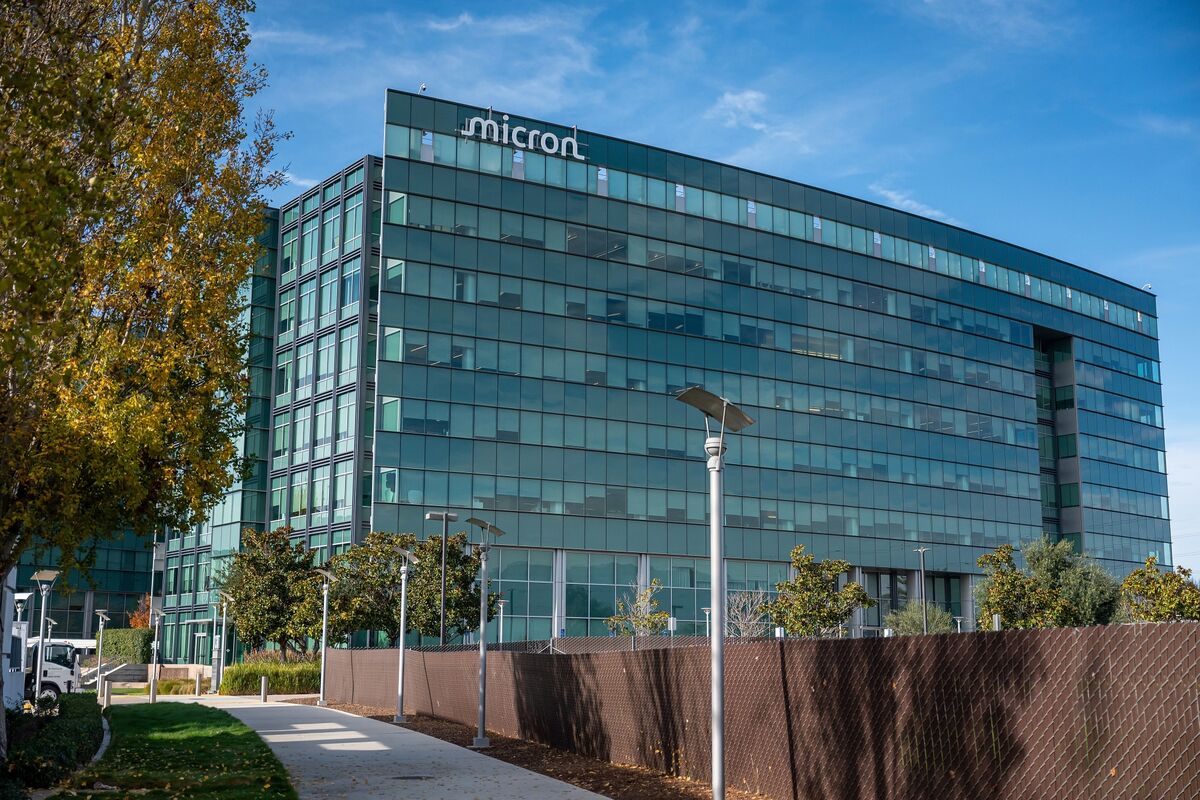
Micron Technology surged to a record high and crossed the $1 trillion market-cap threshold for the first time, with shares rising as much as 6.7% Wednesday after a 19% jump the prior day. The stock is up more than 186% from its March 30 trough, reflecting heavy investor buying tied to booming demand for memory semiconductors used in AI infrastructure. The move underscores strong momentum and positioning in the AI-related chip trade.
MU’s move is less a standalone valuation event than a reflexive signal that AI capex is being re-rated as a multi-year, not cyclical, demand regime. The second-order beneficiary set is broader than the headline suggests: equipment vendors, advanced packaging, and substrate suppliers should see the cleanest follow-through because memory tightness tends to propagate upstream into longer lead times and higher order visibility before it fully shows up in end-demand. The key risk is that this kind of vertical move usually pulls forward returns faster than fundamentals can re-accelerate. If hyperscaler capex pauses even briefly, or if inventory rebuilding overshoots into 2H, the stock can de-rate violently on any guide-down risk because expectations now embed near-perfect execution and continued supply discipline. The relevant horizon is months, not days: the tape can stay parabolic, but the setup is increasingly vulnerable to an earnings inflection that merely lands below a very high bar. Consensus is probably underestimating how much of the move is positioning-driven rather than purely fundamental. When a “must-own” AI winner becomes a trillion-dollar stock, incremental buyers get scarcer and the stock starts trading more like a crowded factor exposure than a single-name semiconductor. That creates a bifurcation opportunity: MU can keep working if AI memory scarcity persists, but the cleaner asymmetry may be in less-owned adjacent beneficiaries where the same demand theme is not yet fully capitalized. The contrarian take is that the market may be overpaying for the duration of memory tightness. Memory is still a commoditized industry structurally capable of adding supply once margins normalize, so any sign of capacity expansion, lower spot pricing, or slower server buildouts can reset the narrative faster than investors expect. In that case, the highest-beta reaction would likely be in the stock itself and in similarly crowded AI hardware names, not in the broader market.
AI-powered research, real-time alerts, and portfolio analytics for institutional investors.
Request DemoOverall Sentiment
strongly positive
Sentiment Score
0.78
Ticker Sentiment
