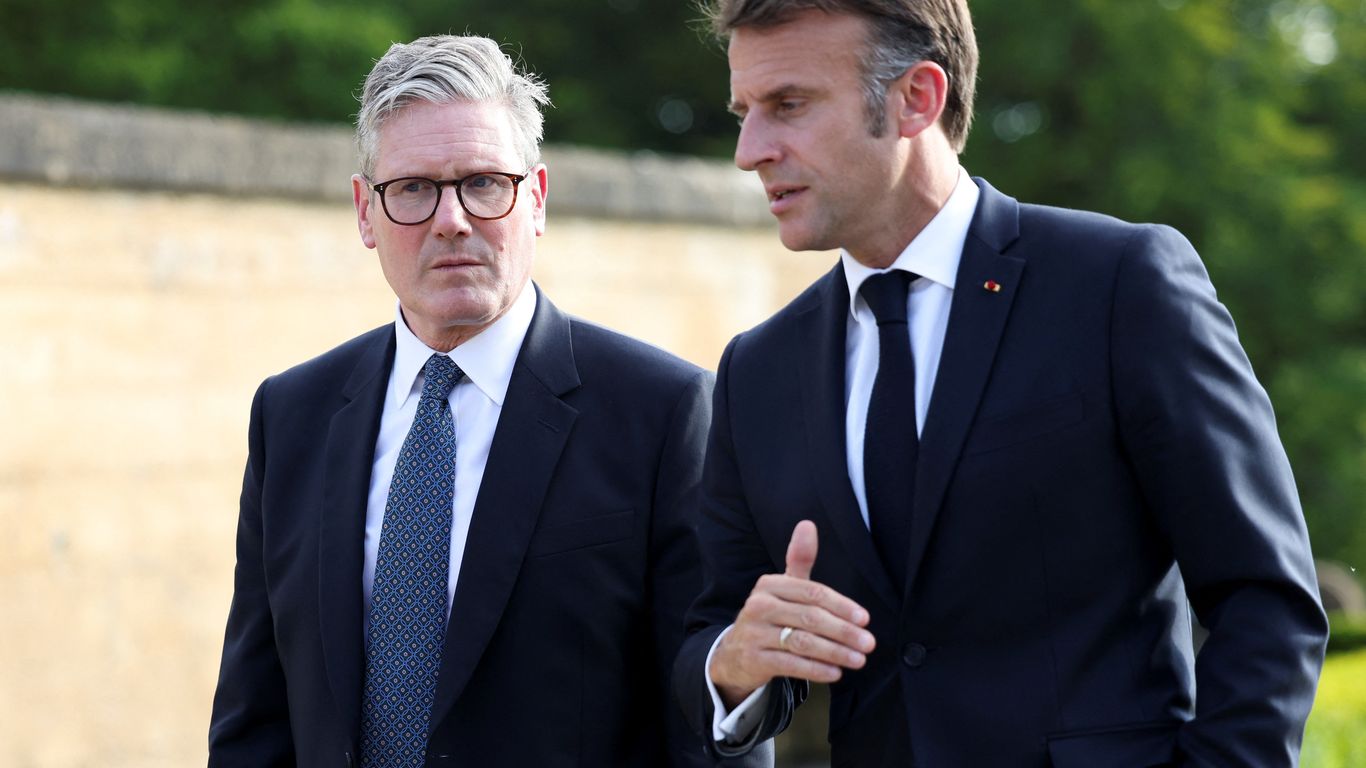
British Prime Minister Keir Starmer announced the U.K. will conditionally recognize the State of Palestine at the UN General Assembly in September, unless Israel significantly improves the humanitarian situation in Gaza and commits to a renewed peace process. This conditional stance, following France's similar commitment, positions the U.K. to potentially join a majority of UN members in recognition, leaving the U.S. as the only permanent UN Security Council member not to do so, and underscores a growing international divergence from Israel's rejection of a two-state solution. The U.K. also detailed a post-war Gaza peace plan.
The United Kingdom's announcement of conditional recognition for a Palestinian state, contingent on Israeli actions regarding humanitarian aid and the peace process, marks a significant strategic shift in European foreign policy. This move, closely following a similar commitment by France, aligns the UK with the majority of UN member states and increases diplomatic pressure on Israel's government, which Prime Minister Netanyahu has stated adamantly rejects a two-state solution. The conditional nature of the announcement acts as a diplomatic lever, providing Israel with a potential off-ramp while retaining the UK's autonomy to proceed with recognition ahead of the September UN General Assembly. This development underscores a growing divergence from the United States' position, which has not recently reaffirmed support for a two-state solution, potentially isolating the U.S. as the sole permanent UN Security Council member not to recognize Palestine. The situation reflects a complex phase of international diplomacy, with ongoing negotiations stalled by what Israel identifies as Hamas's refusal to compromise, creating heightened uncertainty around the region's long-term stability.
AI-powered research, real-time alerts, and portfolio analytics for institutional investors.
Request DemoOverall Sentiment
Neutral
Sentiment Score
0.00
