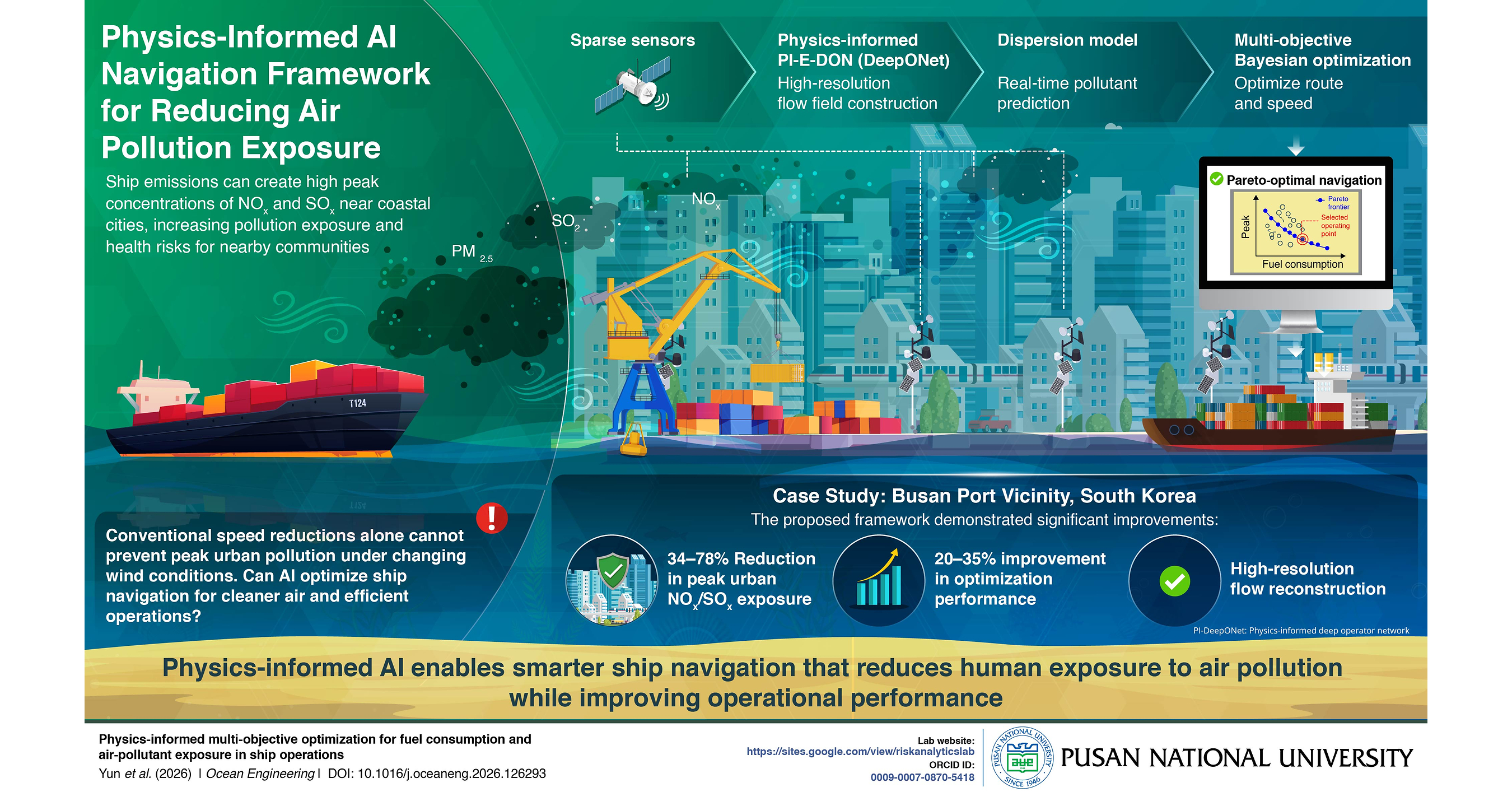
Pusan National University researchers unveiled an AI navigation framework that uses real-time weather data and physics-informed learning to cut peak coastal air pollution while keeping ships fuel-efficient. In Busan Port–based simulation scenarios, it improved optimization performance by 20–35% and reduced peak pollutant exposure by 34–78% versus conventional navigation that often relies on blanket speed reductions. The study will be published in Ocean Engineering (July 30, 2026) and could extend to digital port management and autonomous vessels for cleaner maritime operations.
This is less a near-term shipping alpha event than an early signal that the margin pool in maritime operations is shifting from fuel optimization to software/decisioning. The durable beneficiaries are not shipowners first, but the control-stack vendors: industrial automation, sensor fusion, port OS, and route-optimization providers that can sit between weather data and vessel commands. If this thesis proves out, the economic value migrates to the party that owns the real-time data layer, not the hull owner that merely consumes it.
For listed equities, the first-order P&L impact on carriers is probably immaterial, but the second-order effect is important: better routing can modestly reduce bunker demand and emissions penalties while improving asset utilization and berth scheduling. That makes the biggest upside for port operators and maritime software/automation names, while the biggest downside is for firms whose ESG pitch relies on blunt speed-reduction rules as the primary decarbonization lever. In the next 1-3 months this is mostly sentiment; the real catalyst is whether a major port authority or class society validates the system in procurement.
Contrarian view: the market may overestimate how fast this becomes commercial. The bottlenecks are data quality, liability, interoperability with bridge systems, and whether crews will trust AI recommendations in congested waters. If bunker prices fall, or regulators stick with easy-to-enforce speed limits, adoption could stay pilot-only for 6-18 months. The thesis is falsified if no major port tenders or fleet-level deployments emerge after the first wave of press coverage.
AI-powered research, real-time alerts, and portfolio analytics for institutional investors.
Request DemoOverall Sentiment
mildly positive
Sentiment Score
0.25
