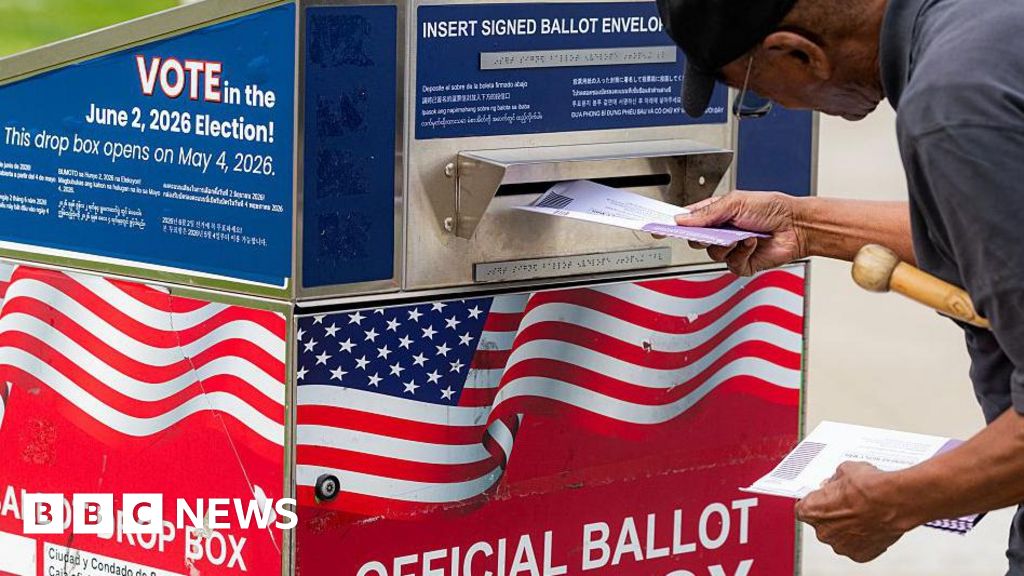
The Supreme Court ruled 5-4 that states may count mail-in ballots received after election day if they were postmarked on time, upholding Mississippi’s five-day grace period. The decision is a political defeat for Donald Trump and could affect voting deadlines in more than a dozen states that may help determine control of Congress after the midterms. While the ruling is significant for election administration and voting law, its direct market impact is limited.
The market impact is not in the ruling itself but in the asymmetry it creates for election-adjacent volatility. By preserving late-counting windows in swing states, the Court increases the probability that the apparent election-night result is not the final result, extending the period in which headline risk, legal challenges, and protest-related uncertainty can persist. That should modestly support options premium in November across index and sector hedges, especially around banks, retail, and small caps that are most sensitive to abrupt risk-off moves.
The bigger second-order effect is on campaign strategy and turnout operations. If mail-ballot acceptance windows remain in place, Democrats gain a structural advantage in late ballot curing and post-election tabulation, while Republicans may respond with heavier legal and legislative efforts to narrow counting rules state-by-state. That shifts the battleground from federal jurisprudence to operational state politics, meaning the next catalyst is not a Supreme Court reversal but litigation, emergency injunctions, and administrative rule changes in a handful of states over the next 60-120 days.
From a trading standpoint, the ruling is mildly bearish for the probability of a clean, same-night market resolution and therefore mildly positive for volatility products into the fall. The contrarian view is that the consensus may be overestimating fraud-related market disruption: actual ballot-integrity risk appears low, so the economically relevant variable is not fraud but perceived legitimacy and recount duration. If polling produces a clear winner, this issue becomes a non-event; if margins are razor-thin, expect a larger-than-typical volatility spike in election-sensitive assets even without any change in underlying policy probability.
AI-powered research, real-time alerts, and portfolio analytics for institutional investors.
Request DemoOverall Sentiment
neutral
Sentiment Score
-0.10
