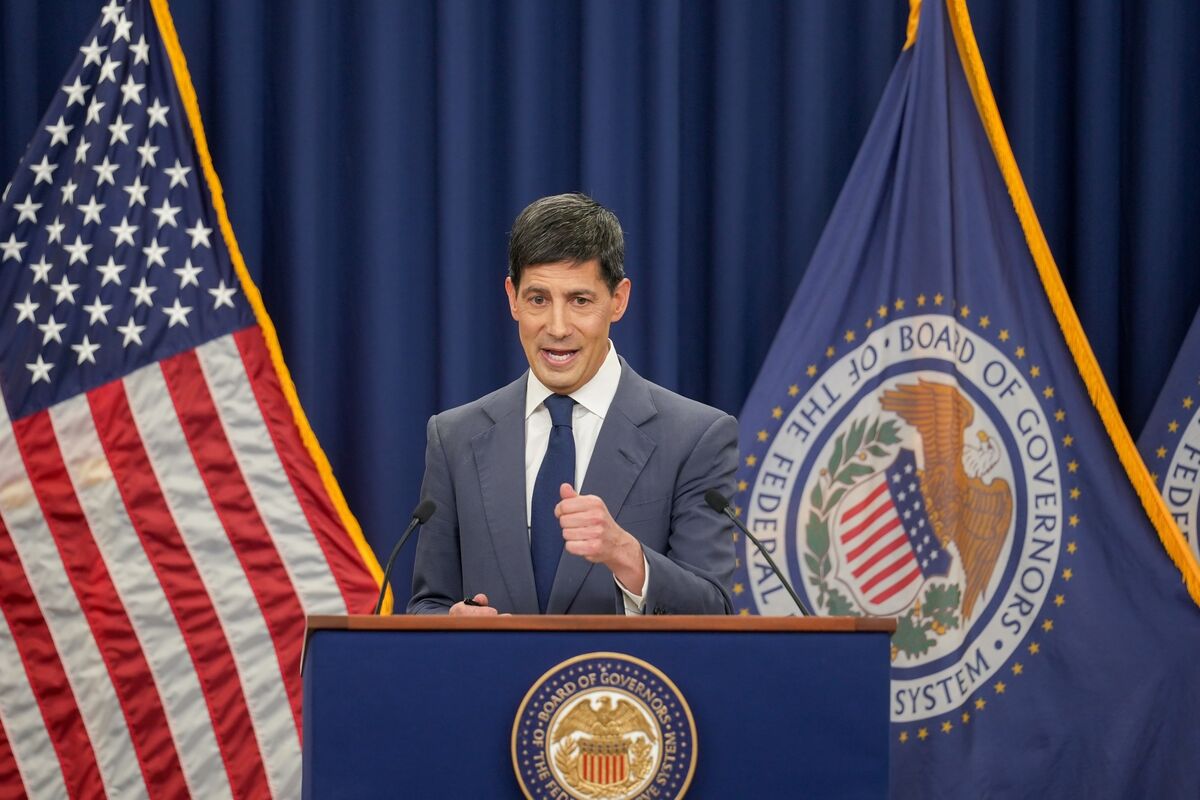
Citadel Securities warns that under a Warsh-led Fed, investors are underestimating the central bank's determination to return inflation to 2%, implying further rate hikes or a prolonged hawkish stance. The firm argues that lower oil prices do little to offset persistent underlying inflation pressures, which could weigh on risk assets and keep yields elevated. The message is broadly risk-off for equities and credit if markets are positioned for easier policy.
The market is still pricing a “soften-and-cuts” path, but a hawkish Fed regime changes the distribution of outcomes: higher real rates, tighter financial conditions, and a longer-duration drawdown in equity multiples. The first-order loser is long-duration risk, but the second-order damage is broader: credit spreads tend to gap wider before earnings actually roll over, because refinancing math deteriorates well ahead of default data. That makes high-beta growth, levered buybacks, and weaker balance-sheet cyclicals the vulnerable cohort even if nominal GDP remains decent.
A sustained inflation-fighting posture also creates a relative winner set inside equities. Cash-rich large caps with pricing power and low refinancing needs should outperform lower-quality credit proxies, while banks get mixed treatment: NIM support helps, but loan growth and asset quality can deteriorate if the hikes bite into employment and commercial real estate. The bigger hidden transmission is positioning—systematic and discretionary portfolios have likely built exposure around falling yields, so an upside surprise in front-end rates can trigger a fast de-risking wave over days, not months.
The key catalyst is whether the market starts believing the Fed is willing to tolerate a growth scare to re-anchor expectations. If inflation data stay sticky for one or two prints, the move can extend into a regime shift where bond volatility stays elevated and equity correlations rise toward 1.0 in risk-off bursts. The contrarian point is that the immediate move could be overdone if oil weakness feeds through quickly enough to lower headline inflation and give cover for a pause; in that case, the more attractive short is not broad equities, but the weakest refinancers and lowest-quality credit names.
AI-powered research, real-time alerts, and portfolio analytics for institutional investors.
Request DemoOverall Sentiment
moderately negative
Sentiment Score
-0.30
