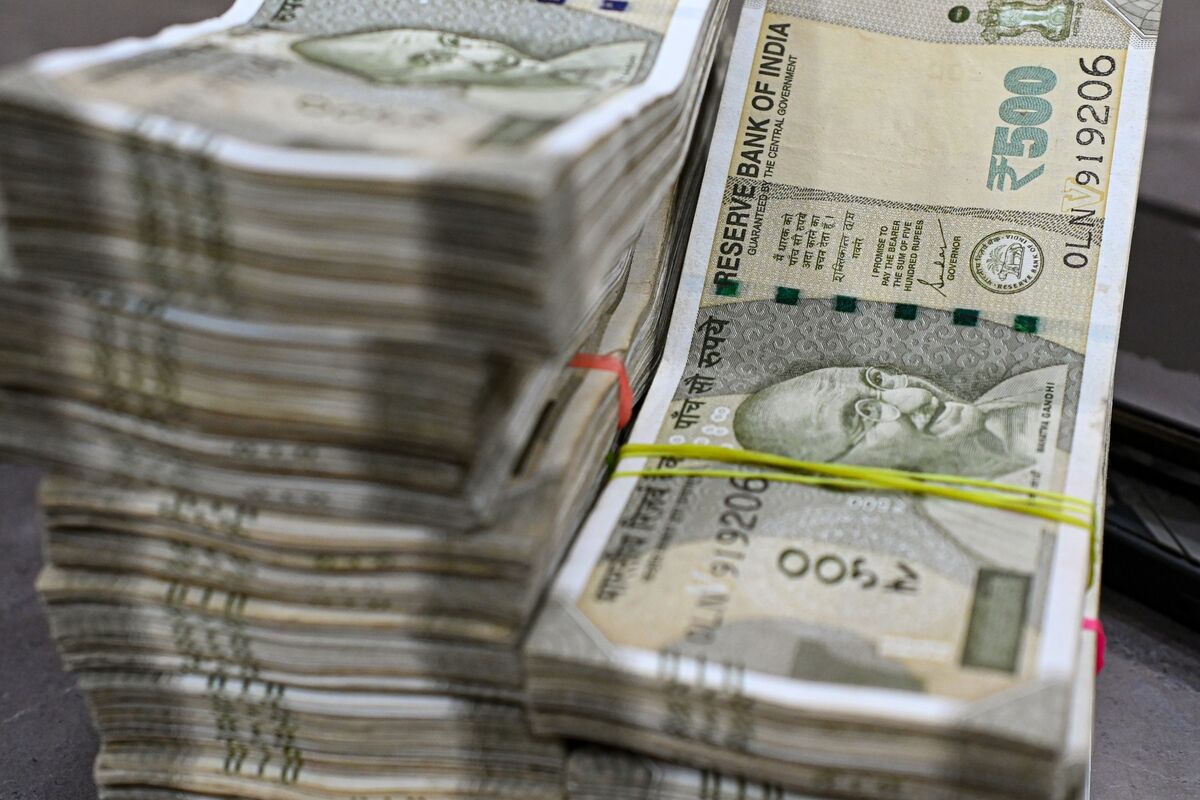
The Indian Rupee is projected to remain one of Asia's weakest currencies in the second half of the year, with analysts from Deutsche Bank AG and Barclays Plc forecasting new record lows by year-end. This anticipated underperformance is attributed to mounting pressure from US tariffs and an already fragile economic recovery, exacerbated by muted foreign inflows. In contrast, the Chinese yuan, Indonesian rupiah, Malaysian ringgit, and Philippine peso are expected to strengthen, underscoring the specific headwinds facing India's currency.
The Indian Rupee (INR) is positioned for significant underperformance in the second half of the year, with analysts at Deutsche Bank AG and Barclays Plc forecasting the currency will reach new record lows. This pessimistic outlook, reflected in a strongly negative sentiment score of -0.8, is attributed to a combination of external and internal pressures. Key headwinds include the threat of US tariffs, which could exacerbate challenges for an already fragile economic recovery. Furthermore, muted foreign capital inflows are expected to weigh on the currency. The INR's weakness is highlighted by its divergence from other major Asian currencies, as the Chinese yuan, Indonesian rupiah, Malaysian ringgit, and Philippine peso are all projected to appreciate, suggesting India faces idiosyncratic risks beyond broad regional trends.
AI-powered research, real-time alerts, and portfolio analytics for institutional investors.
Request DemoOverall Sentiment
strongly negative
Sentiment Score
-0.80
Ticker Sentiment
