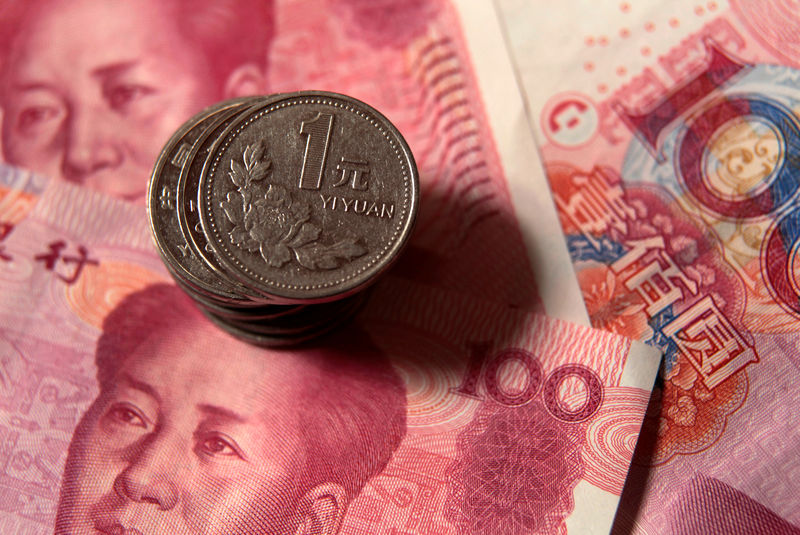
Goldman Sachs raised its USD/CNY forecasts to 6.80 in 3 months, 6.70 in 6 months, and 6.50 in 12 months, saying the yuan remains more than 20% undervalued and should benefit from China’s large external surplus and export competitiveness. April Chinese exports rose 14.1% year over year, reinforcing the fundamental case for a stronger renminbi. Near-term risks include higher energy prices from the Iran conflict and softer growth among trading partners, but Goldman expects China to benefit longer term from global energy security and renewable investment trends.
A structurally stronger yuan is less about one-off trade headlines and more about a multi-quarter squeeze on the dollar system’s China exposure. If the currency rerates toward fair value, the first-order winners are Chinese firms with imported input costs and offshore USD liabilities; the second-order losers are U.S. exporters and EM manufacturers that compete with China on price, because a firmer renminbi can force them into either margin compression or market-share loss. The bigger implication is for capital flows: a rising RMB can attract incremental onshore and offshore allocation back into China assets, especially if it reduces the perceived need for persistent FX hedging.
The market is likely underestimating the lagged impact on clean-tech supply chains. A stronger yuan does not weaken China’s clean-energy dominance; it can actually reinforce it by making upstream non-dollar costs relatively cheaper while preserving pricing power in exported solar, batteries, and grid equipment. That creates a selective long opportunity in Chinese industrial champions with domestic balance sheets, while pressuring global peers that are already struggling with excess capacity and margin compression.
The main risk is that the move is not linear: energy shocks, weaker global PMIs, or a sharp slowdown in export volumes can cap appreciation in the near term even if the medium-term thesis remains intact. On a 1-3 month horizon, any escalation in Middle East energy prices could temporarily re-rate the trade balance and stall RMB strength; over 6-12 months, policy tolerance matters more than macro headlines. The contrarian read is that the consensus may be overfocusing on U.S.-China diplomacy and underestimating China’s own willingness to allow appreciation as a signal of policy confidence, provided it doesn’t threaten export employment.
AI-powered research, real-time alerts, and portfolio analytics for institutional investors.
Request DemoOverall Sentiment
mildly positive
Sentiment Score
0.25
Ticker Sentiment
