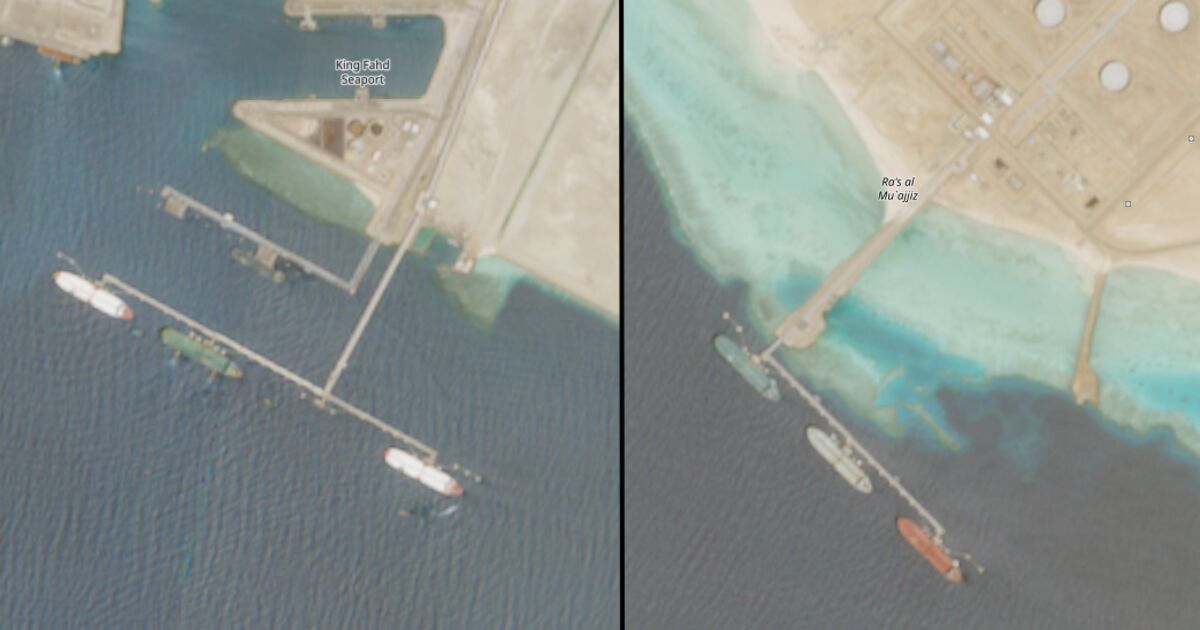
Saudi Arabia’s crude shipments through its Red Sea terminal at Yanbu averaged about 4 million barrels a day in the first three weeks of April, roughly five times pre-conflict levels. Even so, flows are still only about 80% of Riyadh’s target, indicating the bypass route has boosted exports but has not fully stabilized. The update is relevant to oil supply dynamics amid regional conflict, but it is primarily a factual operational check rather than a major new market shock.
The key market implication is not the incremental barrels already visible, but the fragility of the reroute premium. A route that is running below target implies a meaningfully tighter effective spare-capacity buffer than the headline export recovery suggests, which keeps short-dated crude optionality bid even if front-month physical flows look “normalized” on paper. In practice, this raises the value of prompt delivery grades and makes the backwardation/contango path more sensitive to any disruption on either the bypass corridor or the loading infrastructure feeding it.
Second-order winners are logistics and tankage assets that can intermediate uneven flow schedules, while losers are refiners and traders depending on predictable Saudi timing. The more interesting competitive effect is inside OPEC+: if Saudi cannot fully reroute at will, the market will begin pricing a lower reliability discount on replacement barrels from Atlantic Basin producers and higher term premia for Middle East supply. That should disproportionately support crude differentials for flexible exporters and tighten time-spreads before outright benchmark prices fully react.
The contrarian read is that the market may be over-anchoring on the existence of the bypass and underpricing the execution risk of maintaining it at scale under stress. If flows stay capped below target for weeks rather than days, the “surge capacity” narrative weakens and forces risk premia to stay elevated longer than typical geopolitics headlines. The main reversal catalyst is not an easing of tensions per se, but proof of stable throughput at the target level for several consecutive weeks, which would compress prompt volatility and reduce the scarcity premium embedded in near-dated crude.
For positioning, the cleanest expression is a short-dated long-volatility stance in oil: own upside convexity through Brent calls or call spreads with 1-3 month tenor, financed by selling farther-dated upside if the curve remains backwardated. Relative value favors long integrated exporters with strong trading books versus airlines/refiners that are exposed to prompt crude shocks. If you need a directional pair, long XLE / short JETS offers asymmetric payoff over the next 4-8 weeks if the market re-rates operational disruption risk rather than headline supply volume.
AI-powered research, real-time alerts, and portfolio analytics for institutional investors.
Request DemoOverall Sentiment
neutral
Sentiment Score
0.05
