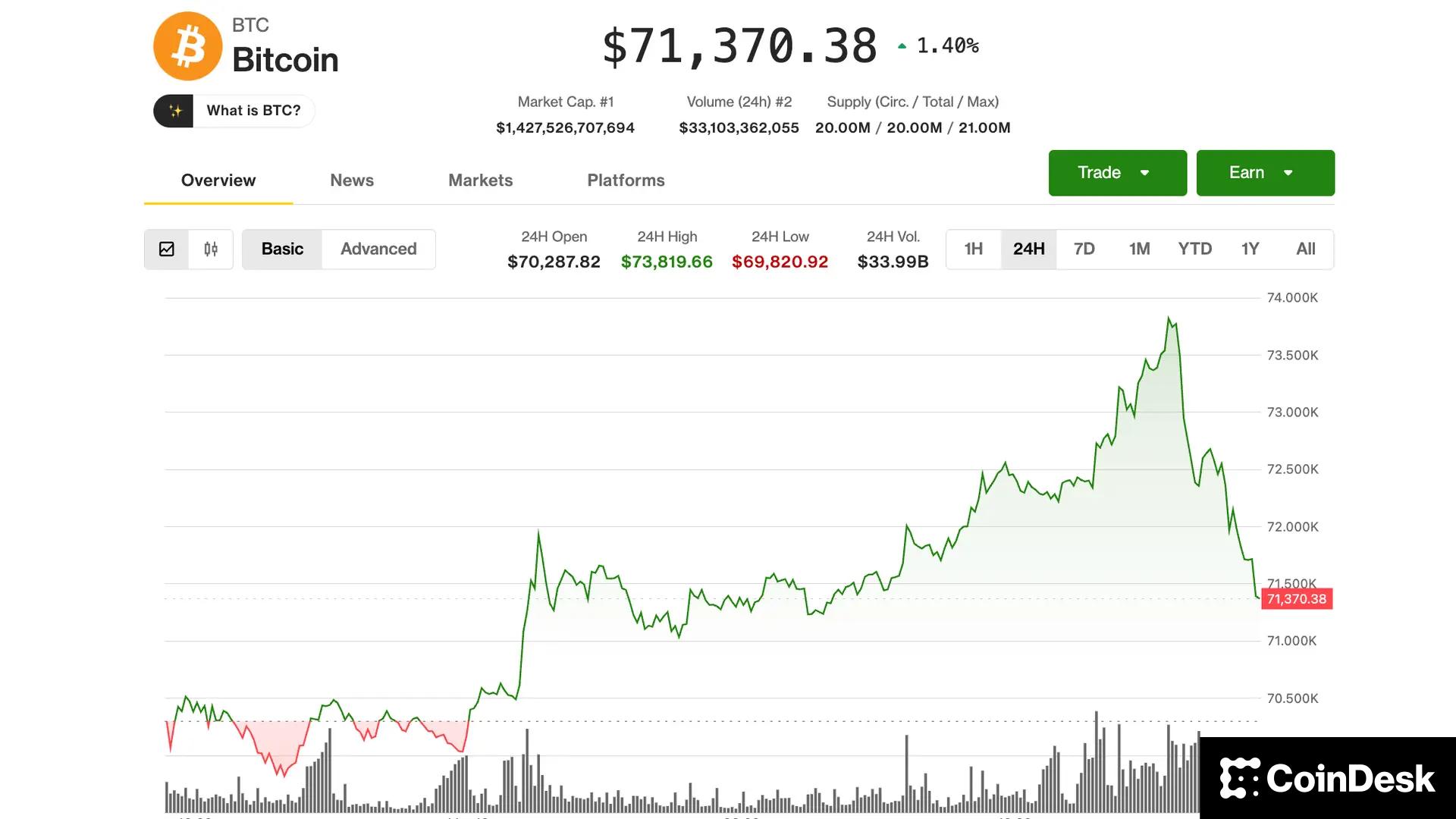
Bitcoin reversed a near one-month high of ~$74,000 and fell ~3.5% to about $71,200 after headlines of U.S. military movements in the Middle East; bitcoin still logged a 1.9% 24‑hour gain. The S&P 500 and Nasdaq flipped to ~0.4%–0.5% losses while oil jumped over $5 from intraday lows to $97.30 (nearly +2% for the session) and gold fell ~1%. Key geopolitical developments cited: a U.S. refueling plane crash in Iraq that killed six crew and reports the Pentagon is deploying a ~2,500‑person Marine expeditionary unit including forces tied to USS Tripoli. Separately, tokenized Treasuries hit a record >$11B with Circle's USYC growing to ~$2.2B, overtaking BlackRock's BUIDL.
Geopolitical micro-shocks are reintroducing a regime shift from idiosyncratic crypto beta back to broad risk-off correlations: when headlines spike, correlation across BTC, altcoins, and tech equities compresses liquidity and amplifies moves through concentrated funding markets. That dynamic inflates realized volatility and options skew for 3–14 days after the event, creating a repeatable window where funding and basis trades misprice relative to underlying fundamentals.
Publicly traded miners and custody/treasury service providers are acting as high-leverage instruments on that volatility cycle rather than pure crypto-adoption plays; their equity moves embed both spot crypto exposure and fixed-cost operating leverage (power, hardware financing) so a 10% drop in crypto often translates into 20–30% equity moves for the most levered names. Meanwhile, firms with differentiated power contracts or large treasury holdings in stable on‑chain instruments will decouple — a structural bifurcation that will persist until volatility normalizes and balance sheets re-price.
Separately, the growing on-chain treasury/collateral ecosystem is shifting short-term funding patterns: faster rehypothecation and lower transaction friction compresses cash-on-exchange demand and can reduce traditional repo and money-market fee pools. The next inflection will be governance or custody incidents that undo that convenience premium; absent such an event, incumbents that provide primary custody or institutional integration capture persistent fee uplifts over 6–24 months.
AI-powered research, real-time alerts, and portfolio analytics for institutional investors.
Request DemoOverall Sentiment
mildly negative
Sentiment Score
-0.25
Ticker Sentiment
