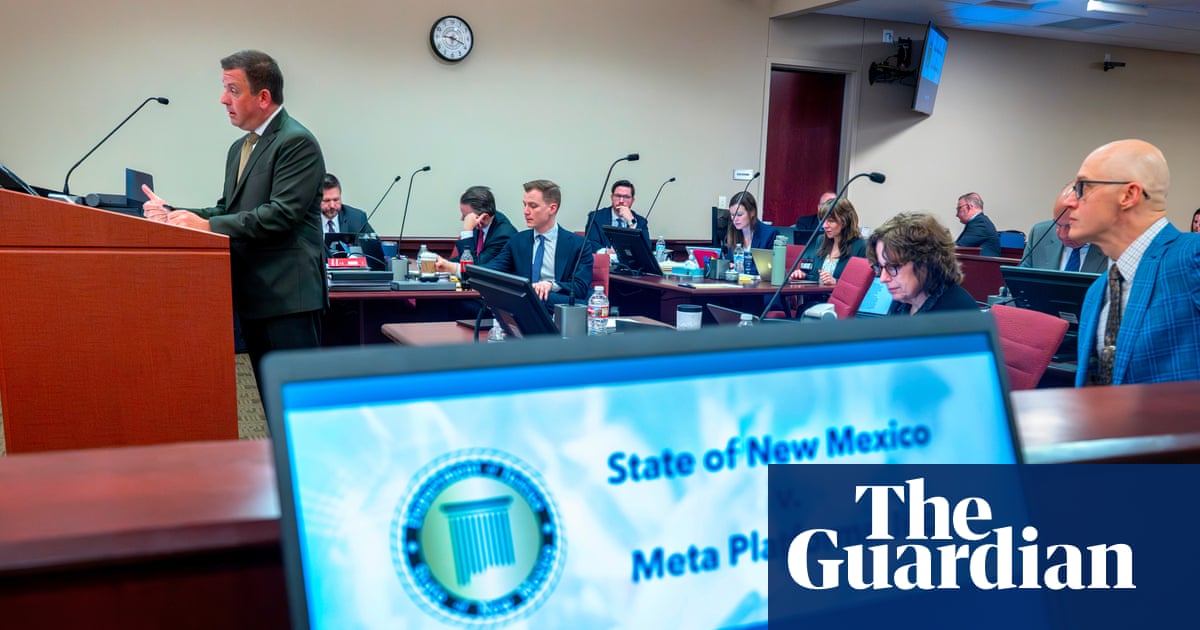
Meta faces a remedies-phase request for a $3.7bn abatement plan after a March verdict found it liable for child safety failures and imposed a $375m fine. New Mexico is seeking sweeping platform changes, including age verification, encryption removal for users under 18, linked guardian accounts, and a court-appointed monitor for at least five years. The proposed remedies could materially affect Meta's product design and compliance costs, while the company warns they may be unworkable and could force platform shutdowns in the state.
This is less about a headline fine and more about a forced redesign of Meta’s engagement architecture. The immediate market risk is not the eventual dollar amount of remedies; it is the possibility that the court creates a template for product-level judicial oversight, which would raise the legal cost of every safety-sensitive feature across Instagram, Facebook, and WhatsApp. That pushes the issue from a one-off litigation reserve into a recurring governance discount on Meta’s consumer internet multiple.
The first-order winner is not another social platform, but companies that sell age verification, identity, content moderation, and enterprise safety tooling. Any remedy that requires persistent age checks, human review SLAs, and external monitoring increases compliance spend and creates demand for third-party verification infrastructure. The second-order loser is not just Meta’s ad load; it is the broader personalized-recommendation model, because any court-backed constraint on minors’ data use weakens the feedback loop that improves ad targeting and session time.
The biggest tail risk is operational fragmentation: if Meta must build jurisdiction-specific teen controls, it may choose to degrade functionality broadly rather than maintain a patchwork of state-by-state product variants. That would be bullish for regulators’ bargaining power but bearish for monetization, especially over a 6-18 month horizon as appeals run in parallel with remedies litigation. Conversely, if the judge signals that the requested design changes overreach free-speech protections, the stock could rip on relief, but that outcome still leaves a lingering overhang because the underlying facts support more litigation and legislative copycats.
Consensus is probably underestimating how asymmetric this is for Meta: the market can model the fine, but not the possibility of a lasting compliance capex regime that suppresses product velocity. The contrarian bull case is that the remedies may end up narrower than the state wants, and Meta’s scale lets it absorb incremental monitoring costs better than smaller peers. But unless the company wins a clean legal reset, the multiple should stay compressed until investors see whether the court is willing to force changes that alter the economics of teen engagement.
AI-powered research, real-time alerts, and portfolio analytics for institutional investors.
Request DemoOverall Sentiment
strongly negative
Sentiment Score
-0.60
Ticker Sentiment
