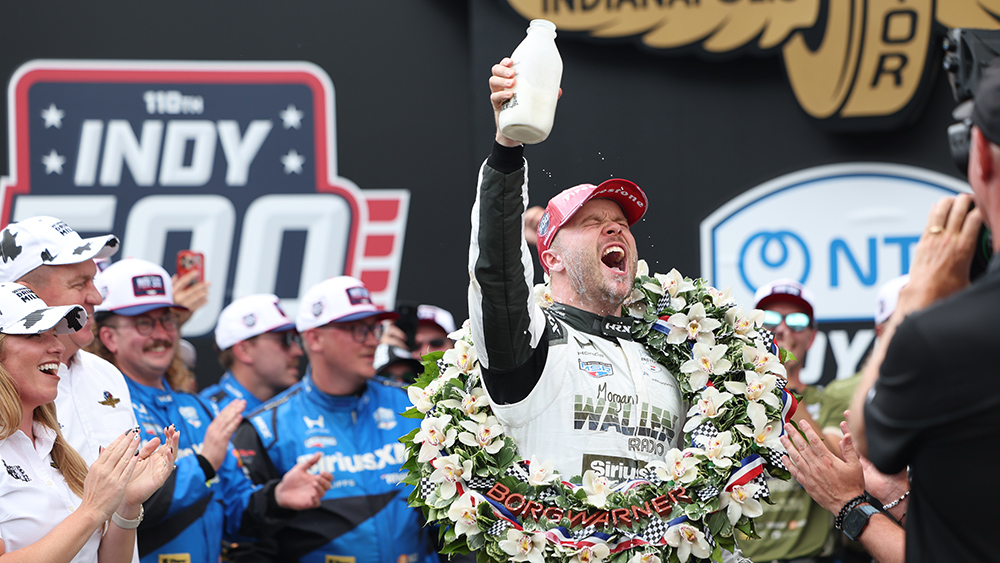
Felix Rosenqvist won the 110th Indianapolis 500 by 0.0233 seconds over David Malukas, the closest finish in race history, after an event-record 70 lead changes. Meyer Shank Racing earned its second Indy 500 victory, while Scott McLaughlin, Pato O’Ward and Marcus Armstrong completed the top five. The article is primarily a race recap with limited broader market relevance.
This outcome is a reminder that in highly stochastic, close-finish events, the economic value is less about the winner and more about the ecosystem of attention and commercialization that follows. The biggest immediate beneficiaries are the entitlement owners and commercial partners tied to the event’s uniqueness: record-close finishes tend to lift future ticket demand, sponsor renewal power, and media value more than a routine marquee win would. That matters for adjacent leisure and travel exposure because the marginal fan story becomes "must-see live," supporting premium pricing and higher repeat attendance over the next 1-3 event cycles.
From a competitive-dynamics lens, the more important signal is that the race validated Meyer Shank as a credible top-tier platform rather than a one-off spoiler. In motorsports, perceived capability often drives sponsorship dollars and technical partnerships with a lag of 1-2 quarters, so this should help their bargaining power even if the article does not mention capital markets. By contrast, the near-miss for the larger, better-resourced teams reinforces that scale alone is not decisive here; execution variance and race-day decision quality can still overwhelm budget, which tempers any assumption that incumbents will dominate future outcomes.
For LEA, the direct read-through is modest at best and likely already reflected as zero beta to the result: no obvious chain from a single race finish to near-term fundamentals. The better angle is second-order sentiment around mobility, performance, and branded experiences, but that is too diffuse to underwrite an earnings revision. The contrarian view is that the emotional resonance may be overstated relative to actual economic impact; unless this translates into sustained attendance, sponsorship inflation, or series-wide TV audience improvement over the next 6-12 months, the move is mostly narrative, not earnings.
AI-powered research, real-time alerts, and portfolio analytics for institutional investors.
Request DemoOverall Sentiment
mildly positive
Sentiment Score
0.20
Ticker Sentiment
