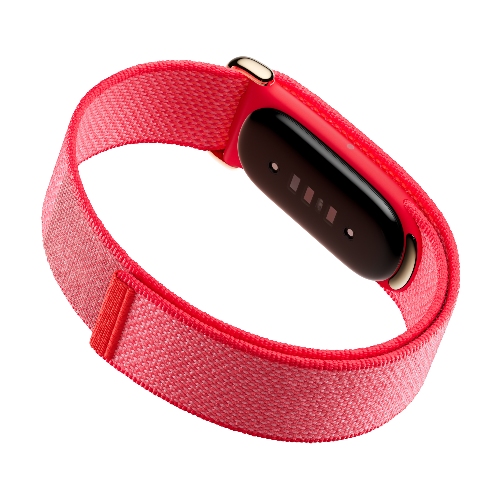
Google’s Fitbit Air is drawing early criticism for its one-size-fits-all design, with Reddit users showing that the tracker can look oversized and leave gaps on smaller wrists. Some users are suggesting bicep or ankle placement as workarounds, but Google has said it has no active plans for a bicep strap. The issue is mainly a product-fit and user-experience concern rather than a financial or market-moving development.
This is not a demand problem yet; it is a conversion problem. For wearables, fit quality is a leading indicator for retention because discomfort is one of the fastest reasons a device gets abandoned after the novelty window, typically within the first 30-60 days. The bigger second-order risk for GOOGL is not the initial preorder chatter, but a higher return rate, lower review scores, and weaker accessory attach if consumers feel forced into a form factor that segments the market by body type rather than use case.
The competitive implication is that Apple and Samsung can quietly benefit if they continue to emphasize broader size curves and more mature strap ecosystems. In wearables, small ergonomic differences compound into platform effects: if a user dislikes the hardware, they are less likely to tolerate the software ecosystem, and less likely to renew any subscription layer tied to the device. That makes this less about one tracker and more about whether Google can build a habit-forming health platform without a premium industrial-design reputation.
The catalyst path is short-term negative if social proof spreads among smaller-wrist buyers, but medium-term reversible if Google responds with accessories or a sizing program. Without that, the issue likely shows up first in channel sell-through and review sentiment over the next 1-2 quarters rather than in headline revenue. The key contrarian point is that this may be a unit-mix issue, not a category failure: if the product still performs well on larger wrists, Google can mitigate damage with targeted SKUs, but the absence of a fix increases the odds that early adopters become unpaid distribution for competitors.
From a stock perspective, this is too small to short GOOGL on its own, but it does argue for owning the better wearables ecosystem rather than chasing Google hardware optimism. The cleaner trade is to fade any near-term enthusiasm in Google hardware-specific narratives and express relative confidence in incumbents with broader accessory and health-platform monetization. If this becomes a pattern across products, it also reinforces the view that Google remains stronger in software distribution than in consumer hardware habit formation.
AI-powered research, real-time alerts, and portfolio analytics for institutional investors.
Request DemoOverall Sentiment
neutral
Sentiment Score
-0.10
Ticker Sentiment
