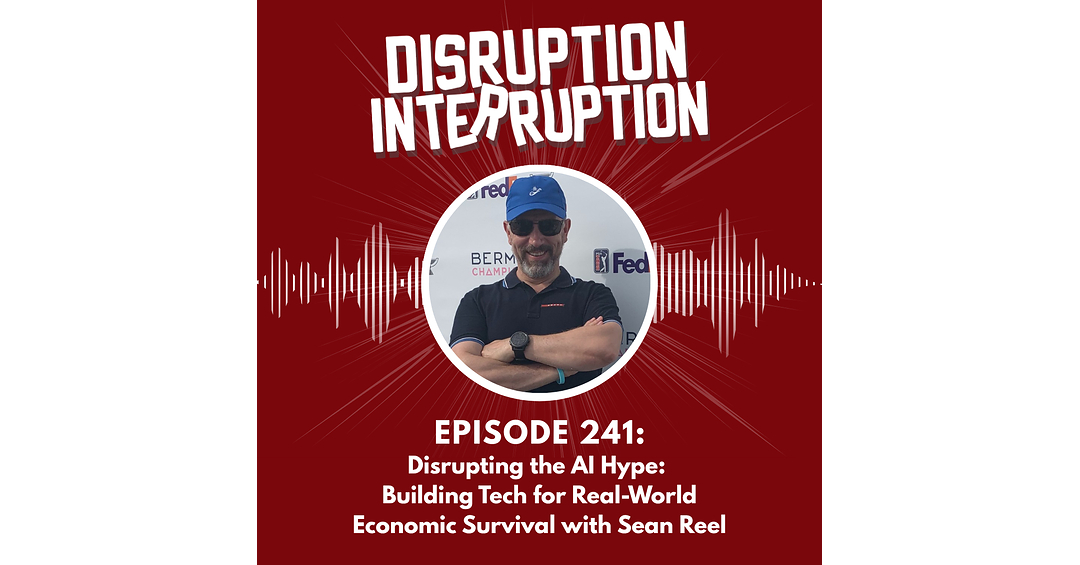
The article highlights a structural issue in accelerator programs: training and capital do not prevent failure when founders rely on untested assumptions. Ignite Bermuda reports an 80% success rate across 600 businesses, creating 250 jobs and contributing about $10M annually to Bermuda’s GDP by using MVP testing and human-centered AI tools (including “Spark AI”). Overall, the piece is broadly supportive of an approach that reduces wasted capital by validating assumptions earlier.
The investable takeaway is not "more startup training," it is a secular premium on tools that shorten the distance between idea and proof. That favors workflow, observability, CRM, and low-friction experimentation stacks (MSFT, CRM, DDOG, HUBS, NOW) because they monetize the bottleneck this piece highlights: evidence collection, not inspiration. In contrast, generic accelerator/consulting economics are structurally weak; they are easy to substitute and increasingly hard to charge for when capital is expensive and founders can self-serve with software.
Second-order, this is bearish for venture-dependent software names that require multiple funding rounds before product-market fit. If investors internalize "assumptions kill businesses," Series A/B scrutiny tightens, burn multiples compress, and time-to-scale lengthens over the next 1-3 quarters. That raises the hurdle rate for unprofitable AI wrappers and SMB tools whose only edge is distribution through hype rather than measurable conversion lift.
The contrarian read is that the market is still overpaying for autonomous AI narratives and underpricing human-in-the-loop tooling. The winner is not the model that answers questions; it is the stack that helps founders ask better questions and act faster. This thesis breaks if risk appetite returns hard enough to reflate early-stage funding or if SaaS spend re-accelerates without corresponding churn pressure over the next 6-12 months.
AI-powered research, real-time alerts, and portfolio analytics for institutional investors.
Overall Sentiment
mildly positive
Sentiment Score
0.15
Ticker Sentiment
