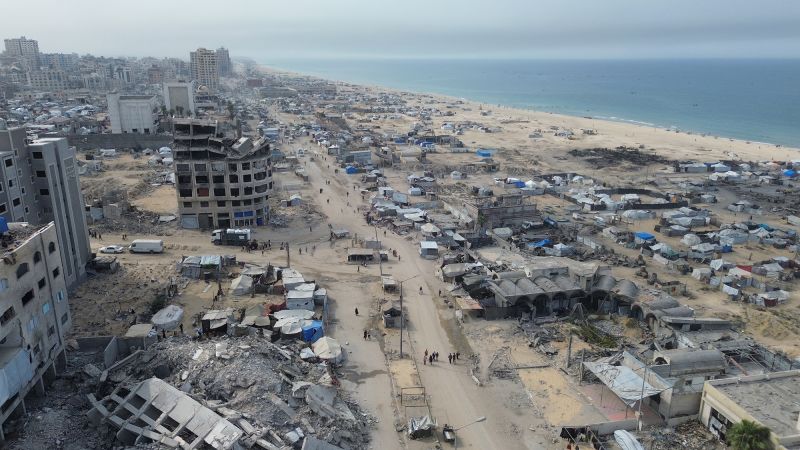
The Trump administration is advancing a UN Security Council resolution to establish a multinational International Stabilization Force (ISF) in Gaza, aiming to uphold a US-brokered ceasefire, demilitarize the enclave, and train a new Palestinian police force. While the US will coordinate from outside, international participation hinges on a UN mandate, with challenges including the contentious task of disarming Hamas and Israel's efforts to influence the resolution's wording and limit Security Council oversight. This initiative represents a complex, high-stakes effort to stabilize a critical geopolitical region, carrying significant implications for regional security, investment flows, and political risk assessments for global markets.
The US administration is pursuing a UN Security Council resolution to establish a multinational International Stabilization Force (ISF) in Gaza. This force aims to enforce the US-brokered ceasefire, demilitarize the enclave, and train a new Palestinian police force, with US personnel in an external coordination role. This initiative is central to Trump’s 20-point Gaza ceasefire plan.
International participation in the ISF hinges on a clear UN mandate, as indicated by potential participants and US Secretary of State Marco Rubio. Challenges include the contentious task of disarming Hamas, which several nations are reluctant to undertake, and the inherent risk of direct conflict. Turkish Foreign Minister Hakan Fidan stressed the need for a clear force definition.
Israel, initially resistant to a UN mandate, conceded under US pressure but is actively influencing the resolution's wording to limit Security Council oversight. The current draft lacks a Security Council reporting requirement, which Israel seeks to maintain. The ISF's mandate extends until the end of 2027, with renewal subject to consultation, highlighting its long-term, complex nature.
Operational hurdles persist, including clarity on the ISF's composition, disarmament mandate specifics, and coordination with the Israel Defense Forces. An ideal deployment would have been immediate, underscoring delays and inherent difficulties in launching this complex mission. The "mixed" sentiment and "uncertain" tone reflect these significant geopolitical and operational risks.
AI-powered research, real-time alerts, and portfolio analytics for institutional investors.
Request DemoOverall Sentiment
mixed
Sentiment Score
-0.10
