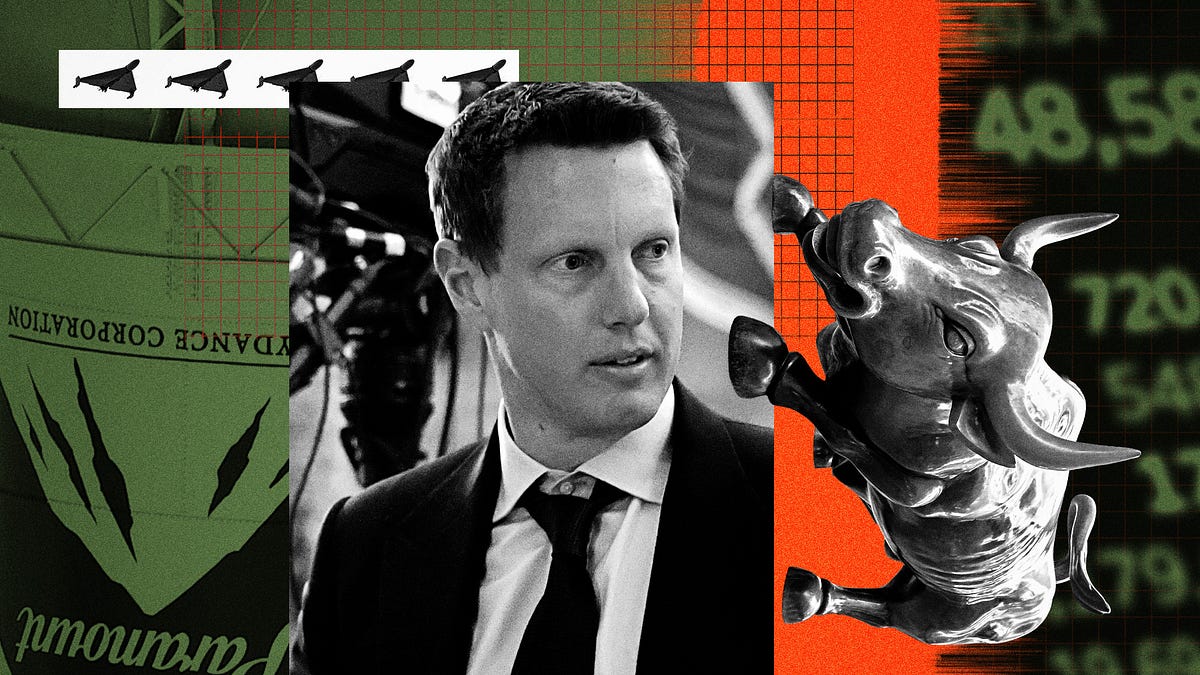
The proposed $111 billion Paramount Skydance–Warner Bros. Discovery merger would leave the combined company with roughly $79 billion of debt and has pushed Paramount Skydance shares down ~14% over the past week and ~35% since Feb. 27. Analysts are skeptical of the $6 billion synergy target and warn that a promised $30 billion content spend plus heavy leverage risks relationship damage, potential junk downgrades, and strained credit markets. The war in the Middle East is flagged as a threat to expected funding, management has not scheduled an investor roadshow, and some investors say “This should not be a public company.” A failed financing or downgrade could lead Ellison to walk away or trigger widespread industry fallout.
The market is treating the combination as a leveraged financing problem more than an operating consolidation; that reshapes incentives across studios, talent and distributors. When leverage is the primary constraint, content budgets and payment terms become fungible levers fast — expect studios to demand cash-friendly licensing, shorter windows and more back-ended deals, which will compress near-term free cash flow but may preserve headline content spend on paper.
Credit markets are the real arbiter: a ratings action or even a modest spread widening in the employer-of-last-resort bank facilities will force either equity raises at punitive levels or asset sales into a buyers’ market. That path creates a high-probability sequence over the next 3–12 months where liquidity events — covenant reviews, bridge draws or delayed funding — are the immediate catalysts, and restructurings or strategic divestitures are the medium-term outcomes.
Second-order winners will be content acquirers with dry powder and high-quality balance sheets: buyers that can purchase IP or licensing at distressed valuations will accelerate catalogue consolidation. Conversely, suppliers and mid-tier production companies face payment squeezes and client concentration risk, which will push them to diversify customers or demand full upfront economics — raising production costs and shortening the runway for smaller players.
A realistic contrarian hedge: if financing closes on flexible terms and a credible carve‑out program hits quickly, equity downside could be limited and strategic optionality preserved; this would likely play out over 9–18 months as synergies begin to show. That outcome is plausible but requires multiple low-probability boxes to be checked (friendly market technicals, stable geopolitical funding sources, and benign ratings treatment).
AI-powered research, real-time alerts, and portfolio analytics for institutional investors.
Request DemoOverall Sentiment
strongly negative
Sentiment Score
-0.70
Ticker Sentiment
