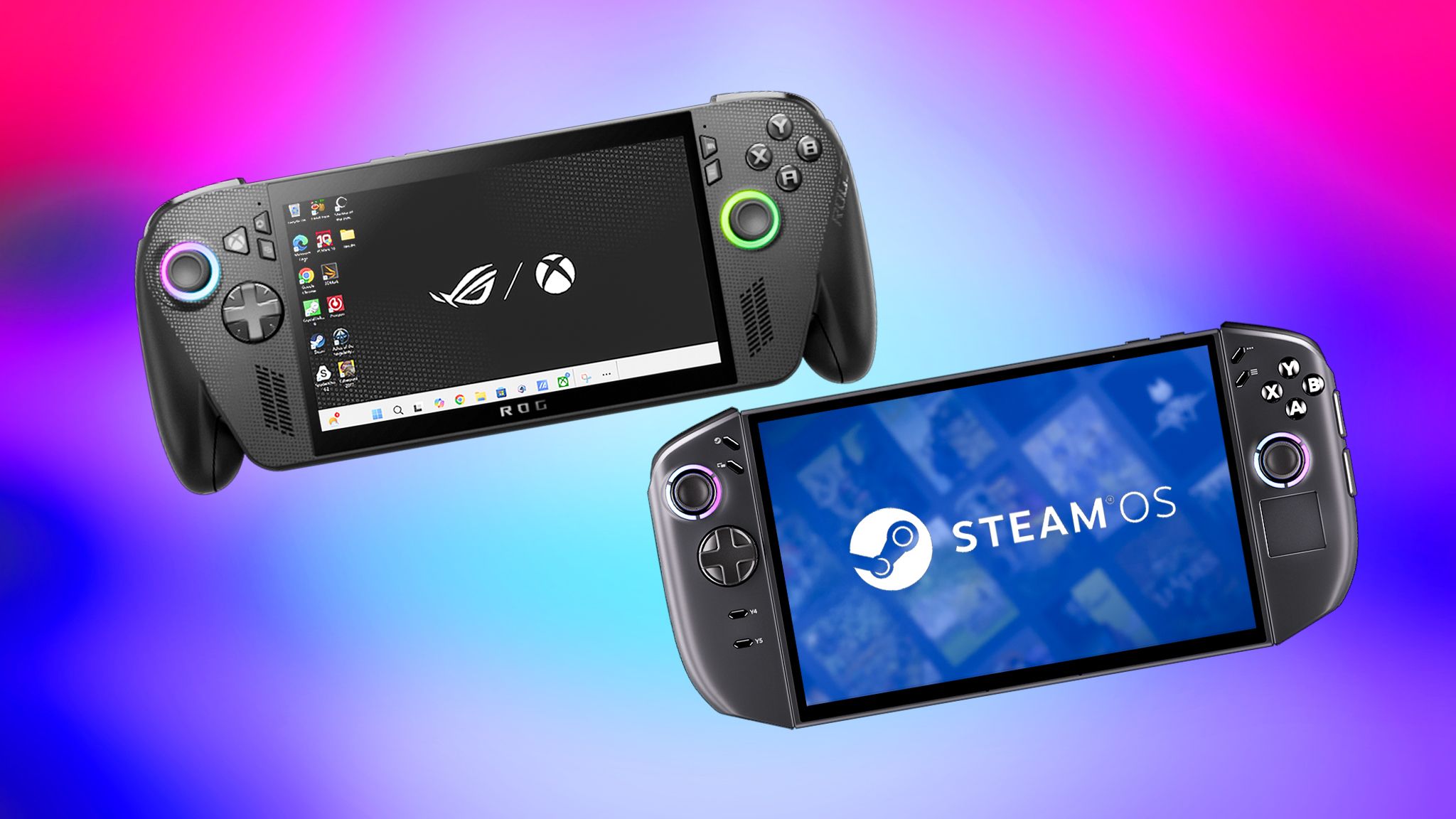
Lenovo announced a SteamOS variant of the Legion Go 2 (launching June 2026, from $1,199.99) featuring up to an AMD Ryzen Z2 Extreme APU (non‑AI), up to 32GB LPDDR5X, up to 2TB SSD, and an 8.8‑inch 144Hz OLED with detachable controllers and kickstand; ASUS/Microsoft's Xbox Ally X (released Oct 16, 2025, $999.99) ships today with an AMD Ryzen AI Z2 Extreme (NPU), 24GB RAM, 1TB SSD and a 7‑inch 120Hz IPS screen running Windows 11. The article judges the Legion Go 2 (SteamOS) superior on display, controls, SteamOS efficiency and likely battery/performance, while the Xbox Ally X offers better price, Windows game compatibility and easier SSD upgrades — factors that will shape consumer preference in the premium handheld segment but are unlikely to move public markets materially.
Market structure: Premium handhelds (Lenovo’s Legion Go 2 SteamOS and ASUS/MSFT-backed Xbox Ally X) concentrate value to AMD (APU supplier) and to retailers (BBY, AMZN) selling high-ASP hardware; expect modest incremental APU unit demand in 2H26 but outsized ASP-driven revenue contribution (estimate +5–10% rev tailwind to mobile APU revenue for AMD vs prior handheld cycles). SteamOS gains shift pricing power toward OEMs that can sell premium, vertically integrated hardware (Lenovo) and may compress Microsoft’s wallet-share for handheld UX, but Windows’ install-base keeps a high floor for MSFT ecosystem monetization.
Risk assessment: Key tail risks include anti-cheat incompatibility limiting SteamOS addressable market (high-impact, low-probability near-term downside within 3–6 months) and TSMC capacity shortages or yield issues reducing APU supply (operational risk over next 6–12 months). Immediate risks (days–weeks) are retail sell-through and inventory build; short-term (quarterly) risks are negative reviews or returns hurting sell-through; long-term (12–24 months) hinge on developer support and whether Valve/MSFT policies change.
Trade implications: Direct plays: semiconductor exposure (AMD) benefits from recurring APU orders; retail exposure (BBY) benefits from hardware attach and gift-season sales. Use option structures to express asymmetric upside: 3–6 month call spreads on AMD to capture device-driven upside while limiting premium; consider small tactical long-BBY call position into quarterly sell-through prints. Avoid large directional short on MSFT — prefer micro hedges (protective puts or pair trades) because Windows remains dominant.
Contrarian angles: Consensus underestimates SteamOS stickiness for handheld-first users and overestimates rapid Windows erosion; however it may be overdoing MSFT downside — Microsoft can iterate FSE and leverage Xbox ecosystem to neutralize Linux threat within 6–12 months. Watch for developer/anti-cheat fixes (60–120 days) which would materially re-rate SteamOS TAM and lift AMD exposure; conversely, sustained anti-cheat failures would be a catalyst to re-weight away from SteamOS beneficiaries.
AI-powered research, real-time alerts, and portfolio analytics for institutional investors.
Request DemoOverall Sentiment
mildly positive
Sentiment Score
0.25
Ticker Sentiment
