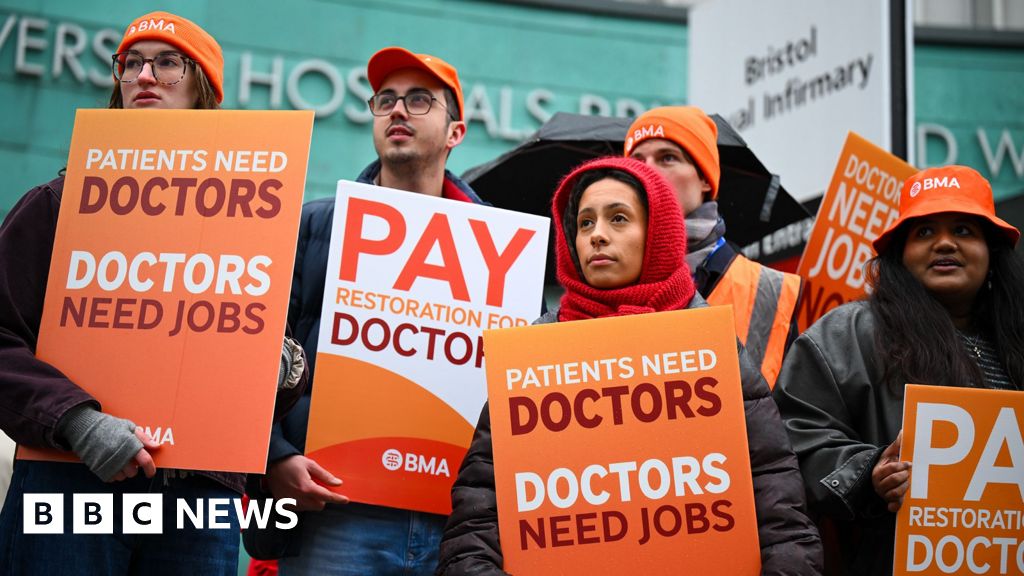
A five-day strike by resident (junior) doctors in England—the 14th walkout in a protracted pay dispute—began after talks with the government broke down; the BMA is demanding a long-term plan to restore pay in real terms and creation of new specialty training posts. NHS leaders warned the action will force cancellation or postponement of many pre-booked operations and strain hospital capacity already hit by a surge in flu, with Health Secretary Wes Streeting estimating a £250m cost and some emergency-department closures reported. The government says it has delivered nearly 30% in pay rises over three years while the BMA says real pay remains about a fifth below 2008 levels; with the dispute unresolved, hospitals face near-term operational and financial pressure and heightened political risk as Christmas approaches.
A five-day strike by resident (junior) doctors in England began at 07:00 on Wednesday after last-minute talks with the government failed, marking the 14th walkout in a prolonged pay dispute; resident doctors constitute nearly half of the NHS medical workforce and are withdrawing from both emergency and non-urgent care while senior doctors provide cover. The British Medical Association is demanding a “genuinely long term plan” to restore real pay and creation of new specialty training posts rather than recycled places, citing that resident pay remains about a fifth below 2008 levels in real terms despite government claims of nearly 30% pay rises over the past three years. NHS leaders warn the action will force cancellation or postponement of many pre-booked operations and strain hospital capacity already facing a seasonal surge in flu, with Health Secretary Wes Streeting estimating the strikes will cost £250m and describing the situation in some hospitals as “dicey”; isolated emergency closures (Cheltenham) and guidance to use 111 online underscore likely localized disruption. The government has offered increased training places and expense coverage but the BMA rejected the offer, and political rhetoric from senior figures increases the risk of further escalation or delayed resolution, implying continued operational pressure and reputational/policy risk for the NHS in the near term.
AI-powered research, real-time alerts, and portfolio analytics for institutional investors.
Request DemoOverall Sentiment
moderately negative
Sentiment Score
-0.45
