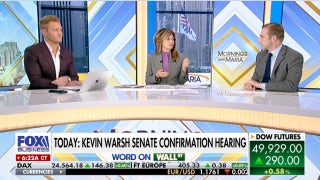
Sen. Thom Tillis said he will continue blocking Kevin Warsh’s Fed confirmation until the DOJ ends its criminal probe into Chair Jerome Powell over cost overruns tied to the Fed’s $2.5 billion headquarters renovation. Powell says the investigation is "unprecedented," while the project is expected to finish in fall 2027 with staff moving in by March 2028. The dispute adds political and legal uncertainty around Fed leadership and independence at a sensitive time for monetary policy.
The market implication is not the investigation itself but the extension of an already politicized transition window at the Fed. That raises the probability of a de facto policy pause, with officials less willing to surprise on rates while the chairmanship is contested and the institution is under legal scrutiny. In the near term, that biases front-end volatility higher and keeps the curve vulnerable to a steeper term-premium move rather than a clean rally in duration.
The second-order effect is on governance, not just rates: a prolonged confirmation fight increases the odds of a chair selection anchored more to political acceptability than policy continuity. That is incrementally bearish for long-duration assets if investors start pricing a more reactive, higher-inflation-tolerance Fed in 2026. Financials are a mixed read: banks benefit if the policy path stays restrictive for longer, but any erosion in Fed credibility can widen funding spreads and hit rate-sensitive balance sheets.
The underappreciated risk is that this becomes a catalyst stack: legal friction, nomination delay, and Supreme Court scrutiny all reinforce the same narrative that Fed independence is weakening. That matters because the market usually prices independence loss only after it shows up in breakeven inflation and term premium, which can reprice quickly over days to weeks. If the DOJ probe is dropped, the immediate trade is a relief rally in duration and a compression in volatility; if it persists, expect the opposite with the sharpest move likely in the 2s10s and options-implied rate vol over the next 1-3 months.
Consensus seems focused on personalities, but the real issue is regime uncertainty: when the policy process looks contingent on political timing, asset allocators demand a higher risk premium across Treasuries, mortgage duration, and rate-sensitive equities. That is especially important if growth is already slowing, because a politicized Fed cannot ease as efficiently in a downside shock. The market is likely underpricing how quickly this can leak into broader US sovereign credibility, even without any immediate change in policy rate settings.
AI-powered research, real-time alerts, and portfolio analytics for institutional investors.
Request TrialOverall Sentiment
neutral
Sentiment Score
-0.12
