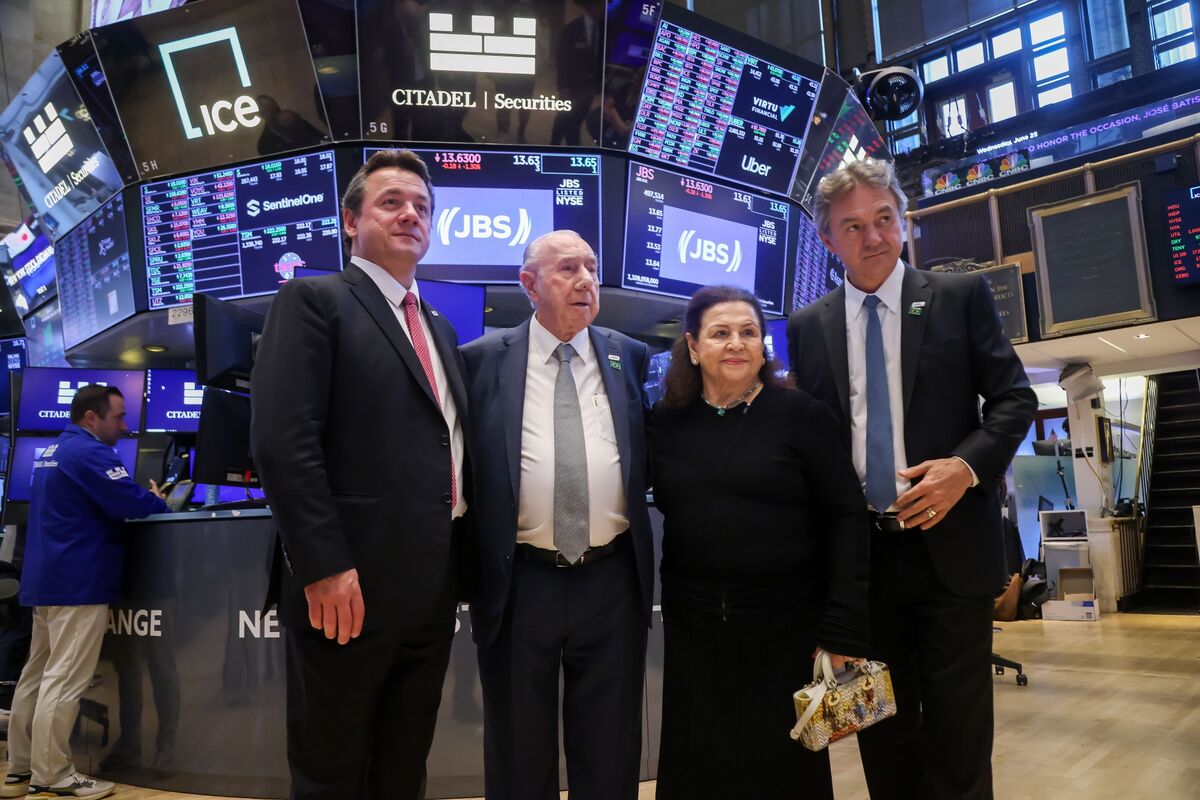
J&F SA, the Brazilian conglomerate controlled by the Batista brothers, raised about $400 million in a debut seven-year US junk bond at an 8% yield to help refinance debt. The deal marks an initial foray into the US high-yield market for the company, but the article provides no indication of stress or surprise beyond routine refinancing activity. Impact is likely limited to credit markets and the issuer rather than the broader market.
This is less a credit event than a liability-management signal: a Brazilian sponsor using the US high-yield market to term out debt implies the core operating asset is being financed at a spread the company likely views as acceptable relative to local or bank-market alternatives. The key second-order effect is that public market execution broadens the refinancing toolkit for the whole control group, reducing near-term default/refi risk and lowering the probability of asset sales at a discount.
For JBS, the more important read-through is not the new borrowings themselves but what they imply about capital access and balance-sheet optionality across the group. If spreads remain open, equity can trade with a “deleveraging overhang removed” multiple expansion; if primary markets shut, the same structure becomes a refinancing cliff, especially for a conglomerate with layered liabilities and cross-entity complexity. That makes the next 6-12 months more about market conditions than operating performance.
Credit investors should focus on duration and spread beta: a seven-year issue at an 8% coupon tells you the market is still demanding equity-like compensation for EM sponsor risk, governance complexity, and refinancing uncertainty. The contrarian angle is that this may actually be mildly positive for unsecured creditors and suppliers, because it reduces the odds of liquidity-driven disruption, but only if proceeds are genuinely used to de-risk maturities rather than fund additional leverage. The biggest hidden risk is that a single successful debut can encourage more opportunistic issuance just as global high-yield technicals weaken, making future execution more expensive or unavailable.
AI-powered research, real-time alerts, and portfolio analytics for institutional investors.
Overall Sentiment
neutral
Sentiment Score
0.15
Ticker Sentiment
