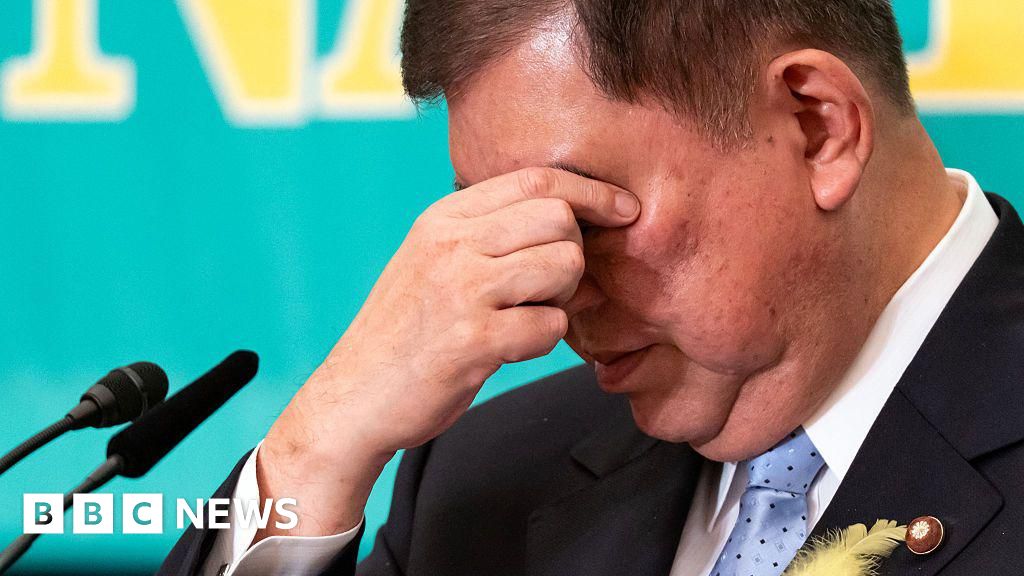
Exit polls in Japan indicate the ruling coalition, led by Prime Minister Shigeru Ishiba, is projected to lose its majority in the upper house election, with public broadcaster NHK forecasting they will secure between 32 and 51 seats, falling short of the 50 required. This significant defeat, following an earlier loss in the lower house, critically undermines the government's policymaking influence and places immense political pressure on Ishiba, potentially forcing his resignation and destabilizing the government at a pivotal moment for US-Japan trade negotiations. The outcome reflects widespread public frustration over rising prices, economic headwinds, and political scandals, with conservative votes notably shifting to the right-leaning Sanseito party.
Exit polls from Japan's upper house election indicate a significant political blow to Prime Minister Shigeru Ishiba's ruling coalition, which is projected to lose its majority. Public broadcaster NHK forecasts the coalition will win between 32 and 51 seats, creating a high probability of falling short of the 50 seats required for control. This result, which follows a prior loss of majority in the more powerful lower house, critically weakens the government's legislative power and threatens to create policy gridlock. The electoral setback is a direct reflection of widespread public frustration with persistent inflation, a cost-of-living crisis, and a series of political scandals that have eroded support for the Liberal Democratic Party (LDP). The outcome places immense pressure on Ishiba, with historical precedent suggesting he may be forced to resign, as the last three premiers who lost the upper house majority stepped down shortly after. Such a leadership change would trigger internal LDP power struggles and introduce significant instability at a pivotal moment for ongoing US-Japan trade negotiations. The erosion of the LDP's conservative base is further evidenced by the rise of the right-leaning Sanseito party, which capitalized on anti-immigration sentiment and is projected to secure seven seats.
AI-powered research, real-time alerts, and portfolio analytics for institutional investors.
Request DemoOverall Sentiment
strongly negative
Sentiment Score
-0.70
