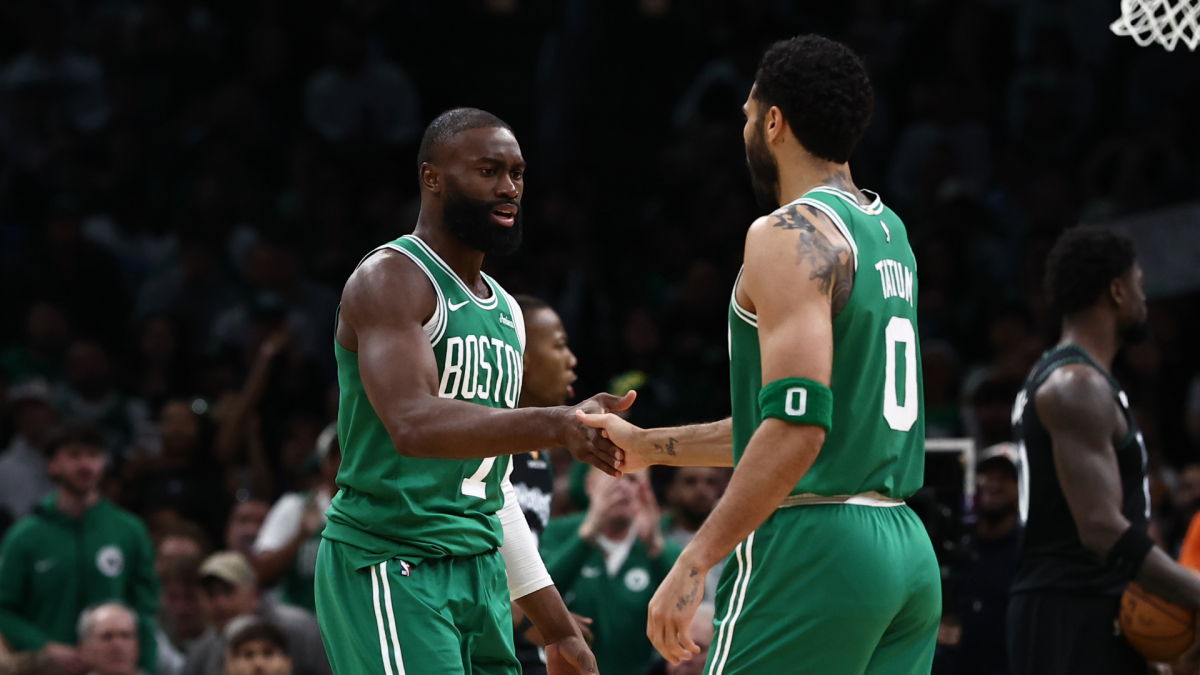
Boston's 3-1 series collapse to Philadelphia exposes structural roster and strategic issues, including a thinner supporting cast after losing Jrue Holiday, Kristaps Porziņģis, Al Horford and Luke Kornet. The piece argues the Celtics may need to consider major offseason moves, ranging from targeted additions using a $27.7 million trade exception to a much larger Giannis Antetokounmpo pursuit, while balancing a repeater-tax reset against present-day competitiveness. The article is analytical speculation rather than breaking transactional news, so the immediate market impact is limited.
The market takeaway is not the playoff loss itself; it is the forced re-rating of a premium “certainty” asset into a more ordinary contender with compressed margins for error. When a team’s edge is built on shooting variance plus roster depth, the collapse of either pillar matters disproportionately, and that tends to show up first in the supporting-cast names rather than the stars. The biggest second-order effect is that management now has a stronger incentive to trade future flexibility for present insulation, which raises the probability of a meaningful roster reshuffle before the next season rather than a marginal tweak.
The real hinge is the transaction path: keeping the tax reset intact preserves long-dated optionality, but it also leaves the roster thin enough that one injury or one cold shooting month can swing the entire thesis. That creates a classic “too much optionality can become underinvestment” problem. If the front office decides the window is still open, the most likely capital allocation mistake is overpaying for fit at the expense of depth, especially in a league where replacement-level bigs and point-of-attack defenders are scarce and expensive.
The contrarian read is that the worst-case reaction may be overdone if the core duo is still intact and the injury environment normalizes. In that scenario, the downside is less about talent erosion and more about the team no longer having an historically deep cushion; that is a meaningful but not fatal distinction. The timing matters: over the next 1-3 months, volatility is driven by rumor and front-office signaling; over 12-24 months, the key driver is whether the team chooses to preserve flexibility or spend it on a star-level upgrade.
AI-powered research, real-time alerts, and portfolio analytics for institutional investors.
Request DemoOverall Sentiment
mildly negative
Sentiment Score
-0.25
