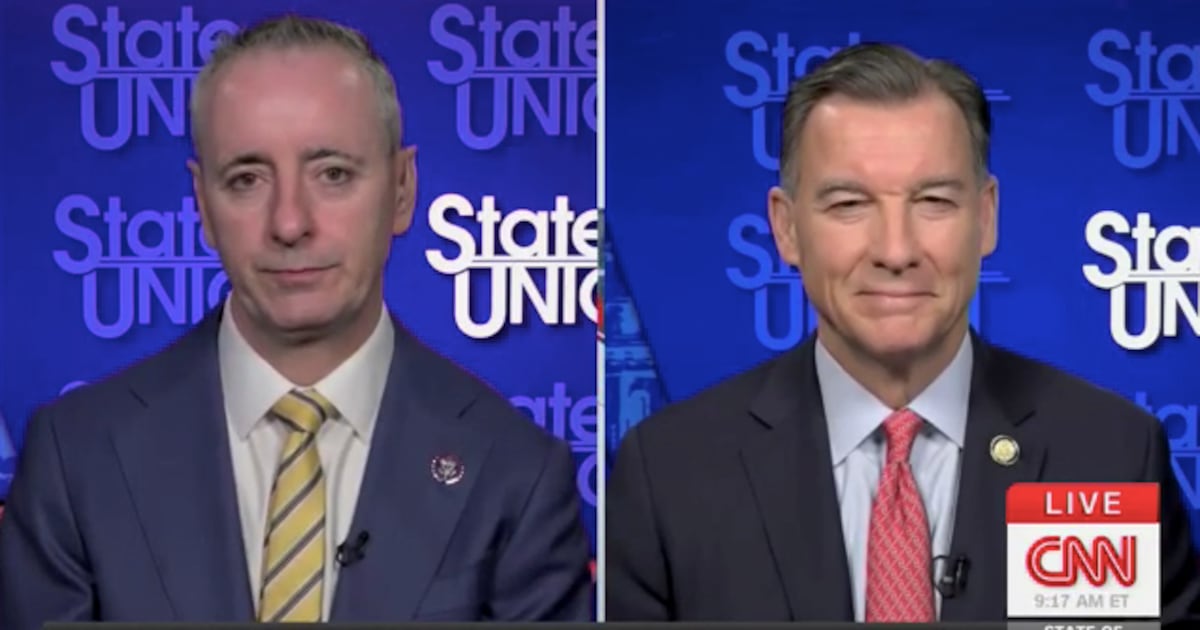
Congressional Republicans, led by Rep. Brian Fitzpatrick, said Trump’s proposed $1.776 billion "Anti-Weaponization Fund" will not receive funding and that the votes are not there to approve it. The DOJ has already said it is abandoning the plan after a court block, though Trump told NBC he still "loves" the idea and would pay Jan. 6 rioters if it were up to him. The article is primarily political and legislative in nature, with limited direct market impact.
This is less about a single funding proposal than about the growing marketability of congressional budget friction as a recurring policy variable. The immediate economic impact is negligible, but the more important second-order effect is on expectations for administrative maneuvering: if the executive branch keeps pushing settlement-style or “special fund” concepts, the judicial branch and appropriators become a more frequent gating factor for policy implementation. That tends to raise the discount rate on any policy-dependent revenue line, especially for names exposed to DOJ grants, prison services, immigration enforcement, or federal contracting where timing risk matters more than headline authorization.
The bigger market implication is that this reinforces the regime of stop-start governance into year-end budgeting, which usually supports volatility in defense, federal services, and broader risk sentiment around shutdown risk. Even when the direct issue dies, the process leaves a paper trail for litigation and a precedent risk that can be reused in other discretionary spending categories. In practice, that means the market should treat this as a tail-risk amplifier for companies reliant on non-defense federal transfers, not as a standalone earnings event.
Consensus is likely underpricing the persistence of legal friction because the base case assumes the fund is dead. The contrarian view is that the larger consequence is not whether this specific pool exists, but whether the administration keeps testing boundaries in ways that force court interventions and create unpredictable disbursement timing. That favors owning names with stable, formulaic federal demand over discretionary-policy beneficiaries, and it argues against chasing any “policy optionality” rally until appropriations clarity improves.
If there is a tradeable edge, it is in relative value rather than outright market direction: anything dependent on smooth federal execution should trade at a small but persistent discount until the litigation/appropriations calendar clears. The setup is more relevant over weeks to months than days, with catalysts tied to House/Senate floor action, court rulings, and any renewed executive attempt to repackage the same concept under a different legal wrapper.
AI-powered research, real-time alerts, and portfolio analytics for institutional investors.
Request DemoOverall Sentiment
neutral
Sentiment Score
-0.05
