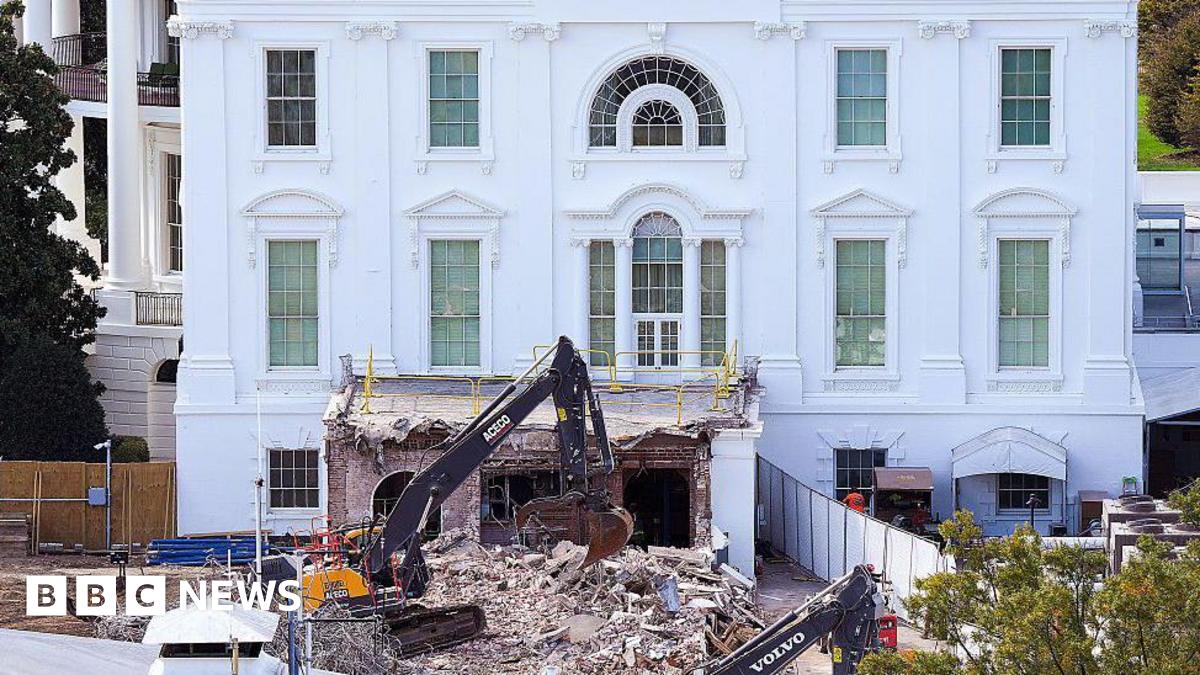
A US judge blocked above-ground construction of Trump's White House ballroom, saying Congress must approve the project, while allowing underground bunker work to continue. The ruling adds to legal and procedural setbacks after the White House was sued over missing planning, environmental, and congressional approvals for the estimated $400m project. Separately, a federal panel gave preliminary approval to Trump's 250ft victory arch, with the NEH earmarking $15m in federal funds.
This is less about a ballroom than about the market price of executive overreach. The immediate read-through is on contractors and design-build firms with federal exposure: any project whose economics depend on informal approvals now carries a materially higher delay premium, while firms with clean permitting, environmental, and historic-preservation processes should see a relative halo. The bigger second-order effect is on capital allocation: if discretionary federal prestige projects become politically toxic, private donors may re-route to state/local civic builds or defense-adjacent infrastructure where legal footing is stronger.
The ruling also raises the odds of a slower, more fragmented path rather than outright cancellation. Appeals could stretch this into a months-long process, which matters because construction and financing costs for large civic projects are very sensitive to schedule slippage; every quarter of delay can chew through contingency budgets and weaken sponsor enthusiasm. If the administration leans harder on “national security” to justify nontraditional builds, expect higher litigation risk across other federal projects that mix public access, security, and aesthetics.
The market consequence is mostly reputational and procedural, not macro. The only direct fiscal takeaway is that donor-funded projects are not immune to public-sector permitting risk, while any taxpayer carve-out for ceremonial structures increases scrutiny of discretionary spending at a time when budget politics are already brittle. The contrarian angle: the setback may actually make the underlying projects more likely to happen over time, because legal setbacks can be used to justify narrower scopes, clearer funding lines, and a better paper trail — reducing tail risk for future approvals.
For equities, the cleaner trade is to fade companies exposed to politically sensitive federal discretionary capex on any strength and favor names that benefit from compliance complexity. The headline may also support short-duration volatility in the broader “Trump policy premium,” but the real opportunity is in pair trades versus firms reliant on nonrecurring federal beautification or ceremonial work rather than mission-critical spend.
AI-powered research, real-time alerts, and portfolio analytics for institutional investors.
Request DemoOverall Sentiment
mildly negative
Sentiment Score
-0.25
