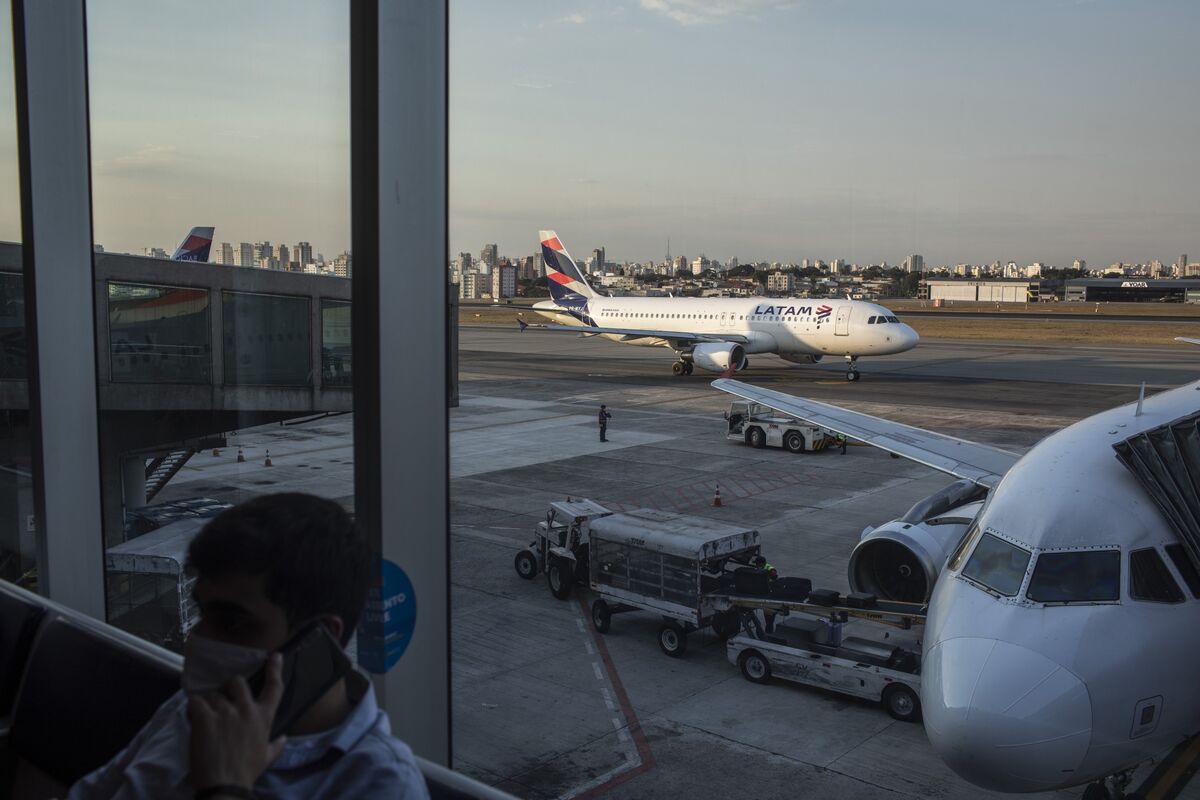
LATAM Airlines reported quarterly earnings above expectations, but it updated full-year guidance to reflect higher jet fuel prices. The company estimates a roughly $40 million first-quarter impact from fuel costs and expects more than $700 million in additional fuel expenses next quarter. The earnings beat is offset by a clear margin headwind from rising energy costs.
Rising jet fuel is a near-term margin tax that hits airlines asymmetrically: the carriers with the weakest fuel hedging discipline, the shortest pricing lag, and the least premium-heavy route mix will see the sharpest earnings compression over the next 1-2 quarters. In Latin America, that typically means the market should expect widening dispersion between large network carriers and smaller operators that cannot reprice fast enough or hedge as effectively. The immediate second-order effect is not just lower airline EPS, but softer ancillary and corporate travel demand if fare increases begin to suppress load factors.
The key inflection is timing. Fuel costs usually show up in reported results before they are fully offset by ticket repricing, so the next 30-90 days may still look operationally healthy even as forward margins deteriorate. That creates a classic “good quarter, weaker guide” setup where consensus often underestimates how much of the next quarter’s EBIT gets consumed by fuel before management can reset yields. If crude remains elevated, the market may start to question whether current profitability is peak-cycle rather than sustainable.
The contrarian angle is that this is not automatically bearish for the whole transport complex. Higher fuel can be partially passed through if capacity discipline holds, and the strongest carriers may use the shock to gain share from weaker rivals that cannot absorb the cost swing. The real loser may be not airlines broadly, but highly price-sensitive routes and regional competitors whose unit economics deteriorate fastest under a $700M-plus quarterly fuel burden.
Watch for three reversal triggers: a pullback in Brent/jet cracks, a faster-than-expected fare increase, or a stronger currency that offsets dollar-denominated fuel costs. Absent one of those, this is more of a months-long margin reset than a one-off miss, and the stock should trade on forward fuel assumptions rather than the headline earnings beat.
AI-powered research, real-time alerts, and portfolio analytics for institutional investors.
Request DemoOverall Sentiment
neutral
Sentiment Score
0.10
Ticker Sentiment
