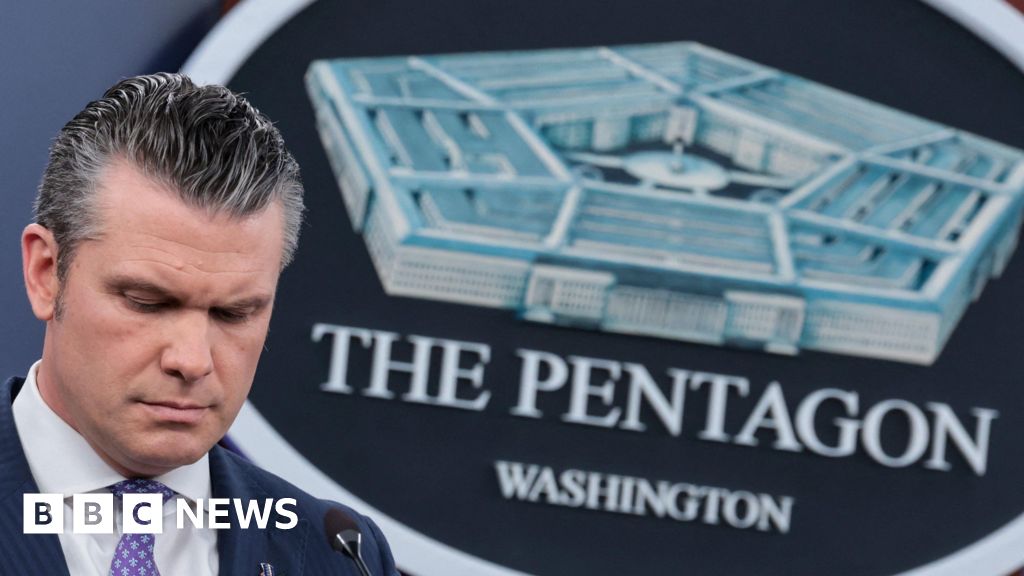
The Pentagon expanded AI contracts with Google, OpenAI, Amazon, Microsoft, SpaceX, Oracle, Nvidia and Reflection, saying AI will now be used for any "lawful operational use" across the military. The move formalizes a broader shift to an "AI-first" fighting force and reduces reliance on any single vendor, while Anthropic remains in dispute with the government over contract language and alleged retaliation. The announcement should support defense AI demand and could be sector-moving for major cloud and model providers.
This is less a one-off contract story than an inflection point in federal AI procurement: the government is shifting from single-vendor experimentation to a multi-supplier utility model. That favors the platform owners with the deepest distribution into enterprise and public-sector workflows, but the real economics accrue to the firms that control the deployment layer, identity, governance, and cloud consumption rather than the model layer itself. In practice, every incremental classified or regulated workload tends to expand attached spend in compute, storage, security, and compliance tooling faster than it grows pure model royalties.
Among the named beneficiaries, the most durable upside likely sits with the cloud incumbents because government AI adoption is compute- and network-heavy, sticky, and hard to unwind once workflows are embedded. Oracle is an underappreciated beneficiary if this expands into segmented, sovereign-style environments: it has historically been able to win by being the “acceptable alternative” where procurement wants redundancy and less perceived concentration risk. Nvidia’s benefit is more indirect here since no hardware is included, but broader model deployment still drives inference demand and reinforces its role as the default architecture standard, even if near-term revenue capture is muted.
The bigger second-order effect is competitive pressure on smaller or more ideologically constrained model vendors. If the government normalizes “lawful operational use” as the baseline, vendors that refuse broad use cases may lose not just contracts but downstream ecosystem mindshare, making them harder to adopt in adjacent enterprise sectors. The market may be underestimating the signaling value: once one top-tier buyer standardizes on a wide AI stack, commercial customers in defense-adjacent industries often follow within 2-4 quarters, especially where procurement teams want to mirror compliance language.
The main risk is not cancellation but delay and headline volatility. This can still be reversed by court action, internal employee pressure, or a political shift around surveillance and autonomous weapons, but those are measured in months, not days. Near term, the cleaner trade is on budget reallocation and workload growth rather than model-licensing economics; if there is a selloff on ethics headlines, it likely creates a better entry point for the infrastructure names than for the frontier-model pure plays.
AI-powered research, real-time alerts, and portfolio analytics for institutional investors.
Request DemoOverall Sentiment
mildly positive
Sentiment Score
0.15
Ticker Sentiment
