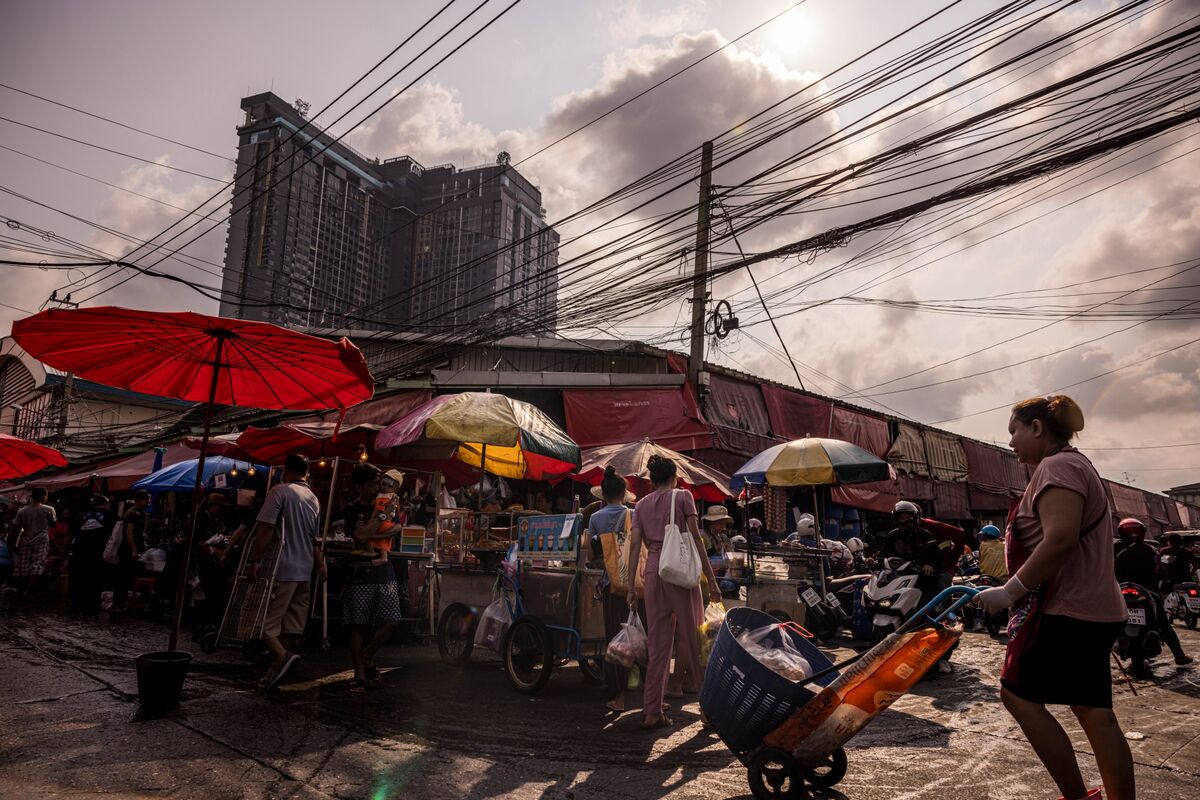
Thailand plans to raise 400 billion baht ($12 billion) in new debt to cushion farmers, low-income households, and small businesses from fallout tied to the Middle East conflict. The government says higher spending is aimed at preventing stagflation as energy shocks spill into food prices and raise living costs. The package also supports Thailand’s shift away from fossil fuels, adding a climate-policy angle to the fiscal response.
Thailand is effectively choosing balance-sheet support over a sharper near-term growth slowdown, which is usually constructive for domestic cyclicals but negative for the sovereign risk premium. The key second-order effect is that the market may initially read this as a quasi-stimulus trade, while credit investors should focus on the denominator: if higher spending is not matched by credible medium-term consolidation, the extra debt can pressure funding costs and crowd out private capex within 2-3 quarters.
The bigger macro transmission is through inflation composition, not just the headline. Targeting vulnerable households can stabilize consumption, but it also keeps demand alive into an energy shock environment, which risks embedding services and food inflation even if the original external shock fades. That makes the policy support most helpful for retailers and staples with pricing power, but less so for rate-sensitive sectors if bond yields back up.
On the energy transition angle, accelerated fossil-fuel replacement is bullish for local grid, renewable developers, and equipment suppliers, but the timing matters: fiscal urgency tends to favor fast-to-deploy solutions rather than the cheapest long-duration projects. In practice, that often benefits distributed solar, storage, and efficiency plays over large centralized builds. The contrarian risk is that “green acceleration” rhetoric can be overowned in headlines while execution bottlenecks, permitting, and grid interconnection limit earnings delivery for 6-18 months.
The consensus may be underestimating the rating agency channel. Once a country starts financing shock absorption with emergency borrowing, investors usually focus less on the initial size and more on whether this becomes a repeated template for future shocks; that can widen sovereign spreads even if growth avoids an immediate downturn. If global oil or shipping costs mean the external shock persists, the policy may merely smooth volatility rather than prevent a margin squeeze for importers and small businesses.
AI-powered research, real-time alerts, and portfolio analytics for institutional investors.
Request DemoOverall Sentiment
mildly negative
Sentiment Score
-0.15
