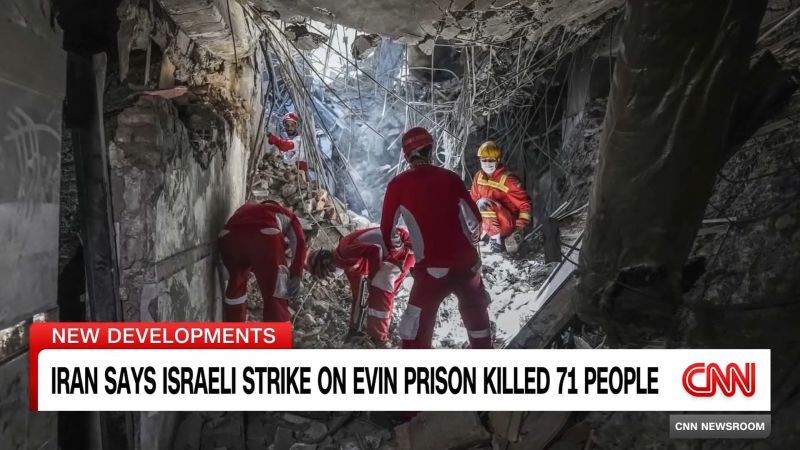
Israel's attack on Tehran's Evin Prison, which Iranian judiciary sources report killed 71 people, was confirmed by the Israeli Defense Minister as part of broader strikes targeting IRGC and Basij headquarters. This incident, condemned by France due to two detained nationals, occurred amidst 12 days of escalating Israeli-Iranian hostilities that concluded with a ceasefire late Monday, highlighting persistent regional geopolitical instability.
A confirmed Israeli strike on Iran's Evin Prison and key military sites, including the Islamic Revolutionary Guard Corps (IRGC) headquarters, marks a significant escalation in a 12-day conflict that has now resulted in a ceasefire. The attack, which Iranian sources claim resulted in 71 fatalities, demonstrates a high-risk, direct-action strategy by Israel within the Iranian capital. The condemnation from France, citing the endangerment of two of its nationals held in the prison, introduces a layer of international diplomatic complexity and highlights the potential for collateral impacts on third parties. While the announced ceasefire provides a potential de-escalation, the preceding series of strikes suggests a new and more volatile phase of direct confrontation between Israel and Iran, elevating regional geopolitical risk. The 'uncertain' tone signal reflects the fragility of this ceasefire and the persistent underlying tensions that could fuel future market volatility.
AI-powered research, real-time alerts, and portfolio analytics for institutional investors.
Request DemoOverall Sentiment
strongly negative
Sentiment Score
-0.80
